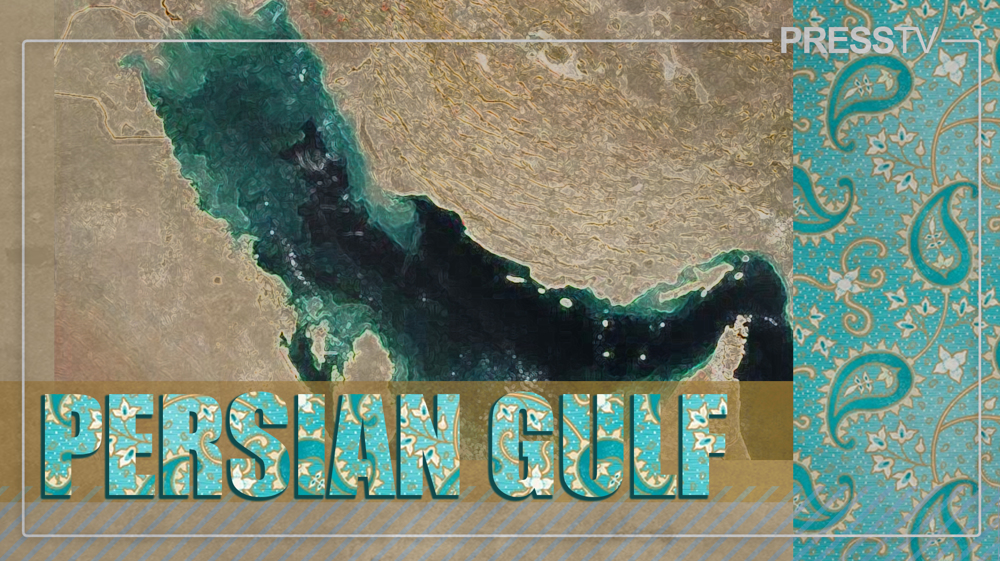












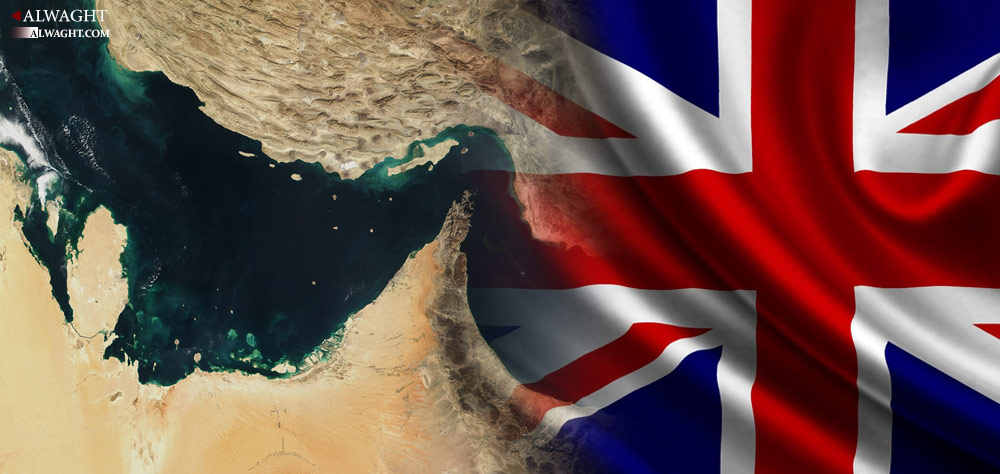


Alwaght- The last presence of Britain in the Persian Gulf region dates back to 1971, a year that London openly ended its direct military presence in the region. However, after Bahrain’s separation from Iran, Britain signed an agreement with the tiny Persian Gulf island nation, dubbed “Friendship Treaty” with the aim of consultation in the emergency situations. By the treaty London managed to get a toehold in the Persian Gulf for the time of need.
After 2011, the global attention shifted back to the West Asian region as well as the Persian Gulf, provoking the British leaders to seek renewed direct military presence in the Persian Gulf after 2012. The motivation for gaining sway in the region remains standing to date in the British leaders' minds. Now we need to give answer to this question: What factors do push Britain to return to Persian Gulf in the present time?
In fact, it can be maintained that the British presence in the region is urged by major policies of London in its siding with the American policies in the significant Persian Gulf region.
The US today is no longer recognized as a the sole powerful and hegemonic country on the international stage; rather the world now sees other powers like Russia and China rising in power and so turning into the key rivals of the US. Having in mind that the US majorly put premium on the economy in its global relations, Beijing, as a rising economic power, is an important competitor to Washington.
Feeling the risks of a rising China, the Obama administration in 2012 issued its new military strategy under “Defense Strategy Review.” The reviewed strategy noted that in the long run China as an emerging regional power will obtain the capacity to influence the American economy and security in a variety of ways. The US concern is not baseless because China has the world’s largest population and the fastest-growing economy, and its service of the Chinese military forces can give Beijing an increasing power. Such a rise can, of course, impair the US position in the East Asia region, and also challenge the American allies like South Korea and Japan, and so change the balance of power in the world in China’s favor. Furthermore, the growing Chinese military spending, particularly in past few years, and Beijing's plans for modernization of its military have begun to send the US into a spin.
In the eyes of Washington, increase in China military spending over the course of past few years is part of Beijing’s efforts to dominate the East Asia countries, as well as the US allies there. And an increasingly powerful Beijing will certainly press Washington to withdraw from East Asia, the same move the US made in the 19th century to push the Europeans out of the Western Hemisphere, where the Latin American countries are located. This pushes Washington to reduce presence in West Asia and Persian Gulf regions and instead focus on the East Asia, where it is losing the edge to China.
This makes us to suggest that it is unavoidable for Washington to task such allies as Britain with part of its work in the Persian Gulf. After all, Washington and London make the biggest money from their relations with Persian Gulf regional states, and they receive the biggest crude oil from the region.
The US has well understood that it can no longer pursue its goals lonely. Actually, the Russian fresh presence in the region makes the US feel a need for a key ally in addition to its traditional Arab allies in a bid to firm up its place in the Persian Gulf region.
On the other side, London has a desperate need to the region’s energy. Britain in 2012 alone imported £400 million in crude oil worth from West Asia. In the same year, nearly 30 percent of the British gas came from the region through sea. Qatar has now turned into the most important Liquid Natural Gas (LNG) supplier of Britain.
Furthermore, shortage in financial sources, economic crises, rising political rivalry inside the European Union and Britain’s growing distance from the EU, risks of independence seeking moves by Scotland, Northern Ireland, and Wales, threats of outbreak of nationwide protests, exit from the EU, and tens of other issues are influential in Britain's military return to the Persian Gulf to dominate the energy resources and plunder them.
In general, it must be suggested that this time, Britain had come to the Persian Gulf region to stay for a long time. On the one hand it seeks its own interests and objectives in the region, and on the other hand it wants to present itself as a supplement to the US as it is Washington’s most significant international ally in the face of rivals like Russia and China.