








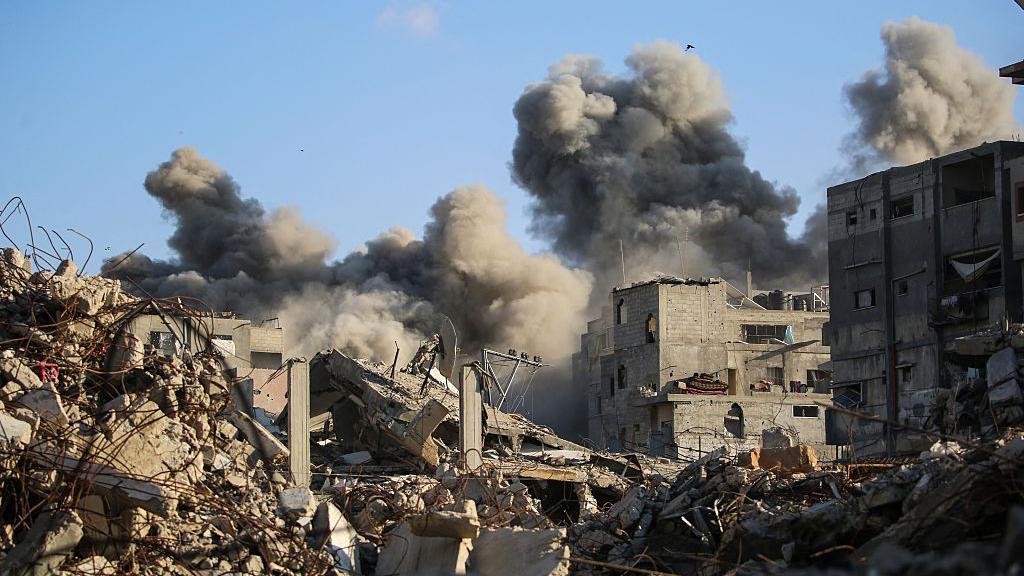


ALWAGHT- On Sunday, Israeli strikes targeted eastern Maghazi camp in central Gaza, while its military conducted demolition operations in the eastern and southern parts of the enclave, breaching the ceasefire.
Israeli military operations have intensified, leading to the killing of seven Palestinians in northern Gaza, including a 70-year-old woman and her son. Simultaneously, strikes and demolitions have been reported in central and southern Gaza, as well as in the Maghazi camp. These actions are seen as direct violations of the current truce, pushing the fragile October 10 ceasefire into a critical and unsustainable phase. Qatar’s Prime Minister and Turkey’s Foreign Minister have publicly warned that the agreement risks collapse unless immediate progress is made toward a permanent political solution. The window for diplomacy is narrowing rapidly.
Qatar, a key mediator alongside Egypt and the United States, has expressed urgent concern over the deteriorating situation. The call to move to a “next phase” refers to transitioning from a temporary humanitarian pause to a comprehensive, lasting agreement—an outcome that now appears increasingly uncertain. Meanwhile, Iran has condemned the strikes, framing the conflict as part of a broader regional struggle against Israeli and Western influence. The US continues to navigate a delicate balance, publicly backing Israel’s security while urging restraint and a return to negotiations.
Parallel to the violence in Gaza, tensions are mounting in the West Bank. Incidents such as the attack by Israeli settlers on an elderly Palestinian woman, her grandson, and international volunteers in Ramallah—along with the establishment of new settlement outposts—signal a worrying escalation.
The international community, including the United Nations and several European governments, has called for an immediate de-escalation. Humanitarian organizations are warning of a catastrophic situation in Gaza, where infrastructure is severely damaged and civilian casualties continue to rise. With the truce under threat, the delivery of aid and medical supplies is again at risk. Global attention remains focused on whether mediators can salvage the ceasefire or if the region will see a return to large-scale military confrontation.