















Alwaght- Over the past few days, Yemen’s east has been a scene for fast-moving and critical field developments that have led to a fundamental change in the region’s political and security landscape. At the center of these developments stands the oil-rich Hadhramaut province that alone accounts for over 40 percent of the country’s size.
The tensions erupted in later November when “Hadhramaut Tribal Coalition (HTC)” that represents the independent Hadhrami identity and is loyal to the Aden-based, Saudi-backed government took preemptive actions to block advances of the UAE-supported Hadhrami Elite Forces (HEF), which are loyal to the separatist Southern Transitional Council (STC).
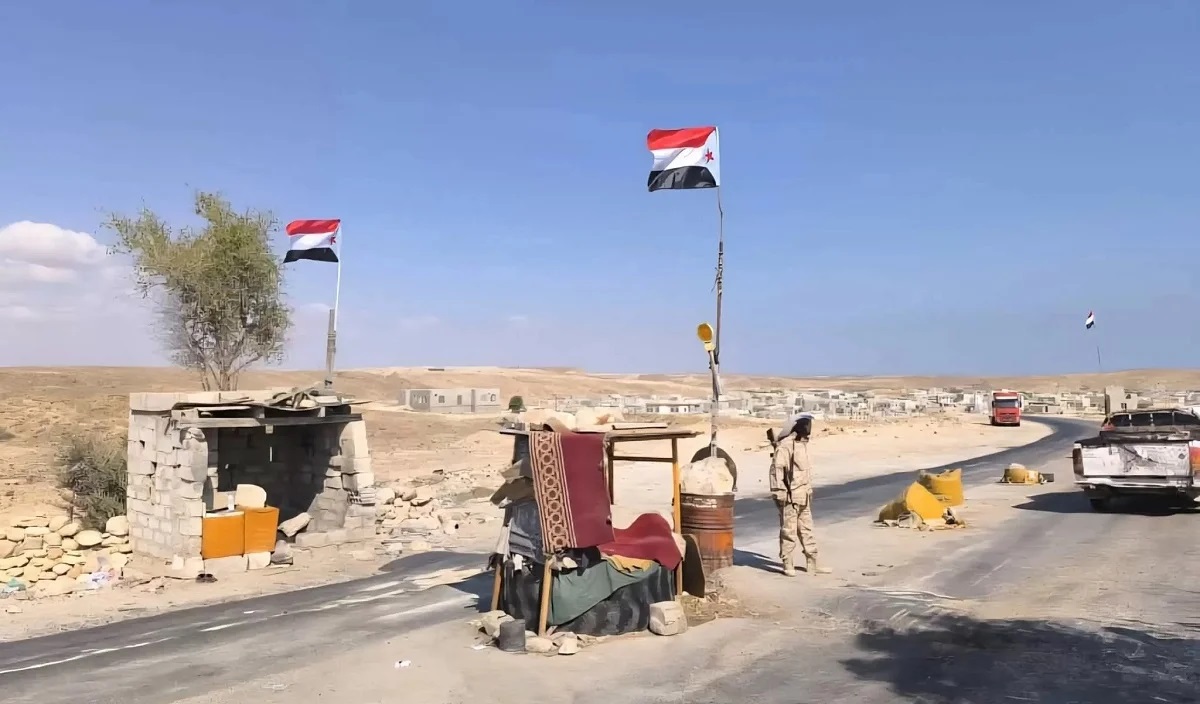
The conflict entered a new phase in recent days as southern forces seized positions previously held by the “First Military Region” in Wadi Hadhramaut. Southern units affiliated with the “Alwiyat Al-Amaliqa” and subunits of the Second Military Region moved into the cities of Seiyun and Qatn, taking control of the Presidential Palace and other key facilities.
In response to this advance by Emirati-backed forces, the HTC led by Sheikh Amr bin Habrish, adopted a cautious stance, declaring the protection of oil fields as its primary objective. This position indirectly signaled that the fall of the First Military Region occurred within the framework of backroom agreements brokered and overseen by a Saudi delegation led by Mohammed bin Obaid Al-Qahtani. The deal included redeploying the HTC and HEF near oil company facilities and integrating local Hadhrami protection forces into a unified structure to guard the companies. This indicates the theater is shifting from ground combat to a security realignment centered on managing oil resources, where the “neutralization of the tribes” was part of a larger plan.
But the story did not end there. Similar developments unfolded in another Yemeni province, where southern forces took over the most important military and security sites, including the airport, seaport, and Presidential Palace in Al-Ghaydah, without any significant fighting. The so-called “legitimate government under the command of the Southern Transitional Council’s Presidential Leadership Council” offered no meaningful response. This confirms that these events go beyond mere military repositioning and point to carefully prearranged plans.
These developments should not be seen separate from the role played by the regional actors. What is happening is very likely part of a Saudi-Emirati distribution of roles.
On the one hand, the STC is an efficient instrument held by the UAE for rapid change of the field developments.
On the other hand, National Shield Forces (NSF) is a Saudi tool serving a purpose to prevent unilateral Emirati control over Yemen’s south and its security climate, especially given the importance of Hadhramaut and Al-Mahrah provinces in terms of ports, borders, and energy sources.
The role of bin Habrish and the HTC makes sense within this framework. It is a structure that is not eliminated and is integrated into a new whole to play a role in guarding oil facilities; a process demonstrating engineered developments.
In fact, what happens is management of conflicts between rival local forces in these regions within an in-the-making political-security plan that enables power transition without large-scale field confrontation.
It seems that the overall framework of this plan is the unity of the HTC and the STC that will pave the way for separation of the south from the north.
Hadhramaut significance in the STC-HTC confrontation
Hadhramaut is one of Yemen’s largest provinces, accounting for nearly one-third of the country’s size. The province is home to rich oil and gas fields, estimated to worth billions of dollars, not to mention ports in the Arabian Sea, and long ground borders with Saudi Arabia.
Oil and gas are the primary revenue source for the Aden-based government under the Presidential Leadership Council, accounting for 60 to 70 percent of its income. Hadhramaut and its neighboring province, Shabwa, are among the leading oil-producing regions. Consequently, whoever controls Hadhramaut holds a vital artery of Yemen’s economic lifeline.
For a long time, Hadhramaut was nominally under the authority of the Aden government. However, the ground reality was far more complex, with influence fragmented among local forces, particularly the tribes.
This nominal and symbolic arrangement completely collapsed last March when the HTC announced in a statement that its forces had taken control of the province’s oil installations. It framed the move as a step to defend the “national wealth” and protect it from any foreign interference.
Established in 2013, HTC positions itself as the legitimate representative of the Hadhrami people’s interests against any attempt to impose foreign agendas upon them. This includes rejecting the secessionist project of the STC and its HEF which Abu Dhabi established in 2016 under the pretext of fighting Al-Qaeda.
Islah Party, the biggest losing force
Indeed, fall of the First Military Region deals a heavy blow operationally and symbolically to the Islah Party, an affiliate of Muslim Brotherhood in Yemen. This region made the main layer of political-military power of Islah Party in Hadhramaut.
Dissolution of this Islah strong point, either with voluntary retreat or under battlefield pressure, will leave Islah Party with no choice but compulsory redefining of the role and degrade of influence. The expansion of progress of the southern forces to other regions like Shabwa and Al-Mahrah, which are the areas of influence of Islah Party, shows that the development is not limited to a specific point. The Islah Party is facing three big tests
1. Maintaining influence on key northern fronts such as Marib and Taiz, as the military landscape rapidly shifts.
2. Rebuilding and forging new alliances within a deeply fragmented anti-Sana’a coalition.
3. Avoiding political and military marginalization if the current trend continues.
This trend is not only targeting Islah Party, rather, it shifts the balance of power on the anti-Sana’a front and boosts the role of new actors like National Shield Forces, Al-Amaliqa, abd Tareq Saleh, the son of slain former President Ali Abdullah Saleh.
Domestic and external consequences
These developments can leave deep impacts:
- A redefinition of the south as a space with multiple power centers: In practice, recent developments mean the Aden-based government, nominally headed by the Presidential Leadership Council, will no longer exercise even nominal authority over the South. It is being pushed to the margins of southern politics, while local actors play a far more decisive role in shaping the balance of power.
- The center of gravity of the conflict is shifting eastward, elevating the strategic importance of Hadhramaut and Al-Mahrah in national calculations.
Eastern Yemen had remained one of the most secure parts of the country throughout the years of chaos and war. But new dynamics now cast a shadow over its stability. In a worst-case scenario, a direct military conflict between Saudi-backed HTC and UAE-backed HEF could sink Yemen into an entirely new phase of conflict.
- Deepening internal fractures among the anti-Sanaa bloc and a further erosion of its political legitimacy.
- New openings for Sana’a to build fresh channels with tribes and elites in Hadhramaut and al-Mahrah as traditional rival forces pull back.
- A diminished Omani role in Al-Mahrah: Oman has long been a pivotal actor in al-Mahrah due to geographic, social, and security linkages. But the rise of UAE-aligned forces in the area is likely to trigger serious concern in Muscat. Although Oman has remained publicly absent from the recent developments, its absence should not be mistaken for lack of influence. Any shift in Al-Mahrah will inevitably be measured against Omani sensitivities regarding Saudi and Emirati penetration.
Intensification of Saudi-Emirati competition in the south
While the cold war between Sana’a and Aden-based government remains part of the Yemeni landscape, the more dangerous cold war is one that takes place between the former allies over distribution of influence.
A report by Carnegie Foundation warns that rising competition between Saudi Arabia and the UAE through local proxies jeopardizes Hadhramaut stability and can inflame further home disputes.
Analysts, however, argue that talk of tensions between Riyadh and Abu Dhabi can be an exaggeration as the two actors show signs of coordination in the developments of Yemen over the past few weeks. Still it is an inevitable reality that their rivalry for a large foothold in the south can deepen. Realities on the ground, especially the relentless support of the local allies of each side in Hadhramaut and Al-Mahrah indicates a broader level of competition.
Riyadh’s interest in Hadhramaut stems from the province’s strategic value. The province shares a long land border with the kingdom along the Empty Quarter and fronts a vast stretch of coastline on the Arabian Sea.
Saudi Arabia sees Hadhramaut as a direct outlet to the Arabian Sea that could diversify trade and energy export routes and reduce its reliance on the Strait of Hormuz.
If Saudi Arabia succeeds in establishing a strong foothold along the Hadhramaut coast, the kingdom would effectively gain a third strategic maritime access point, after the Persian Gulf and the Red Sea.
The UAE for its part, has both political and military interests in the province. Control of this oil-rich province by the STC would bolster the council’s secessionist project and give it significant economic and political leverage.
Since 2016, The UAE has sought to build an expansive military presence along Yemen’s southern littoral facing the Arabian Sea and the Bab-el-Mandeb, including the island of Socotra and the Balhaf terminal. Hadhramaut is the most critical link in this coastal footprint, extending all the way toward the Strait of Hormuz.
Experts note that Yemen’s oil is not a direct economic prize for either Riyadh or Abu Dhabi, as the cost of military and political intervention far outweighs any potential revenue from Yemen’s petroleum. Nevertheless, control of oilfields and energy infrastructure remains a key instrument of power: It allows the controlling side to finance its forces, strengthen its bargaining position, and gain greater domestic influence as the actor perceived to “manage the wealth.”
While it seems that the current balance of power is shifting in favor of the STC and its backer the Emirates, the final result still depends on interactions of the home and regional actors and the capability of the local actors in managing the new complexities stemming from redeployment of the forces in the east.
Yemen in the US’s Greater Middle East Game
Developments in eastern Yemen can also be read in the context of renewed Western thinking on how to handle the Yemen case within the broader vision of a “new Middle East”, particularly after the failure of military tools in eight years of war against Sana’a, and after the collapse of Washington’s naval coalition, which was formed to protect Israel in the Red Sea, following two years of Ansarullah’s anti-Israel attacks.
In US policy and research circles, a number of ideas have been circulating, including:
- Sidelining the Islah Party
- Handing control of resources to southern forces
- Strengthening federal structures
- Fragmenting central power
- And building a stable belt in the south and east to contain Ansarullah that holds the north
In this regard, Abdulbari Taher, the prominent intellectual and former head of the Yemeni Journalists Syndicate, told Al-Quds Al-Arabi: “What the four countries, especially the United States and Britain, want is not separation, but the partition of Yemen, into north and south, east and west.”
He added: “What we are seeing in Libya, Sudan, Syria, the West Bank and Gaza is the ideal scenario for these four powers. Militias and fabricated leaderships are the instruments of this project. Maintaining the status quo, prolonging fragmentation, and eroding the social fabric are the foundations for reshaping West Asia region and building a greater Israel, in line with the visions of Peres and Netanyahu and Bernard Lewis’s blueprint for the Arab region.
What is projected for Yemen is way beyond returning it to the situation before 1990 and even worse. It is about perpetuating the crisis cycle and ensuring keeping Yemen within the lines of a failed state to make it possible to control its strategic position and assets including ports, islands, Bab-el-Mandeb Strait, and energy.
In general, while it would be inaccurate to claim these ideas are being implemented in a literal sense, the timing of recent developments alongside such thinking suggests that eastern Yemen has effectively become a testing ground for redrawing the political landscape. It is a space where economic security, centered on oil and ports, is now intertwined with the reconfiguration of local forces under plans that carry domestic, regional and international roots.










