







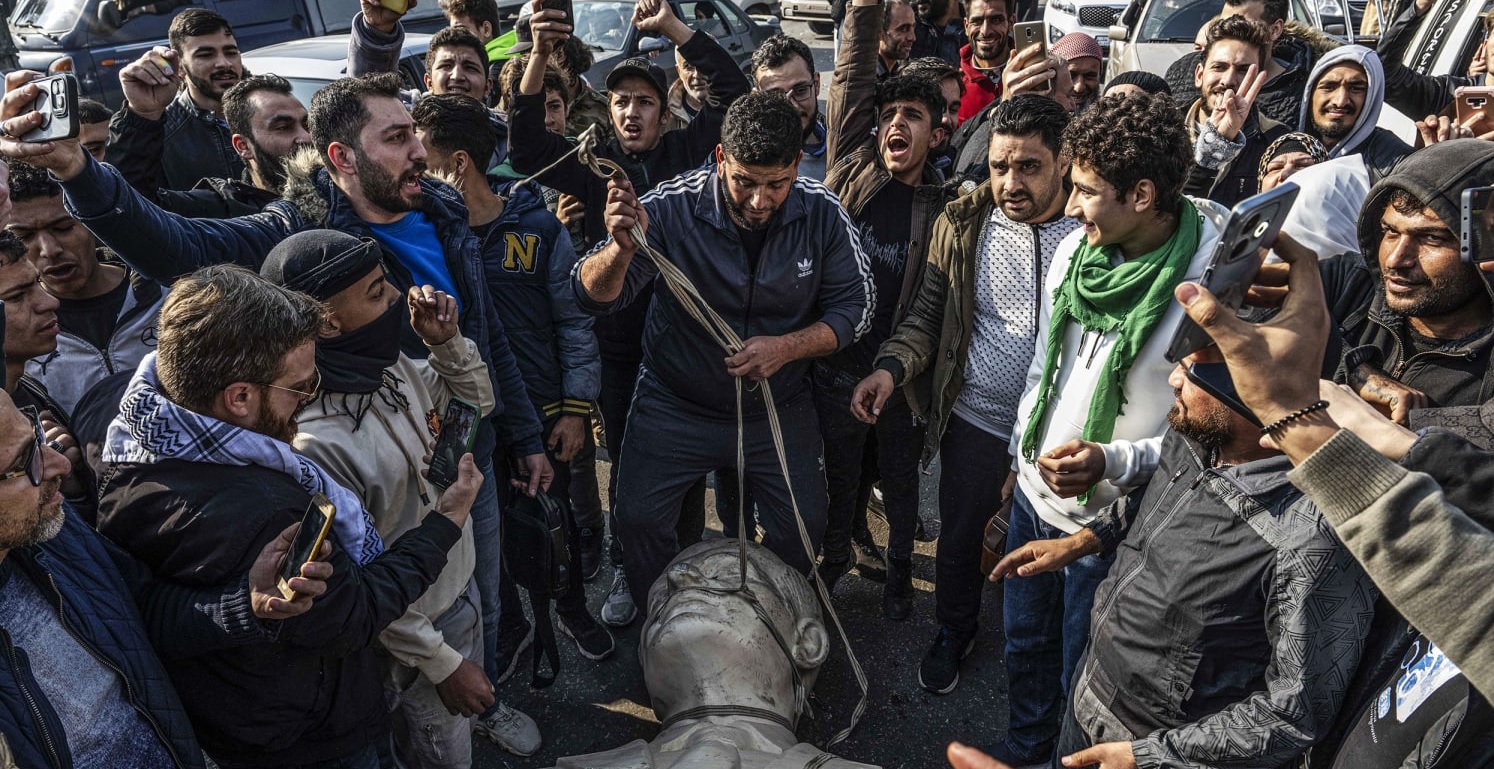


Alwaght- A year after fall of President Bashar al-Assad of Syria, Damascus is now an ally of the West, departing from its long-held position in the opposite camp. But this alliance with the West has not ended the deep-seated public discontentment.
A year after a new government took the power in Damascus still many regions are suffering from structural crisis and devastation of infrastructure. In a speech at Umayyad Mosque marking his first year in power, interim Syrian President Ahmad al-Sharaa reiterated his promise of reconstruction of the country to all Syrians, but it seems that he just talks the talk.
Massacring a large number of the Syrian army and security forces and political figures of the previous government has been the ordinary job of the current rulers of Damascus, and despite claims of general amnesty, still many of the military officials of the al-Assad government are being killed. Actually, the tensions in Syria are still rising.
Deeper gaps in Syria
Despite al-Sharaa's success in securing Western backing, violence within Syria has intensified and divisions have deepened.
In March, a four-day massacre by Syrian government forces and other armed factions, primarily targeting Alawite civilians along the Syrian coast, besieged this religious minority. The killings continued. Then, in July, another massacre against Druze civilians in the southern province of Suwayda sparked widespread alarm. Since the massacres, Suwayda has been functionally severed from the rest of Syria. Residents have hardened their stance against Damascus, and Druze leader Hikmat al-Hijri is now demanding autonomy.
In mid-November, Syrian authorities staged public trials of Bashar al-Assad's supporters. Masked and shackled figures were paraded before cameras in these court proceedings.
Human rights observers argue that Syria's new government has failed to craft a national strategy for transitional justice. The opportunity is slipping away, they say, as actors within the new regime themselves have turned to suppressing and even killing opponents.
Return of authoritarianism
Many Syrians believe that Syria is now suffering from a worse authoritarianism. Alla Ibrahim, a civil activist, from Homs told The Guardian: "A year after new government assumed power, where would we shelter if the massacare and assassinations continue?"
Many of Syrians argue that justice is now a big challenge under the new rule and if the violations continue, the situation will grow worse than before. Civil activists warn that in the new Syria, there is little mention of democracy and the new constitution grants sweeping powers to the president, while the recent parliamentary elections were arranged in a largely ceremonial way without people voting to elect their representatives. The al-Sharaa-influenced committee selected two-third of the members of parliament and the interim president himself appointed the remaining one-third of the MPs.
Rights activists are speaking out against the political approach of the new government in Damascus, arguing that al-Sharaa’s government is creating a new security and political apparatus that watches all.
Ridwan Ziyadeh, a Syrian author, said that some existing institutions are trying to set up a new system more authoritarian than before. They do not allow political parties to act and nobody can arrange a political meeting without the political office of al-Sharaa.
Tensions in southern and Kurdish regions
A year after the fall of al-Assad's government, and despite a March agreement signed between Damascus and Kurdish-majoroty Syrian Democratic Forces (SDF) in northeastern Syria intended to integrate Kurdish forces into the new Syrian army, persistent tensions continue between the new Damascus government and the Kurdish factions.
Meanwhile, although al-Sharaa has stated he does not seek conflict with Tel Aviv, Israeli Prime Minister Benjamin Netanyahu remains deeply skeptical of Syria's new government. Israeli forces have repeatedly bombed areas in southern Syria. The Israelis have even occupied a buffer zone in southern Syria that was previously under UN supervision, and have carried out successive airstrikes and incursions into Syria since al-Assad's fall. Currently, security negotiations between Damascus and Tel Aviv are stalled, and parts of southern Syria remain effectively under Israeli occupation.
Syria with highest landmine casualties
The remains of Syria civil war are seen everywhere. It is reported that since al-Assad’s fall in December last year, at least 590 were killed in the country by the landmines, including 167 children, making Syria the country with highest rate of casualties because of landmines in the world in 2025.
Reuters has reported that fatalities and injuries caused by landmines and unexploded ordnance in 2025 have reached their highest four-year levels.
Economy in coma
Over the past year, Syria's economy has failed to emerge from crisis. Despite the lifting of most Western sanctions, the economic engine remains stagnant.
Although Persian Gulf Arab monarchies have pledged to invest in reconstruction projects, little has materialized on the ground. The World Bank estimates the cost of rebuilding Syria's war-torn areas at $216 billion.
Also, while a large number of internally and externally displaced Syrians have returned to their hometowns over the past year, the most devastated regions largely remain abandoned ghost towns.
The UN Refugee Agency reports that over 1 million refugees and nearly 2 million internally displaced Syrians have returned home since al-Assad was toppled last year by Western-backed militias. But, with no jobs and no reconstruction, some may find themselves with no option but to leave the country.