


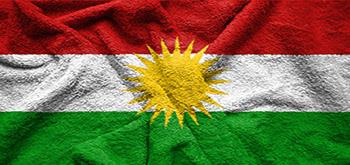





Alwaght- Iraqi legislators have called on central government to deploy troops to areas disputed with Kurds as the warn-torn country’s semi-autonomous Kurdistan Region is holding an independence referendum in defiance of strong objections from Baghdad and the international community to scrap the vote.
Hakim Abbas Mousa Abbas al-Zamili, a legislator from the Sadrist Movement, said on Monday that the parliament had approved several tough measures in response to the contentious Kurdish independence vote.
He added that in line with these measures, Baghdad would have to act to “protect Iraq's unity and to deploy troops in all [disputed] areas.”
Disputed regions label covers some regions like the oil-rich Kirkuk and some parts of Diyala and Salaheddin provinces on which the government and Kurds struggle for control and demographic structure determination.
Zamili further stated that the measures also called for the closure of all border crossings with the Kurdish region.
A total of 12,072 polling stations have opened at 8:00 local time (0500 GMT) Monday where more than 5.3 million are eligible to vote. Polls will remain open for 12 hours.
The stations are dotted across the three provinces of Erbil, Sulaimaniyah and Dohuk that form the Iraqi Kurdistan Region as well as in disputed bordering zones.
Initial results are expected to be announced 24 hours after the vote.
The Iraqi parliament considers the Kurdish independence referendum as “unconstitutional” and has called for punitive measures against all Kurdish officials and civil servants involved in it, the Iraqi lawmaker pointed out.
Protests against Kurdistan referendum
As the voting got underway in Kurdish-populated regions, Iraqis elsewhere took to the streets in protest, saying the referendum aimed to divide their country.
Hundreds of people protested in Al Khalis city of Diyala province, urging the central government to immediately intervene to stop the referendum.
According to Iraq’s al-Sumaria news website, two towns in Diyala have not participated in the referendum.
A local source said Sadiyah, a disputed territory claimed by both Baghdad and the Kurdistan region, had announced that it would not hold the vote. The town of Mandali, 90 km east of Baqubah, also refused to organize the plebiscite after a ruling by its city council.
Iraqis also demonstrated against the referendum in Alqosh, stressing that it will remain an Iraqi town.
Neighboring countries have voiced their opposition to the Kurdish referendum plan.
Iran has denounced the “unilateral” scheme for independence, underlining the importance of maintaining the territorial integrity and stability of Iraq and insisting that the Kurdistan Region is part of the majority Arab country.
Also on Sunday, Iran closed its airspace to all flights to and from the Kurdish region at the request of the Iraqi government.
Turkey has also opposed the referendum and warned that the disintegration of Iraq has the potential to turn into a major global conflict.
The Kurdistan Region's referendum plan has also drawn large-scale criticism internationally.
Earlier this month, United Nations Secretary General Antonio Guterres urged Iraqi Kurdish leaders to scrap the vote which he said would undermine the ongoing battle in the Arab country against Daesh.
On September 13, the Arab League rejected the plebiscite as an illegal measure that would pose further threats to security in the already volatile Middle East.
The European Union also cautioned political parties in Iraq's semi-autonomous Kurdistan Region against holding the independence referendum.
The US, which has deployed a contingent of military forces to a base in the Kurdistan Region, has also opposed the referendum.
However, many observers view the vote in line with a long-pursued Israeli-US agenda to partition regional states.
The Israeli regime has openly come out in support of the referendum, saying it endorses an independent Kurdish state.
Iraqi Vice President Nouri al-Maliki has reacted by saying that Baghdad will not tolerate the establishment of "a second Israel."
Ankara not recognizing Kurdistan referendum
As voting started, Turkey said it does not recognize the referendum and will view its results as null and void.
Turkey’s Foreign Ministry said in a statement that it would take "all measures" if the plebiscite generated threats to Turkey's national security.
"We stress again that we will take all measures arising from international law and the Turkish parliament's authority in the face of every kind of threat to our national security in Iraq generally," it said.
The statement stressed that the Kurdistan Regional Government (KRG) was threatening peace and stability in Iraq and the whole region.
The ministry also advised Turkish citizens in the three Iraqi Kurdish provinces to leave as soon as possible if they are not obliged to stay.
Turkey’s Customs Minister Bulent Tufenkci said tight controls have been imposed on traffic at Habur border gate with northern Iraq.
Earlier, the NTV broadcaster said Turkey had blocked access into the country’s southeast from northern Iraq at the Habur border gate.