










Alwaght- Over the past decade, the UAE has transformed from a peripheral actor to an effective regional power, and in this path it has gone beyond West Asia. South Caucasus has been one of the new regions with geopolitical significance grabbing Abu Dhabi’s attention.
One of the signs of this attention is the boost of the Baku-Abu Dhabi relations, to an extent that in recent months the officials of two countries increased their mutual visits to a meaningful degree.
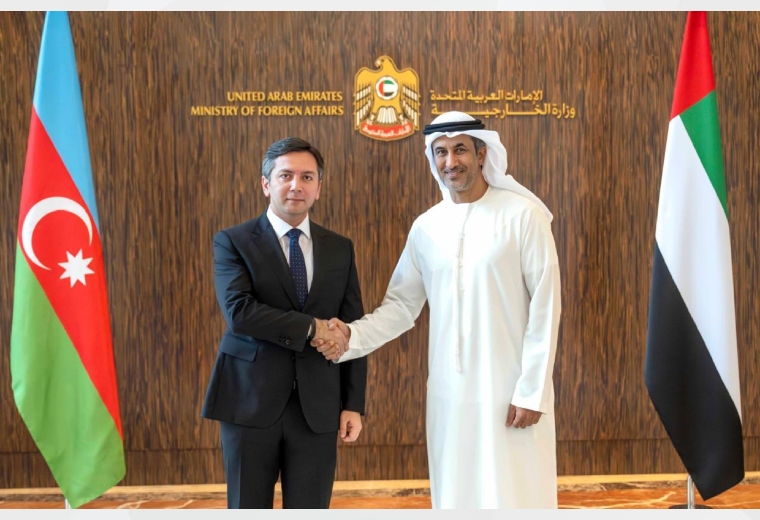
Continuing this approach, last week, a joint meeting was held between the UAE’s Minister of State Saeed Al-Hajeri and Azerbaijani Foreign Minister Yalchin Rafiyev in Abu Dhabi.
The two sides described the meeting as an important step in quicker boost of bilateral relations. The Emirati foreign ministry in a statement said that the “Strategic Committee” between the two countries has “underscored the depth of mutual partnership and the common strategic view”, adding that the two countries are ready to enhance their interactions in top priority areas through a specialized institutional platform.
The meeting saw the two parties discuss the landmark achievements of 2025 that now form the foundation of the new UAE-Azerbaijan relationship. These include the signing of the Comprehensive Economic Partnership Agreement (CEPA), the announcement of a comprehensive strategic partnership, and a series of high-level reciprocal visits.
Furthermore, the sides agreed to establish subcommittees across five key areas: politics and diplomacy; economic cooperation; defense and law enforcement; humanitarian fields (education, culture, and advanced technologies); and energy cooperation and sustainable development.
The meeting concluded with an agreement to hold the committee’s next meeting in Baku, a move underscoring their shared commitment to sustained dialogue and collaboration.
However, the signs of moving in the path of renewed Baku-Abu Dhabi partnership extend beyond political talks, with economic ties surging exponentially. Official UAE figures show bilateral trade jumping from $979 million in 2022 to $1.64 billion in 2023, a striking 68 percent year-on-year increase. Trade climbed again in 2024, reaching $2.2 billion, confirming a clear and accelerating trend of economic expansion.
Given Azerbaijan’s oil and gas capabilities and the UAE’s interest in energy investments, a significant portion of this trade involves petrochemical products and cooperation in renewable energy. Partnerships in construction projects, port development, and new technologies also form a vital part of the economic relationship.
Tourism is playing a key role in strengthening bilateral ties. UAE Ambassador to Baku, Mohammed Al Bloushi, noted, “In air transport between the two countries, UAE national carriers operate about 28 direct weekly flights, and Azerbaijani airlines operate 14 flights per week.” According to 2024 statistics, 48,888 Emirati tourists visited Azerbaijan, while 115,189 Azerbaijani tourists visited the UAE, a clear demonstration of growing economic relations between the two nations.
Finding a foothold in Caucasus
The strategic position of Caucasus in the competition of the world powers has motivated the UAE to seek expansion of influence in this important region. Meanwhile, Azerbaijan, due to its rich energy resources and special place, can help Emirates with this aim. So, Abu Dhabi’s view to Azerbaijan has gone beyond the borders of an ordinary relationship and is falling into a long-term plan to establish a political, economic, and even security presence in the region.
The Caucasus, situated at the crossroads of key energy transit routes and connecting Europe, Russia, and West Asia, holds the potential to become a critical platform for nations seeking to enhance their geopolitical standing and expand regional influence. UAE is actively pursuing this strategy, aiming to secure a significant role in the region’s affairs, particularly within the energy sector.
From the UAE’s perspective, Azerbaijan possesses unique potential in fossil fuels. Its substantial oil and gas reserves, stable pipeline infrastructure, and existing links to European markets make it an ideal base for investment. Over the past decade, Abu Dhabi has diversified its foreign partnerships by engaging in energy cooperation, infrastructure development, and logistical initiatives. Azerbaijan, with its established export routes and strategic location between the Caspian and Black Seas, provides a favorable conduit for expanding Emirati influence in the Caucasus.
Abu Dhabi has also thrown its support behind the so-called Zangezur Corridor, a project connecting mainland Azerbaijan to Nakhchivan and onward to Turkey. The UAE has entered into related infrastructure projects, a move that signifies its practical involvement in the geopolitical competition of the South Caucasus, a region where Iran as an actor with deep-seated influence faces its own challenges.
The presence of Emirati companies in Azerbaijan’s industrial and energy projects yields not only economic benefits but also positions the UAE to demand a greater stake in the Caucasus’s geopolitical equations.
Simultaneously, this active engagement in Azerbaijan has enabled the UAE to bolster political ties with other Caucasian nations and assume an extra-regional role aligned with its foreign policy ambitions. In essence, by leveraging Azerbaijan’s combined economic and geopolitical advantages, Abu Dhabi has opened a new path to elevate its status within regional power dynamics.
Baku-Abu Dhabi’s play in Tel Aviv’s game
Their relations are not limited to economy and the two countries over the past few years have ventured in other areas, especially Security and military.
Though their military and security relations are still fledgling, the role of Israeli regime as a third-party actor that complements Baku and Abu Dhabi ties within a trilateral coalition is of special significance.
The UAE and Azerbaijan, both normalized ties with the Israeli regime, are seeking to lure other Muslim countries into normalization, thinking that the broader the network of bilateral cooperation, the easier the normalization process. So, a trilateral cooperation has begun to emerge, resting on common interests to redefine the power balances in Caucasus and West Asia.
The Gaza war laid bare the strategic links between the Israeli regime, Azerbaijan, and the UAE. At the height of Tel Aviv’s energy and trade constraints, Baku supplied a significant portion of the regime’s oil needs, averting a full-blown energy crisis. Simultaneously, Abu Dhabi facilitated a land transit route from the Persian Gulf to the occupied territories, easing logistical and economic pressures for the Israelis.
This critical cooperation, extending beyond bilateral relations or symbolic gestures, reveal the consolidation of an active trilateral political-economic and security network. This network pursues objectives that go beyond mutual interests.
Threats to Iran
As Baku-Abu Dhabi-Tel Aviv triangle grows firmer, Iran takes effects from their security partnership more than any other player. Azerbaijan’s proximity to Iran and the sensitive security conditions of Iran’s northwest make any foreign presence near Iranian borders of strategic significance to Tehran. In recent years, Azerbaijan’s soil has become one of the most important intelligence and security activities of the Israeli regime and Abu Dhabi-Baku partnership has strengthened these activities.
Tel Aviv’s access to infrastructure and communication routes in the South Caucasus could enhance its ability to monitor Iran’s military and infrastructure developments. The UAE’s investments in technology and security sectors within Azerbaijan may further reinforce this pattern. Although these activities are often presented under the guise of economic cooperation, their security dimensions are undeniable.
On the other hand, Baku government itself is trying to, on the strength of Israeli regime and UAE, strengthen its position against Tehran as it holds geopolitical disagreements with Iran especially when it comes to Zangezur Corridor project. A combination of these developments has made Baku-Abu Dhabi-Tel Aviv security triangle present a serious challenge to the security balance around Iran, a challenge that not only includes intelligence and economic pressures on Tehran, but also can leave long-term and deep impacts on Caucasus stability and Iran’s peripheral environment should they sustain.