














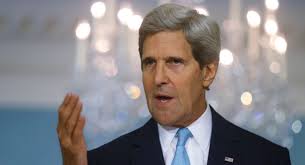


Alwaght- Secretary of State John Kerry says that the US government and its Western allies are making Progress in reaching a nuclear deal with Iran. Kerry defends the US policy in carrying on with the negotiations, stressing that if Washington abandons the talks, then the sanctions against the Islamic Republic will not hold.
The US policy appears floundering again to the public. The US government today has fallen between two pliers, not knowing what to do. The leading party in the US, the Democrats, support the nuclear negotiations with the Islamic Republic, and believe that the nuclear talks is the most appropriate solution for the Iranian issue. On the other hand, the Republicans, especially those with Zionist-orientations, are on their own, opposing the US President Barack Obama’s policies regarding the negotiations, and requesting additional sanctions against Tehran, which is consistence with the Zionist desire.
The Republicans ask for more sanction that have failed already, to prevent Iran from developing its nuclear program, rather than, it had a reverse impact on the Iranian nation, strengthening its independence.
Speaking to senior US diplomats in Washington on Wednesday, Kerry assailed the deal-opponents saying, “Anybody standing up in opposition to the talks has an obligation to stand up and put a viable realistic alternative on the table. And I have yet to see anybody do that.”
"What happens if, as our critics propose, we just walk away from a plan that the rest of the world were to deem to be reasonable?" Kerry continues to ask. "Well, the talks would collapse. Iran would have the ability to go right back spinning its centrifuges and enriching to the degree they want... And the sanctions will not hold."
The US Secretary of State said that the whole point of years of US-Western sanctions was to limit Iran’s nuclear program progression. Kerry adds, that Obama administration’s job was to “provide an agreement that is as good as we said it will be; that will get the job done; that shuts off the four pathways to [what so called] a nuclear weapon." Kerry believes that other alternatives of diplomacy could push Iran to expand its nuclear program.
As an evidence on Iran's nuclear capabilities, Kerry pointed out that Tehran was able to reach 160 centrifuges in 2003, and to more than 19 thousand centrifuges today, however not all of them active at this point. Such evidence demonstrates that the nuclear ability of the Islamic Republic is enormous.
The US secretary of State also highlighted the challenges his team has faced to reach a historical deal, many think it would end years of dispute over the Iranian Nuclear program.
Kerry and Iranian Foreign Minister Mohammad Javad Zarif and their teams held talks on Thursday in Lausanne to overcome significant gaps after nearly two years of negotiations between Iran and the P5+1 group. Negotiators on Kerry’s team are optimistic about reaching an agreement by the end of March.
The two parties have set themselves a March 31 deadline for the outline of a final accord they hope to seal by the end of June. Iranian Supreme Leader Ayatollah Sayed Ali Khamenei and have spoken against what would be a third extension of the talks. The Supreme Leader is putting pressure on his team to get the insulting US sanctions lifted on day one of any deal.










