















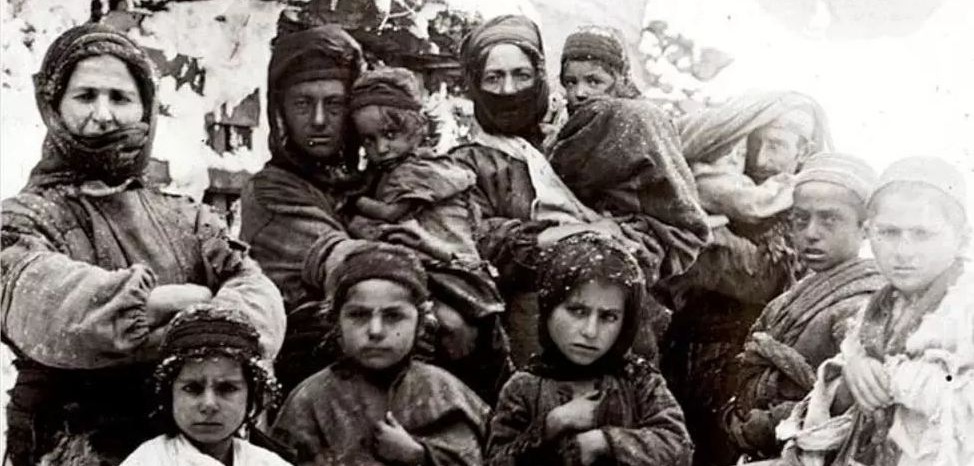


Alwaght- On Friday, the US President Donald Trump published a statement in which he remembered the massacring of Armenians in 1915. He used the phrase “meds yeghern” which in the Armenian language means the great crime.
In the most important part of his statement, Trump said: “On this day, we bear witness to the strength and resiliency of the Armenian people in the face of tragedy. We are fortunate that so many Armenians have brought their rich culture to our shores and contributed so much to our country, including decorated soldiers, celebrated entertainers, renowned architects, and successful businesspeople.”
The significance of Donald Trump’s new stance is that just contrary to the Congress that in December 2019 recognized the “Armenian genocide” he did not use the word genocide to describe the incident.
Upon the release of the statement, Turkish officials reacted. The country's ambassador to Washington Serdar Kilic in response said: “This statement, made with domestic political considerations, has no validity for us. We reject the claims put forward in this statement.”
The statement raises a question: What are the impacts this statement leaves on Turkish-American relations? Before answering this question, we need to in brief shed light on the Armenian genocide and the Turkish reasons in self-defense.
Armenian genocide and Ottoman Turks’ self-defense claims
The Armenian genocide describes a set of measures and killings that took place in a three-year period in the final years of the Ottoman Empire in a variety of ways. Armenia has always argued that the actions by the Ottoman Empire that had Armenia as its subject led to the death of 1.5 million Armenians. Armenians say that these people between 1915 and 1917 went victims to systematic massacring, displacing, and impoverishing.
According to the claims, the Ottoman Empire in WWI systematically persecuted and massacred the Armenians. Despite that, there is no consensus among the political observers and historians about the incident. Some historians suggest that the Ottoman measures took some hundreds of thousands of lives while others insist that some 1.5 million Armenians were killed.
So far, over 30 countries recognized the Armenian genocide. For the first time, France as a European power talked about the Armenian genocide in 2001. Germany’s parliament in 2016 followed a similar path, something caused a diplomatic crisis between Berlin and Ankara. Three years after Germany, the US Congress recognized the genocide.
Although every year new countries join the Armenian genocide recognition, the Turkish officials during the whole decades of the modern-day Turkey, which emerged from the ashes of the Ottoman Empire in 1924, denied the accusations of genocidal actions against the Armenians. They argue that the developments associated with Armenians were simply part of the WWI process. To put it differently, although the Turkish government approves of the happening, it denies that it was systematic. It keeps responding severely to any stances describing it systematic.
Proof that US advocacy to human rights is politically-motivated
The Trump statement in the present situation can be viewed from the viewpoint of criticism against the US claims that it supports human rights. When on December 12 the Congress voted to approve the recognition of the Armenian genocide, Trump simply stood in the face of the lawmakers and rejected to officialize the act in order to preserve the relations with President Recep Tayyip Erdogan of Turkey. A couple of months later, the US human rights approach appears to have changed and Trump, motivated by the policy objectives, is accentuating the Armenian genocide.
This approach shift has a clear thing to tell the world: Human rights, as more than once has been made clear to the world by the American behavior and double standards, have a political concept in the US and are set with political and economic interests and ambitions. The recent Trump stance is no exception.
Hopes about the continuation of Washington-Ankara alliance shattering
The recent statement by the US leader can mark an end to the strategic alliance of Washington and Ankara. Although over the past years the two countries’ ties were frayed following a wide range of differences over an array of issues, there were hopes of mending. But now Trump’s statement could mark an end to their troubled friendship. Actually, either Trump wins a second term or the Democratic Joe Biden wins the November 3 presidential election in the US, no positive outlook for the American-Turkish relations could be anticipated.
The decline of bilateral cooperation gathers pace
The most important outcome of chill in the two countries’ relations over the past months is the downturn of the economic and military partnership that has been up for decades as the two NATO members developed firm trade and military relationship.
Factors like the Turkish purchase of the S-400 missile defenses from Russia as the strategic rival to the West, Turkish military operations in northern Syria against the US-aligned Syrian Kurds, and mismatch of Ankara’s policies with the overall NATO policies in West Asia and even on the international stage all certainly negatively influence the trade, security, and military relations of the two countries.
It can be concluded that in the near future, Trump’s highlight of the Armenian genocide will work as a propellant of the US-Turkey movement towards cooperation scale-down.










