














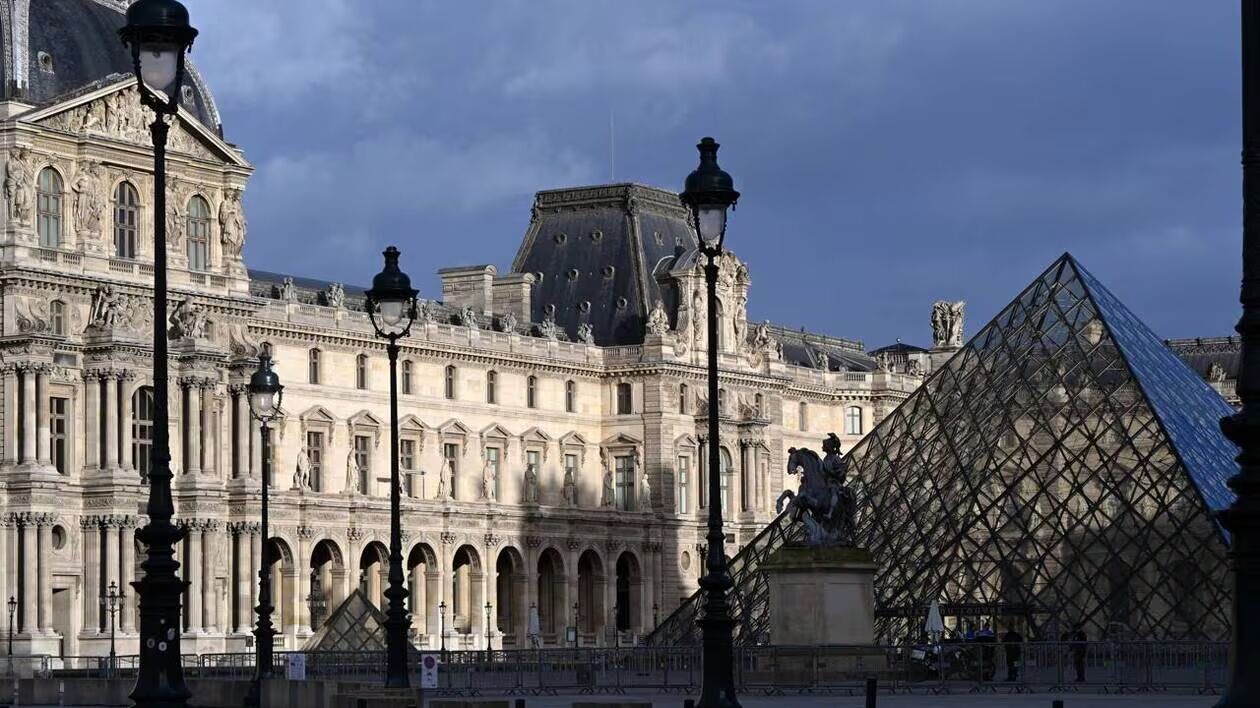


Alwaght- It may be hard to believe, but the world’s biggest museum in France is these days grappling with major challenges. From heist to employee strikes are challenges that these days are crippling the Louvre Museum of Paris as the most prestigious and prominent museum in the world. Louvre is not just a museum, it symbolizes the French cultural influence.
The museum as the symbol of archeological and cultural identity of France and as a massive historical archive, and an unchallenged economic powerhouse in Europe. Millions of tourists annually travel to France to visit this place and so its role in the French tourism economy is key. Reports suggest that Louvre is the world most-visited museum, between 9-11 visiting it every year. This grand museum hosts around 36,000 artistic and archeological, and historical pieces from around the world, displaying them in halls reaching 73,000 square meters
Economic significance of Louvre
Based on a report published by the Amazing Museums website, the estimated revenue generated by the Louvre Museum for the French economy includes the following:
- Direct ticket revenue: €100 to €150 million (based on average ticket price and number of visitors)
- Accommodation revenue (hotels, rental properties): €1.5 to €2 billion euros
- Food, beverage, and hospitality revenue: €750 million to €1 billion (visitors regularly patronize Parisian cafes and restaurants.)
- Retail and souvenir sales revenue: €500 to €750 million (museum shops, boutiques, and general shopping centers)
- French transportation sector revenue (domestic and international): €1 to €1.5 billion (airline tickets, train, taxi, metro)
Total annual economic impact in France: €4 to €5.5 billion billi in revenue (not including other indirect revenues).
France’s soft power symbol faces cash crunch
Louvre Museum is not just a powerful economic engine but a definition of the French cultural position in the world. Though it is facing serious challenges these days, Foreign Policy has written that since 2000s, Paris has been using this museum as an instrument for soft power outside the country. A branch of the Louvre Museum is located in Abu Dhabi, the capital of the UAE. Its establishment was previously approved in 2007 by then-French President Jacques Chirac and was inaugurated a decade later by the current French President, Emmanuel Macron. Part of the agreement between France and the Emirates stipulates that France will receive a substantial annual sum of $1.1 billion for the rental of the Louvre name in the Emirates over a period of 30 years. As part of this agreement, the Emirates also placed an order for 40 Airbus A380 aircraft and billions of dollars worth of weapons with France to secure Paris’s approval for the Louvre name rental.
Between 2006 and 2009, France also managed to sign a contract with the High Museum of Art in Atlanta, USA, under which the Louvre Museum granted permission to display 200 of its works, including historical paintings, in the US. In return, it received $6.4 million to assist in the renovation of art galleries.
Foreign Policy reported in its analysis that although the Louvre, like France itself, has a glorious past, these days it faces significant challenges amid budget and political crises with no clear solution in sight. The French government is grappling with austerity measures and lacks sufficient funds to cover the estimated $1 billion required for the Louvre’s renovation.
Large barriers ahead of Louvre
In addition to economic woes, Louvre is currently facing multiple other challenges.
Possible shutdown: The museum is now facing open strike of its employees. CNEWS reported that Louvre staff strike crisis is deepening and despite talks between the unions, the management of the museum, and the culture ministry, the employees are preparing for unlimited strike. After the June 16 strike that came in protest at overcrowding and critical job conditions and lasted for hours, the planned strike will be the second in a year.
If the labor strikes persist and expand, there is a possibility of the Louvre Museum closing. Reports indicate that approximately 2,200 employees are facing significant grievances, including overcrowding (with around 30,000 visitors per day), recurring building damage in need of repair, and insufficient wages.
According to three unions that have called for the strike, there is strong criticism of the “ruthless human resources management and contradictory directives.” In addition to demanding pay raises, the strikers are calling for an end to the unstable hiring of contract workers. They argue that “systematic hiring with permanent contracts” would allow the museum to properly meet the ongoing needs of its staff.
Partial closure: Over the past year, sections of the Louvre Museum have also been forced to close due to deterioration. To date, one public gallery and a section of staff offices have been shut down, and museum management announced this week that access to second-floor offices will be blocked due to infrastructural issues and building decay.
It Is further anticipated that additional sections of the Louvre will gradually close, with these shutdowns attributed to the structural weakness of the museum building.
Security weakness: For years, French and Western officials have presented the Louvre Museum as a symbol of advanced security. In official reports, the museum has been described as one of the most secure cultural sites in the world. Its security systems have been portrayed as a virtually impenetrable combination of cutting-edge technology, such as motion sensors and intelligent cameras, supported by highly trained guards. However, a recent theft at the Louvre has called all these security claims into question. During the recent heist, thieves used a crane and power tools to gain entry through a window, exposing serious operational flaws in the Louvre’s security system, despite official claims of comprehensive protection. Post-theft official assessments have since rated the museum’s security apparatus as “outdated and insufficient,” revealing that only one-third of the museum’s galleries are actually covered by surveillance cameras. On the day of the theft, the perpetrators accessed a second-floor balcony using an industrial lift. They then used tools such as a power saw to break through a window and enter the Apollo Gallery. The entire operation, completed in less than seven minutes, highlights glaring weaknesses in the museum’s monitoring and protective systems.