















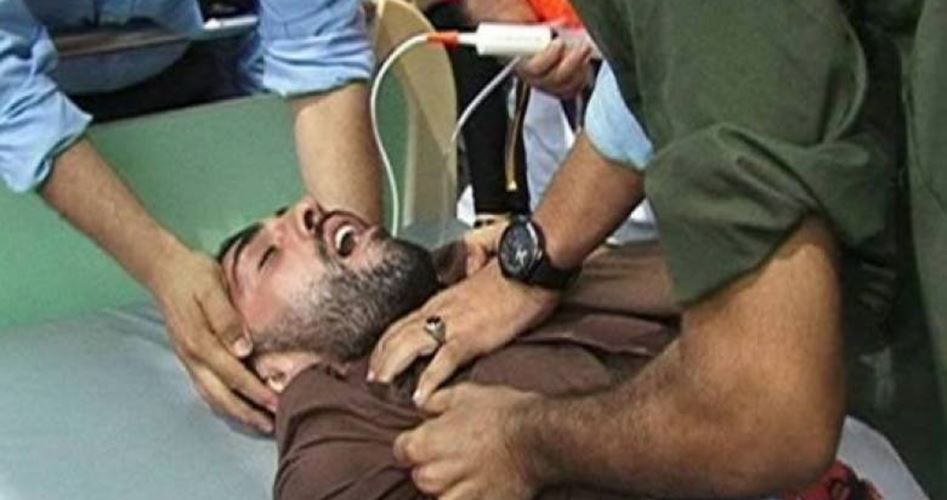


Alwaght- Palestinian activists called on the World Health Organization (WHO) to intervene against Israeli regime's potential force-feeding of the Palestinian prisoners who staged an open-ended hunger strike since 17 April 2017.
According to palinfo.com, the head of the Prisoners and Ex-Prisoners Affairs Commission, and Qaddoura Fares, the head of the Palestinian Prisoner Society, asked WHO to help Palestinian prisoners who went on hunger strike demanding basic rights, such as an end to the policies of administrative detention, solitary confinement and deliberate medical negligence.
The call on the WHO followed the news circulated by the Hebrew media about the preparations started by the Israeli regime authorities to bring doctors from foreign countries to force-feed the striking prisoners. The Israeli Doctors Syndicate refused this policy which may lead to fatal consequences.
The media committee formed by the Prisoners and Ex-Prisoners Affairs Commission and the Palestinian Prisoners Society affirmed in a statement that the international law prohibits this kind of feeding and that prisoners have the right to go on a hunger strike as a means of protest.
The committee considered the force-feeding policy a license to kill the Palestinian prisoners under the pretext of protecting them, noting that the two prisoners Rasem Halawa and Ali al-Jaafari were killed in 1980 in Nafha prison after being force-fed while on hunger strike.
It pointed out that the force-feeding process is done through a tube put in the mouth or the nose after the prisoner is tied to a seat, adding that this process is usually accompanied by bleeding for being done repeatedly.
The statement said that Israel used force-feeding against the Palestinian prisoners in three previous hunger strikes between 1970 and 1980 then it ceased to be used following a ruling by the Israeli High Court following the death of Halawa and Jaafari. However, the Israeli Knesset reapproved this policy in 2015.
Hundreds to join hunger strikers
The Islamic Jihad Movement’s leading committee of prisoners said that hundreds of Palestinian detainees in Israeli jails would join the hunger strike battle in the next few days.
In a press release on Friday, the committee stressed the need to back up the hunger strike as it reached a very critical stage without any response to the just demands of prisoners.
The committee urged the national factions, human rights groups and the world’s conscientious people to make concerted efforts to support the prisoners in their struggle for better prison conditions.
Their primary demands include more frequent and lengthy family visits, better incarceration conditions such as improved medical care, access to telephones and an end to solitary confinement and administrative detention without charge or trial.
Nearly 1,500 Palestinian prisoners in Israeli jails started the Freedom and Dignity hunger strike on 17th April coinciding with the Palestinian Prisoner Day to regain their basic rights which were withdrawn by the IPS and which they had clinched in previous strikes.
6,500 Palestinian prisoners are being held in Israeli jails including 15 women, 300 children, 500 administrative detainees and 1,800 sick prisoners.










