









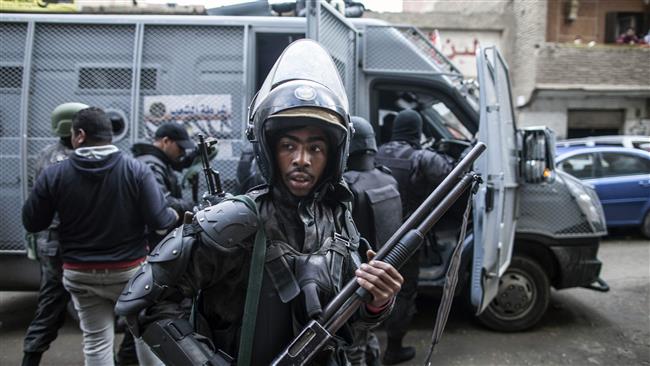


Alwaght- Amnesty International has accused many European countries, including the UK, France, Germany, Italy, Spain of flouting suspension on arms transfers to Egypt, risking complicity in a wave of unlawful killings, enforced disappearances and torture.
"Despite the suspension imposed after hundreds of protesters were killed in a show of grossly excessive force by security forces in August 2013, 13 out of 28 EU member states have remained among Egypt’s main suppliers of arms and policing equipment. It is feared that EU Foreign Ministers could soon decide to scrap the current, already insufficient, suspension," Amnesty International said today.
“Almost three years on from the mass killings that led the EU to call on its member states to halt arms transfers to Egypt, the human rights situation has actually deteriorated,” said Magdalena Mughrabi, interim Deputy Middle East and North Africa Programme Director at Amnesty International.
Holding EU responsible for dire humanitarian situation in Egypt, Amnesty International said “EU states transferring arms and policing equipment to Egyptian forces carrying out enforced disappearances, torture and arbitrary arrests on a mass scale are acting recklessly and are risking complicity in these serious violations.”
In 2014 alone, EU states authorized 290 licences for military equipment to Egypt, totalling more than €6 billion (US$6.77). The items have included: small arms, light weapons and ammunition; armoured vehicles; military helicopters; heavier weapons for use in counter-terrorism and military operations; and surveillance technology.
The Britain-based human right group listed The EU countries who have been supplying arms to Egypt through exports or brokering since 2013 as Bulgaria, Cyprus, Czech Republic, France, Germany, Hungary, Italy, Poland, Romania, Serbia, Slovakia, Spain and the UK.
According to Privacy International, companies from several EU countries, including Germany, Italy and the UK, have also supplied the Egyptian authorities with sophisticated equipment or technologies destined for use in state surveillance, which Amnesty International fears may be used to suppress peaceful dissent and violate the right to privacy.
The Egyptian government has been cracking down on opposition since former President Mohamed Morsi was ousted in a military coup led by ex-military chief and current President Abdel Fattah el-Sisi in July 2013.
Sisi has been accused of leading the suppression of Morsi’s supporters; hundreds of them have been killed in clashes with Egyptian security forces over the past couple of years.