















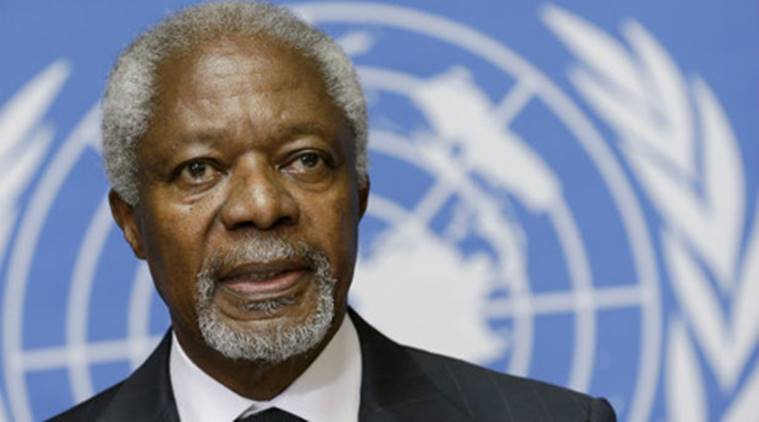


Alwaght- Former UN chief Kofi Annan urged the Security Council on Friday to push for the return to Myanmar of hundreds of thousands of Rohyinga Muslims who have been forced out of their ancestral land in Rakhine state.
Annan, who led an advisory commission to the Myanmar government, said world powers must work with the country's military and civilian leaders to end the refugee crisis.
"I hope the resolution that comes out urges the government to really press ahead and create conditions that would allow the refugees to return with dignity and with a sense of security," Annan told reporters after a closed-door meeting with the council.
"They should not be returned to camps. They should help rebuild," he said.
Annan further said the refugees taking shelter in Bangladeshi border camps needed help to “get their homes back.”
He urged the UNSC to agree with Myanmar’s government on a refugee return “roadmap,” cautioning that if no action is taken, “we are going to have a long-term festering problem” in the region that “can be very serious, down the line.”
In the past seven weeks, an estimated 600,000 people have fled their homes following a military-led genocide campaign in Rakhine State and crossed into Bangladesh. There have been shocking reports of Myanmar troops and Buddhist mobs murdering and raping civilians and torching their villages.
The current crisis erupted on 25 August, when Myanmar’s army backed by gangs of Buddhist extremists brutally attacked Muslims in Rakhine state on the pretext of responding to the killing of security forces. In the ensuing operation, over 6,000 Rohingya Muslims have been killed in what is clearly an organized campaign of ethnic cleansing and genocide.
Myanmar has refused to recognize the Rohingya as an ethnic group, instead claims they are Bengali migrants from Bangladesh living illegally in the country. Myanmar has come under international criticism for failing to stop the ethnic cleansing in its Rakhine state and in turn an exodus that has become the largest refugee crisis to hit Asia in decades.










