














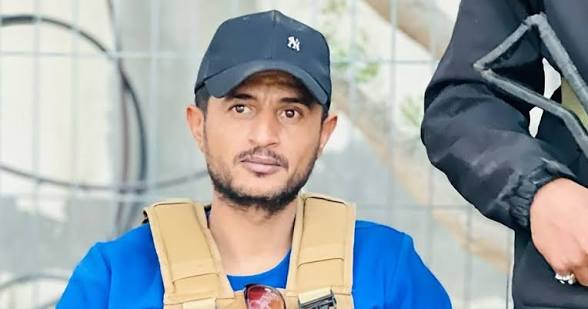


Alwaght- The death of Yassir Abu Shabab, the leader of an anti-Hamas terror group in Gaza was confirmed on Thursday. The death of Abu Shabab, whose militia is backed by Israel militarily and logistically, marks a potential blow to the Israeli plans for post-war Gaza.
Abu Shabab led an armed group that controlled Rafah in southern Gaza. This collaborator with Israel is reported killed when trying to ease tensions between members of a family. An Israeli source reported that death of Abu Shabab came as a result of “infighting”, however .
Two Israeli sources reported that prior to announcing Abu Shabab’s death, Israel had made a failed attempt to transfer him to a hospital.
Abu Shabab was the leader of one of the most prominent Israeli-backed militant groups in Gaza, and his death represents a setback for Israel’s ambiguous plans in the territory. In his early thirties, he had been supported by Israeli security and intelligence agencies as a means to strengthen a counterweight to Hamas and diminish its power in Gaza. In essence, Tel Aviv intended to use his militia to weaken Hamas and act as a potential replacement.
The Israelis also reportedly planned to utilize the armed group led by Abu Shabab, known as the “Popular Forces”, to implement their projects in Gaza during a later stage of a ceasefire agreement. In the final months of the war, the group had taken control of aid flow through the Kerem Shalom crossing in southern Gaza and, through looting relief convoys, sought to dominate the distribution of humanitarian assistance into the Strip.
Killing of a rebel
A source from the Bedouin Al-Tarabin tribe confirmed to the Arabi21 that Abu Shabab, a collaborator with Israeli forces, was killed on Wednesday during an exchange of fire and clashes in the eastern Rafah area. The source also reported that others were killed in the incident.
Another source from the same tribe stated that Abu Shabab killing was carried out by a member of one of the families affiliated with the Al-Tarabin tribe. The motive for the action was described as putting an end to behavior that violated local customs and norms. It is alleged that Abu Shabab was kidnapping and killing members of families who refused to join his group.
The source added that two men from two families opened fire with automatic weapons at Abu Shabab and a number of his companions, resulting in his death and injuring others. The assailants were subsequently killed in the ensuing clash in the area.
Death of collaborator
Hamas, which had previously sworn to target Abu Shabab as a traitor to Palestine, did not claim responsibility for his killing. However, following his death, the resistance movement stated that “this is the inevitable fate of all those who betray their people and homeland and agree to be pawns in the hands of the occupiers.”
In its statement, Hamas praised all those who condemned Abushabab and others for “collaborating” with Israel, adding: “We emphasize that the occupier, just as it failed to protect its own forces, will be unable to protect any of its mercenaries.”
Popular Forces militia group in a statement said that Abu Shabab was not killed by Hamas and that his death was the result of “infighting.”
Meanwhile, Israeli military analyst Amir Bochbot, in an analysis of the incident, revealed that assessments within the Israeli security establishment indicate that Hamas managed to infiltrate one of its own operatives from the Al-Tarabin tribe into Abu Shabab’s militia. This infiltrator is believed to have then lured Abu Shabab and senior militia officials into a trap and engaged them, resulting in the deaths of the militia leader and several others.
Rejoicing Abu Shabab’s death
Following the killing of Abu Shabab, some Palestinian factions in Gaza posted photos of celebrations over his death, images that underscored how widely Abu Shabab’s group was despised among many Gaza residents. Footage also circulated showing fans in a stadium in Qatar cheering the death of him, who is widely recognized as a collaborator with Israel.
After the assassination became public, Palestinian refugees in Ain al-Hilweh camp in Lebanon handed out sweets and chanted religious slogans.
Reports said that residents of Khan Younis in southern Gaza also distributed sweets after news broke of Abu Shabab’s killing.
Meanwhile, a Jordanian activist celebrated the news on social media, writing: “Celebrate, because this should be a lesson for every collaborator inside and outside Gaza.”
In Gaza, the Tarabin tribe issued an official statement after the killing of “Israeli regime’s agent” in Rafah, declaring full solidarity with the Palestinian people and their cause. The tribe described the killing of Yasser Abu Shabab by resistance forces as closing “a dark chapter of treachery and collaboration” with Israel.
The statement stressed that the tribe’s members have always stood with the Palestinian people and would never provide cover for those who foment strife or cooperate with the occupation, even if some try to drag the tribe’s name into actions that contradict its history and values.
The Tarabin tribe added that the killing of Abu Shabab, who it said betrayed his community and assisted the occupying forces, marked the end of a shameful episode, one the tribe insists it is determined to erase through its stance and public position.
Netanyahu boosting ISIS-style militias
According to CNN, a majority of the members of Popular Forces group were deployed to the occupied parts of Gaza by Israel. According to Mohammed Shahadeh, an expert of Palestinian affairs at European Foreign Relations Council, Abu Shabab’s militias has hundreds of members and before retreat to Israeli-occupied parts, it had launched attacks on Hamas-controlled regions and against resistance forces.
Israeli Prime Minister Benjamin Netanyahu had earlier described armed, predatory Gaza factions like the Abu Shabab group as “a good thing,” despite facing domestic criticism for backing what some in Israel called ISIS-like groups.
Two Israeli officials told CNN that Netanyahu pushed forward with the process of arming rebel and terrorist factions, including the Abu Shabab group, without securing approval from the security cabinet. This approach of supporting terrorist groups, the report indicates, has left many within Israel dissatisfied.
The predictable failure of this approach was echoed by Michael Milstein, a former Israeli military intelligence officer, who told CNN: “The outcome was clear. Whether killed by Hamas or in internal clashes among tribes, it was obvious things would end this way.”
CNN further reported that death of Abu Shabab meant the end of the Israeli strategy in Gaza, which was not a real one. Nobody in Israel believed that Abu Shabab will replace Hamas, because Abu Shabab was not important enough and did not enjoy sufficient popularity.
Tel Aviv strategy fails
Reacting to the death of Abu Shabab, Israeli analyst Elvir Levy suggested that the death of this collaborator had totally made things clear. According to him, it is time for Tel Aviv to learn from the past and understand that it cannot count on a few armed bands “for covert and dirty actions” against Hamas. He adds that this trick has never worked and will not work from now on. These remarks by an Israeli journalist reflect the setbacks of the Israeli security policies in reliance on the mercenary groups to counter Gaza resistance.
Avi Ashkenazi, a military analyst, pointed to the army’s inability to protect its proxies, stating: “The military failed to protect the militiamen, and the death of the commander of the largest militia is proof. Unfortunately, Hamas’s propaganda about the fate of collaborators has been successful.”
In an even more scathing assessment, Tzvi Yehezkeli, an analyst for Channel 13, dismissed the entire premise of relying on such figures: “Anyone who thought people like Abu Shabab were capable of governing the Gaza Strip or establishing a stable governing system received their definitive answer today: ‘The elimination of Abu Shabab.’”
Channel 12 in analysis stated that the death of Abu Shabab was a “direct result of Israel’s short-term policies”, adding that it was a noisy failure to the idea of replacing Hamas. The channel added that for long months, such people as Abu Shabab were trained, developed, and gained acceptance and legitimacy of militias to present replacements to Hamas. But finally, they collapsed and Hamas lived on.