






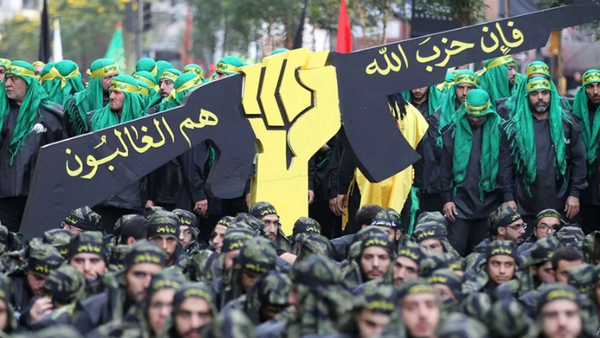


Alwaght- After the recent speech of Hezbollah chief Sheikh Naim Qassem and his emphasis on the issue that the resistance movement reserves the right to respond to assassination of its commander Haitham Ali Tabatabaei last week and that it will decide on the timing of the response, a new climate for speculation around the security and political tensions between Lebanon and the Israeli regime has emerged. Analysts believe that Hezbollah is now assessing a set of operational and strategic options to react precisely and effectively to the Israeli assassination of commander of its elite Radwan Force at a proper time.
Over the past year, Hezbollah has refrained from directly responding to the Israeli aggression due to political and strategic factors. Following the ceasefire agreement last year, Hezbollah’s primary focus had been on rebuilding damaged areas and, to preserve Lebanon’s political stability, it had tempered some of its core demands regarding government formation. The aim was to create conditions for internal calm and strengthen national infrastructure, enabling Lebanon to navigate its overlapping political and economic crises.
However, Israel exploited Hezbollah’s strategic patience, repeatedly violating the ceasefire with continued hostile actions. The assassination of senior Hezbollah commander Tabatabaei, however, crossed a red line and exhausted the group’s strategic restraint. With Israel’s miscalculation leaving no room for further hesitation, Hezbollah now faces a decisive moment.
Statements from Sheikh Naim Qassem have confirmed a shift in the movement’s approach toward Israel. Iran’s ambassador to Lebanon likewise emphasized that Hezbollah’s strategic shift is significant, signaling the group’s intention to deliver a forceful response to the recent aggressions by the occupying regime.
The critical question now is: What form will Hezbollah’s response take, and what scenarios lie ahead?
Response with popular force
To get a clear picture of how Hezbollah’s response will look like, it is crucial to take into account the Lebanese home developments in the calculations of the resistance leaders. Over the past months, Hezbollah has faced a heavy, concerted, and multifaceted campaign of the US and its allies pressing it to disarm. Meanwhile, the scene of this confrontation has majorly been the Lebanese public opinion and the driving force been the Lebanese government. Highlighting the need for arms to be exclusively in the hands of the army, the government practically proposes diplomacy as a root solution to deal with the Israeli aggression and retaking the five points Israeli military still holds since its incursion into Lebanon last year. This approach is widely sold to the world and specifically Lebanese public opinion by Arab and Western media outlets.
As operational options are being weighed, analysts believe that securing broad domestic backing will be a central pillar of any potential move by Hezbollah. Ground realities in Lebanon suggest that public opinion sees purely political solutions to confront a regime that has not honored the November 2024 ceasefire as largely ineffective. As noted by Hezbollah’s Secretary-General, a significant potential exists among internal factions and political currents that view Israel as a common enemy and could be mobilized into a unified front of confrontation.
However, in the current sensitive climate, maintaining and consolidating this domestic support has become strategically critical for Hezbollah.
The resistance movement must now strike a delicate balance of sustaining military and security pressure on the Israeli regime while simultaneously countering any attempts by opposing political factions to exploit the situation for propaganda gains. In this context, the combination of military capability and social legitimacy is seen as the essential formula for guaranteeing the success of any intelligent and strategic response to the occupying enemy.
Attacking Israeli-occupied territories in southern Lebanon
Based on what was said, among the options available to Hezbollah, focusing on the targeting the Israeli forces in the occupied areas of the southern Lebanon is one option. Over the past year, the Israeli regime has occupied five points of Lebanon and made it clear it is planning for long-term stay, a move jeopardizing the Lebanese territorial integrity. A military action to drive the occupation forces out of these strategic points, in addition to garnering home support, will send a powerful political message to Tel Aviv leaders, asserting to them that occupation is costly and the resistance movement will not allow Israeli entrenchment on the Lebanese soil.
In international law terms, such anti-occupation attacks are legitimate as they mainly aim at liberating occupied territories. This choice will allow Hezbollah to disrupt security of the occupying forces to force them out of Lebanon, a move that will considerably shift the battlefield equation.
Attacking Israel’s Mediterranean energy facilities
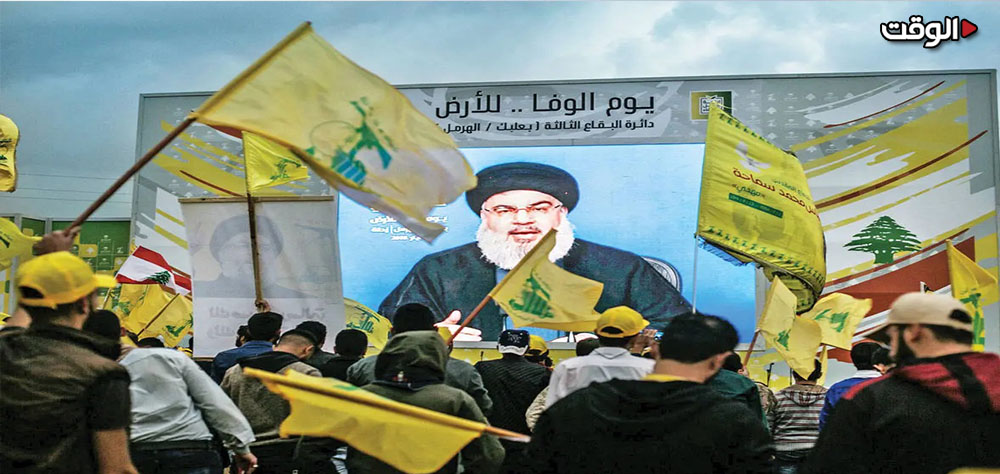
The potential targeting of the Israeli regime’s energy installations in the Mediterranean Sea has emerged as a viable retaliatory option for Hezbollah. These facilities form the economic and energy backbone of the entity and hold significant strategic value. The late Secretary-General of Hezbollah Sayyed Hassan Nasrallah, repeatedly warned during maritime border demarcation negotiations two years ago that Hezbollah would place these vital centers within its crosshairs should Lebanon’s interests be threatened. Today, circumstances suggest the time to act upon that warning may have arrived.
By executing such an option, Hezbollah would achieve dual objectives: inflicting substantial economic pressure on the Israeli enemy, while simultaneously sending a clear security message to Tel Aviv and its backers. The message would underscore that Hezbollah not only possesses the capability to strike critical infrastructure deep inside occupied territories but is also prepared to respond to any aggression against Lebanon with a decisive, precise, and deterrent retaliation, one that could potentially reshape the regional balance of power.
Drone and missile strikes
Also, Hezbollah may restore to massive use of drones and missiles in the next stages of confrontation to strike points in northern Israeli regime, appoint of high strategic sensitivity for Tel Aviv. Israeli regime sees this choice of Hezbollah likely and that is why it has put its air defense systems at high alert on the northern front.
Yoav Zitun, a military analyst at Yedioth Ahronoth, has noted that despite recent losses among senior commanders, Hezbollah retains a substantial arsenal. “Hezbollah can strike Haifa and Tel Aviv with precision-guided missiles and dispatch kamikaze drones toward the Galilee and strategic targets in the north,” he emphasized.
The primary objective of such an operation would be to compel Israeli forces to withdraw from areas near the Litani River and adhere to the internationally recognized Blue Line, the border demarcated by the UN in 2000.
This option carries not only a military dimension but also a clear political message, suggesting that Hezbollah asserts its commitment to preserving Lebanon’s recognized sovereignty and expects the opposing side to respect its international obligations. Applying this calibrated pressure could open the door to renewed diplomatic negotiations and initiatives, demonstrating that any violation of Lebanese sovereignty will be met with a measured, deterrent response.
A less likely, yet operationally plausible, scenario involves Hezbollah launching a limited ground incursion into parts of the Galilee within occupied territory. The objective would be to exert direct pressure on Israeli settlers, disrupt daily life, and create a tangible sense of insecurity deep inside what many Israelis consider “home front” territory.
Historical precedent underscores the profound psychological and operational impact of such moves. According to official figures, during Hezbollah’s sustained attacks on northern occupied territories amid the Gaza war, prior to the December ceasefire, over 70,000 settlers fled the region and have not returned. A new wave of northern operations could trigger another, possibly larger, exodus, compounding the military and economic pressure on Netanyahu’s far-right government.
It seems that Hezbollah would null an array of military and political options instead of relying on just one option. Such an approach can both sent a message of strong deterrence to Tel Aviv and secure domestic and regional support to Hezbollah.
All in all, all eyes are now on Hezbollah’s official standing, and any military move by the movement not only bears a message of deterrence, but also suggests that in dealing with any aggression and threat adopts a smart and strategic approach that can turn the deterrence tide and foist strategic fresh costs on the Israeli regime.