





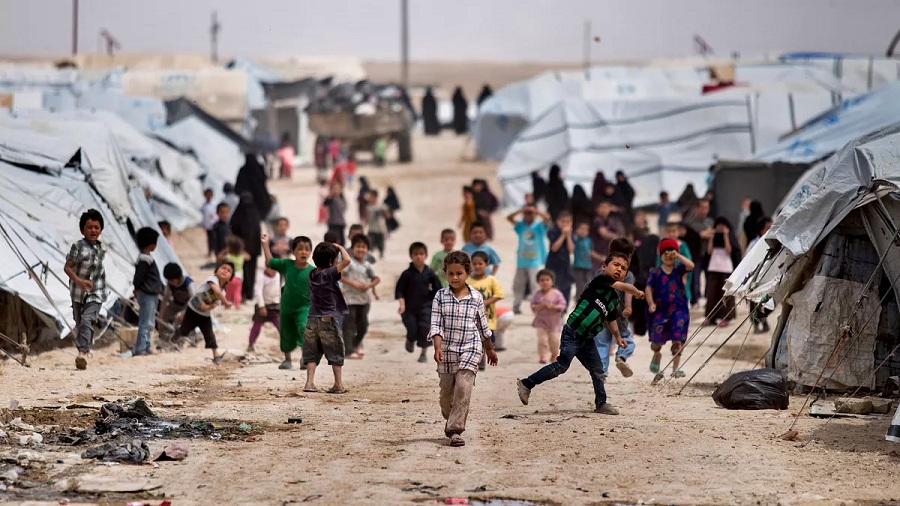


Alwaght- Over 850 Iraqis are set to be repatriated from Syria’s Al-Hawl Refugee Camp to Iraq. A security source active in the camp was cited as saying, adding that the administrative and logistical preparations are being made for the transfer. The source added that on Tuesday, Iraq will send 20 busses to Syria through Al-Walid border crossing for the purpose. According to Syrian sources, the return of this group of refugees from Al-Hawl is to be done under the auspices of the American forces.
Al-Hawl, a sprawling displacement camp in Syria’s northeastern Hasakah province, is home to tens of thousands of displaced persons and family members ISIS terrorist fighters. Operated by the US-backed Kurdish-majority Syrian Democratic Forces (SDF), it stands as the largest facility of its kind in Syria and Iraq for women, children, and men linked to the terrorist group.
Located on the southern outskirts of Al-Hawl town, whose name means “the swamp” in Arabic, the tent city sits near the volatile Syria-Iraq border. Its future remains a geopolitical flashpoint, with most nations refusing to repatriate their citizens detained in SDF-administered camps and prisons across northeast Syria. The Issue gained renewed focus last Friday when Iraq’s migration ministry signaled a new wave of Iraqi nationals was poised to exit Al-Hawl. The move follows public pressure from US officials, including CENTCOM commander General Brad Cooper. At a conference held alongside US General Assembly meetings in New York, Cooper urged Iraq and other countries to accelerate the repatriation of detainees from the overcrowded and volatile camp.
Al-Hawl security challenge
Even with ISIS power diminished, the sprawling camps and prisons housing the group’s members and their families continue to pose a severe security and humanitarian challenge in areas controlled by the SDF.
Reports indicate these camps have become potential incubators for an ISIS resurgence. Al-Hawl alone holds over 50,000 people, including more than 30,000 Syrian, Iraqi, and foreign children and women from Europe, Asia, and North Africa. Despite security measures, light weapons continue to be smuggled into the camp, while active ISIS cells continue to recruit, radicalize, and carry out assassinations.
According to a report by the European Center for Counterterrorism and Intelligence Studies, the separate Roj annex within Al-Hawl primarily houses European nationals and women. The report states that as of March 17, 2025, the total number of foreigners in the two facilities stood at around 23,000, over 60 percent of whom were children, mostly under the age of twelve.
Although the camp’s population has fallen since its peak in 2019, managing Al-Hawl remains a monumental challenge for the region. The camp also contains 12 separate prisons for detained ISIS members, holding roughly 11,000 inmates. The American newspaper Politico has estimated the number of prisoners in Al-Hawl’s detention facilities at around 10,000 across 26 prisons.
Additionally, despite the growing human rights criticism and pressures, a majority of European countries reject to take in their nationals from this camp as they are fear the security impact on the European demographic fabric. Ahmad al-Arabi, a researcher of fundamental groups told Al Jazeera that the European governments are afraid that return of Al-Hawl inmates will pose direct threats to the European security through reviving the ISIS sleeper cells or launching lone-wolf or collective terrorist attacks.
Raed al-Hamid, an Iraqi researcher of the radical groups, says that security organizations, no matter how advanced, cannot watch those transferred to Iraq from Syria all day long. Al-Hamid warns that a large number of the Al-Hawl refugees still hold extremist ISIS views.
Legal obstacles behind return of ISIS members
The obstacles of repatriating citizens linked to ISIS from camps like Al-Hawl to their countries of origin, especially in Europe, extends beyond simple security and political concerns into a thicket of legal complexities. Many European governments consider the presence of these individuals on their soil unlawful. The situation for some is further complicated by the revocation of their citizenship, effectively rendering them stateless.
According to researchers specializing in extremist movements, the camps and detention centers in northeastern Syria have evolved into one of the most critical issues facing the international community. They are no longer mere holding facilities for the families of ISIS members but have transformed into fertile environments for the regeneration of extremism, potentially breeding a new generation of militants.
The Arab Foundation for Counter-Extremism Studies in the US echoed this grave warning in a recent report. It stated that abandoning the residents of Al-Hawl creates a double-edged threat: the children raised there are growing up in brutal conditions and are subjected to intense indoctrination, potentially priming them to become the next generation of suicide bombers. These individuals, the report warns, could be mobilized to carry out attacks in the future.
Damage to Iraq’s security
While the European countries have so far not repatriated any of their nationals from this camp, Iraq’s doors have been open to these radicals, to an extent that CENTCOM commander said that Iraq has already returned around 80 percent of its nationals from Al-Hawl. This move will certainly pose a serious security risk to the Iraqi security in the future.
Various reports suggest that a significant portion of Al-Hawl’s residents remain staunchly loyal to ISIS’s extremist ideology, creating a climate of fear and internal terror within the camp.
A 2019 investigation by The Washington Post revealed a grim reality of radicalization and weak oversight. It described a camp where residents were growing more radical, and those who did not subscribe to ISIS doctrine lived in constant fear. This internal intimidation is violently enforced.
As an example, a dispute sparked between Iraqi and Tunisian ISIS-affiliated women in the camp when some criticized the terrorist group and its leader. It ended with the Tunisians’ tents being set ablaze. The Washington Post cited intelligence sources as saying that ISIS loyalists have established organized cells inside Al-Hawl, systematically targeting and torturing individuals perceived to have criticized the group.