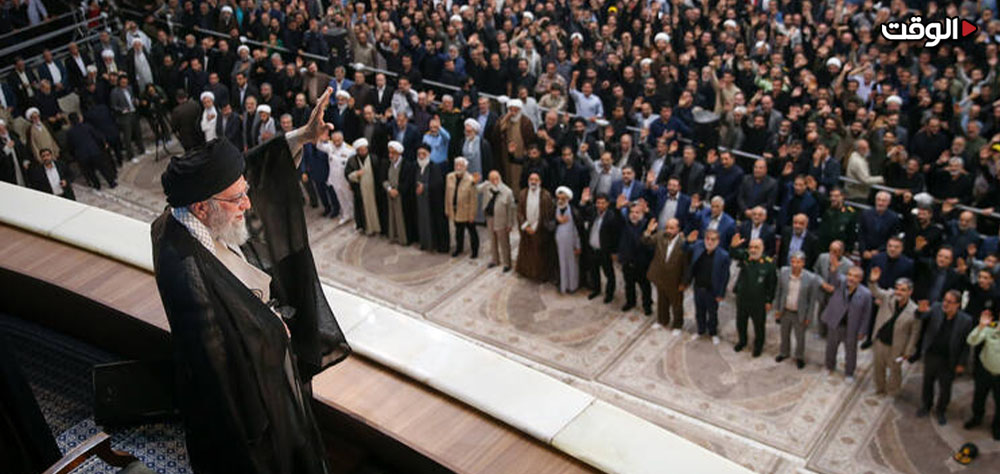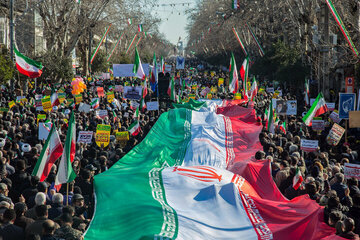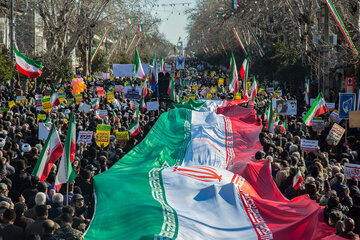

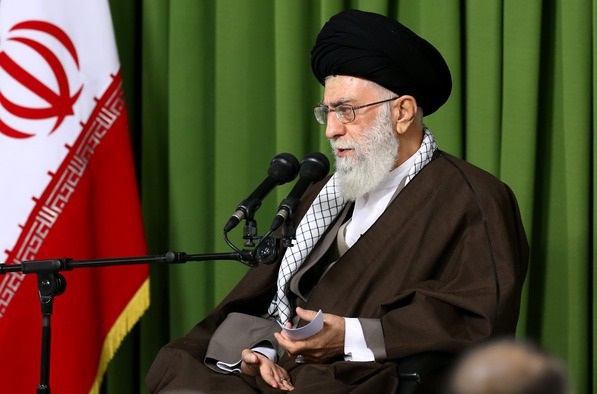


Alwaght- Iran's Leader of Islamic Revolution Ayatollah Seyed Ali Khamenei on Sunday dismissed talks with the US on regional issues as worthless .
'Americans want to impose their views rather than solve problems; they want to impose 60 to 70 percent of their demands in talks and practically implement and impose the rest of their goals illegally; so what can such negotiations mean?' said the Supreme Leader in a meeting with Foreign Minister Javad Zarif, ambassadors and charge d'affaires.
Referring to Iran's logical and strong solutions to key regional issues such as those of Syria, Yemen and Bahrain, the Supreme Leader said the US goals in the region are completely differ from those of Iran.
The Iranian Leader outlined the irrevocable and stable principles and strategies of Iran as stipulated in the Constitution and their requirements and said 'The foreign policy is based on Islam and stem from the aspirations and goals of the revolution and foreign ministry officials, ambassadors and charge d'affaires are in fact the envoys, soldiers and agents at the service of such principles and aspirations.'
Ayatollah Khamenei said that like in other countries, foreign policy of Iran is based on long-term interests and principles and values and will not change due to such exchange of visits between governments with different political tendencies. 'Governments can be influential and effective only in executing foreign policy strategies .'
Diplomatic tactics of different governments should serve to promote foreign policy principles, as envisaged in the Constitution and Iran's diplomatic envoys abroad should consider themselves the representatives and staunch advocates of the policies of the Islamic establishment, according to the Supreme Leader.
Referring to propaganda launched by foreigners about 'obligatory or voluntary ' change in Iran's diplomacy, the Leader said the wishful analysis of Westerners actually originate from the fact that the Islamic Republic of Iran's foreign policy is like a bastion at least in the region, preventing the unilateralism of the domineering powers, especially the US, and they will always continue dreaming of a change in such policies.
Ayatollah Khamenei said US policies on the highly sensitive West Asia region are the main cause of plights of the region. 'Contrary to certain people's belief, the US is the cause of major portion of regional problems and is not part of the solution to the problems.'
Reiterating that the Islamic Republic of Iran's foreign policy is not dictated by anybody, rather it is based on the firm constitutional principles. 'In the Constitution, Islam is the yardstick for foreign policy, so any stance taken on countries and different issues should be exclusively religious in nature.'
Insisting that the Islamic Republic of Iran holds firm and global logic on regional issues, Ayatollah Khamenei said that as for Palestine, while negating the usurper and forged Zionist regime and strongly condemning its daily crimes, Iran has suggested holding a referendum, in which all Palestinians can participate according to international standards.
He said any government formed based on the votes of the Palestinian nation should clarify the fate of the Zionists and residents of the occupied lands. 'Of course, in negating our logical offer, they have claimed that it (the offer) means collapse of the usurper regime: Naturally, the forged regime should go down.'
On Syria, the Leader said, 'As far as this issue is concerned, we believe that it is useless for other countries to get together and decide on a system of government and its leader; that's a dangerous precedence and no government in the world is ready to accept such a decision when it comes to its own country.'
Election is the key to the Syria problem and the requisite for the election is stopping military and financial support for the dissidents; first of all, war and unrest should come to an end so that people of Syria can chose anybody (to leader their country) under a peaceful atmosphere, said Ayatollah Khamenei.
While rejecting disintegration of countries and their division into small ethnic units, Ayatollah Khamenei said it isl not logical and acceptable to choose one of the armed groups as the body responsible to make decisions and form government. 'Such formulas will in practice lead to continuation of war.'
As for Iraq, Ayatollah Khamenei said partitioning the country into Arab Shiite, Arab Sunni and Kurdish regions is in sharp contrast with interests of people, being impractical, nonsense and unacceptable.
'Territorial integrity and united land and setting public votes as the yardstick are the principles of Iran's solution to Iraq issue.'
On Yemen, the Supreme Leader urged immediate end of Saudi crimes and beginning of Yemeni-Yemeni dialogue and said the two sides can end clashes in the country.
He said Saudis' conduct in Yemen and Syria is double-standards. 'On Yemen they claim they had launched military attacks at the request of the resigned and defunct president of Yemen but when it comes to Syria, they are not ready to stop supporting the armed dissidents as per the request of the country's legal president.'
On Bahrain, Ayatollah Khamenei said people of Bahrain do not want any thing but the right to vote and decide and 'We consider both of their demands logical.'
Briefing the audience on the Islamic Republic of Iran's solutions to regional problems, Ayatollah Khamenei said the main cause of the insecurity is the US support for the Zionist regime and the terrorist groups and the policies are in sharp contrast with those of the Islamic Republic of Iran.
Elsewhere in his remarks, the Leader said Islamic Republic of Iran's constitutional principles include fraternal commitment towards all Muslims across the world; unsparing support for the world oppressed; total rejection of the arrogance and preventing foreign intervention in all affairs, maintaining independence; defending rights of all Muslims; opposing any domineering power, peaceful relations with all non-belligerent governments, avoiding any intervention in the internal affairs of nations, and supporting just struggles of the world oppressed against the imperial powers in any part of the world. 'The attractive, new and lofty principles have drawn attention of nations, especially the elite.'
The foreign policy of the Islamic Republic of Iran is revolutionary diplomacy for having such strategies and characteristics and if they are coupled with wise strategies, they will yield amazing results and have the potential to solve major portion of the problems facing the world of Islam.
Underlining that the irrevocable strategies of the Iranian diplomacy should be continued ceaselessly, the Supreme Leader said, 'We do not claim that we have achieved or even have come close to all our objectives because implementation of the revolutionary diplomacy has in practice faced certain negligence, shortcomings, lack of vigilance and foreign obstacles; however, the country owes its present noble standing to such wise policies. Had we not complied with these principles, God knows with which problems and unexpected hurdles we would have faced inside the borders.'
Addressing the foreign ministry officials, ambassadors and charge d'affaires, Ayatollah Khamenei said they should firmly, powerfully and honorably continue to stick to the revolutionary principles and irrevocable diplomatic strategies so that foreigners and their agents inside the country cannot even dream of seeing any change in the Islamic Republic of Iran's diplomacy.
'Be careful that the diplomatic tactics should serve strategic fundamentals and that one should not act against principles under pretext of tactic.'
Elsewhere in his remarks, the Leader reminded the audience that continued expansion of relations with neighbors, Muslim countries and African states is among exigencies of Iran's foreign policy.
Lauding efforts of the Foreign Ministry officials on the international scene, Ayatollah Khamenei said foreign ministry has been highly active and well fulfilled their responsibilities and pursuing their goals. As for recent nuclear talks, Foreign Minister Mohammad-Javad Zarif and his colleagues passed their test well, added the Leader.
'The feeling of being powerful and sitting before the six world powers, defending goals and making the other parties understand their position and presence (in the talks) were among strong points of our country's negotiators in the nuclear talks.'
As for the Joint Comprehensive Plan of Action (JCPOA), the Supreme Leader advised the audience to follow up the main points.
- Tehran Meeting Further Step to Address Afghanistan Challenges
- Troubled Louvre Museum Faces Some Grave Scenarios
- Senior Commander Praises Continuous Advancements in Iran’s Air Defense Capabilities
- Iran Introduces New Nuclear Medicine Products
- US Military Aircraft Nearly Collides with Civilian Plane Near Venezuela
- Russia Says It Intercepted 130 Ukrainian Drones Overnight
- Human Rights Watch Says Israel Is Blocking Reconstruction in Southern Lebanon
- Tehran and Riyadh Going Beyond De-escalation, Now Seeking Common Cooperation Grounds
- Is Yemen on the Verge of Split?
- Mass Shooting at Jewish Gathering in Australia Leaves 12 Dead and Dozens Injured
Editor's Choice

Is Yemen on the Verge of Split? The country is sinking in chaos as conflicting forces in the south are going separate ways and Yemenis are less involved in the fate of the south.
Beirut Assassination: Tel Aviv’s Dangerous Game and Mystery of Hezbollah Response Israel is seeking to take Hezbollah into a new confrontation, but the latter has its own calculations and game.
What’s Driven Public Trust in Resistance Factions in Iraq Vote? The Iraqis find effective forces in the resistance groups that do not restrict themselves to military sphere and have worked to stabilize national economy.
Gaza Disability Crisis: A Non-healing Wound Thousands of Gazans have suffered organ amputations, making it hard for them to engage in daily life activities.
Two Blasts Signal Deadly Game in South Asia The Pakistan and India blasts suggest that a new wave of instability is in the making, raising concerns about broader insecurity.
News
Senior Commander Praises Continuous Advancements in Iran’s Air Defense Capabilities
The Chief of Staff of the Iranian Armed Forces emphasized the ongoing and consistent improvement of Iran’s air defense capabilitiesIran Introduces New Nuclear Medicine Products Iran’s NSTRI has revealed three domestically developed products for diagnosing and treating diseases using nuclear medicine
US Military Aircraft Nearly Collides with Civilian Plane Near Venezuela A US military refueling plane narrowly avoided a collision with a civilian passenger aircraft off Venezuela’s coast
Russia Says It Intercepted 130 Ukrainian Drones Overnight Russia’s Defense Ministry says air defense units intercepted 130 fixed-wing Ukrainian drones overnight across multiple regions and over the Caspian Sea
Human Rights Watch Says Israel Is Blocking Reconstruction in Southern Lebanon Human Rights Watch says Israeli attacks on reconstruction machinery and civilian factories in southern Lebanon after the ceasefire breach the laws of war and amount to war crimes
Mass Shooting at Jewish Gathering in Australia Leaves 12 Dead and Dozens Injured Two gunmen opened fire at a Jewish gathering in Sydney on Sunday, killing at least 12 and injuring dozens more
Iran FM Araghchi Meets Pakistan’s Special Representative in Tehran Mohammad Sadiq, Pakistan’s special envoy on Afghanistan, held talks with Iran’s Foreign Minister Abbas Araghchi in Tehran on Sunday
Iran Opposes External Interference, Calls for Regional Cooperation on Afghanistan Iranian Foreign Minister Abbas Araghchi said externally imposed solutions and foreign decision-making cannot bring lasting stability to Afghanistan
Diplomatic Discussions Underway Concerning Iran’s Nuclear Program IAEA Director General Rafael Grossi said discussions to address Iran’s nuclear program are continuing
Palestinian Teenager Martyred in Israeli Military Raid in Northern West Bank A Palestinian teenager was killed after being shot by Israeli forces during an overnight operation in a town in the northern Israeli-occupied West Bank
Khatibzadeh: Iran-China Relations Stand Strong and Historical Iran-China relations are authentic, civilizational, and long-standing, the Deputy Foreign Minister stated
Iran, Ethiopia Expand Economic Cooperation Following BRICS Membership The Speakers of Iran and Ethiopia’s parliaments, Mohammad Bagher Ghalibaf and Tagesse Chafo, emphasized enhancing political, economic, and legislative cooperation
Southern Lebanon Hit by Israeli Airstrikes as Ceasefire Violations Persist In the latest escalation, Israeli warplanes struck targets across southern Lebanon
Israeli Forces Launch Fresh Incursion into Rural Quneitra, Syria According to a monitoring group, Israeli troops carried out a new ground incursion into a village in Syria’s Quneitra province
Ayatollah Khamenei: Iran Continues to Progress Despite Significant Challenges Ayatollah Seyyed Ali Khamenei, Leader of the Islamic Revolution, states that Iran is progressing in spite of immense shortages and difficulties
Russia And China Announce Combined Strategic Bomber Patrols in East China Sea Airspace Amid rising regional tensions, China and Russia conducted a joint strategic air patrol over the East China Sea
Honduran President Alleges Trump Engaged in ‘Election Manipulation’ Donald Trump’s direct intervention in Honduras’ election is seen as potentially swinging the result toward his preferred candidate
IRGC Forces Martyred in Southeast Iran Border Clash Three IRGC Ground Force members were martyred in a Wednesday attack by "terrorist groups" near the border city of Lar in southeastern Iran
Iranian President to Tour Central Asia, Visiting Kazakhstan and Turkmenistan President Masoud Pezeshkian left Tehran for a two-day Central Asia trip to Kazakhstan and Turkmenistan
Iran: World Must Act Decisively to Stop Israeli Genocide and Honor Victims At the UN, Iran’s ambassador called for urgent, unified international action to halt what he labeled Israel’s "ongoing genocide" in Gaza
Most Viewed
Is Yemen on the Verge of Split?
US Military Aircraft Nearly Collides with Civilian Plane Near Venezuela
Iran Introduces New Nuclear Medicine Products
Human Rights Watch Says Israel Is Blocking Reconstruction in Southern Lebanon
Tehran Meeting Further Step to Address Afghanistan Challenges
Russia Says It Intercepted 130 Ukrainian Drones Overnight
Tehran and Riyadh Going Beyond De-escalation, Now Seeking Common Cooperation Grounds
Troubled Louvre Museum Faces Some Grave Scenarios
Senior Commander Praises Continuous Advancements in Iran’s Air Defense Capabilities
Deep Rift in Israeli Army Leadership
Palestinian Teenager Martyred in Israeli Military Raid in Northern West Bank
Russia And China Announce Combined Strategic Bomber Patrols in East China Sea Airspace
Iran: World Must Act Decisively to Stop Israeli Genocide and Honor Victims
Iran FM Araghchi Meets Pakistan’s Special Representative in Tehran
Trump’s Doctrine: An Analysis of US Hegemonic Decline
Iranian President to Tour Central Asia, Visiting Kazakhstan and Turkmenistan
Gaza ‘Peace Board’: From Removing Blair to Kushner’s Personal Interests
US Tanker Seizure Brings War Clouds Lower on the Caribbean
What’s Pezeshkian’s Central Asia Visit Yielded?
UNIFIL: No Evidence of Hezbollah Rearming
Is Yemen on the Verge of Split?
Israeli Forces Launch Fresh Incursion into Rural Quneitra, Syria
Two Palestinians Killed as Hostilities Resume in Gaza
Iran FM’s Baku Visit Highlights Neighbors’ Need for Closer Cooperation
Lebanese President Aoun to Protest Israel’s Southern Wall Project at the UN
Maduro Denounces US And Trinidad And Tobago Military Maneuvers As ‘Irresponsible’
Bin Salman’s US Visit the Launching Pad for Future US-Saudi Ties
Iran, Pakistan Discuss Strategies to Deepen Ties
Calls to Restart Negotiations with Iran Are Emerging: FM
Israeli Strike on South Lebanon Kills One
UNSC Backs US Gaza Plan; Hamas Rejects It
One Israeli Killed and Three Injured in West Bank Stabbing
With Multi-billion Plans Collapsing, Saudi Megaprojets Prove a Failure Story
US Approves Covert CIA Operations in Venezuela: NYT
Former UN Investigator of Israeli Violations Questioned in Canada
Army Chief Says Iran’s Defense Capabilities Are Expanding
Military Mobility Corridors: Europe Bracing for Possible Russia Confrontation
What’s Driven Public Trust in Resistance Factions in Iraq Vote?
Araghchi: Caspian Sea as Vital to Iran as Persian Gulf; Russia A “Strategic Partner”
In Focus
Ansarullah
A Zaidi Shiite movement operating in Yemen. It seeks to establish a democratic government in Yemen.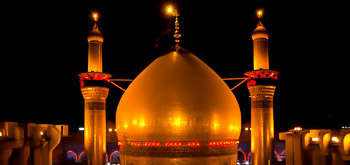
Shiite
represents the second largest denomination of Islam. Shiites believe Ali (peace be upon him) to be prophet"s successor in the Caliphate.
Resistance
Axis of Resistances refers to countries and movements with common political goal, i.e., resisting against Zionist regime, America and other western powers. Iran, Syria, Hezbollah in Lebanon, and Hamas in Palestine are considered as the Axis of Resistance.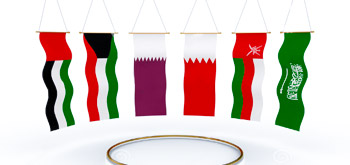
Persian Gulf Cooperation Council
A regional political u n i o n consisting of Arab states of the Persian Gulf, except for Iraq.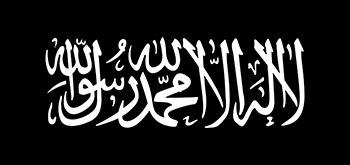
Taliban
Taliban is a Sunni fundamentalist movement in Afghanistan. It was founded by Mohammed Omar in 1994.
Wahhabism & Extremism
Wahhabism is an extremist pseudo-Sunni movement, which labels non-Wahhabi Muslims as apostates thus paving the way for their bloodshed.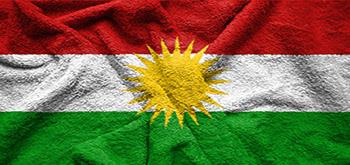
Kurds
Kurds are an ethnic group in the Middle East, mostly inhabiting a region, which spans adjacent parts of Iran, Iraq, Syria, and Turkey. They are an Iranian people and speak the Kurdish languages, which form a subgroup of the Northwestern Iranian branch of Iranian languages.
NATO
The North Atlantic Treaty Organization is an intergovernmental military alliance based on the North Atlantic Treaty which was signed on 4 April 1949.
Islamic Awakening
Refers to a revival of the Islam throughout the world, that began in 1979 by Iranian Revolution that established an Islamic republic.
Al-Qaeda
A militant Sunni organization founded by Osama bin Laden at some point between 1988 and 1989
New node