














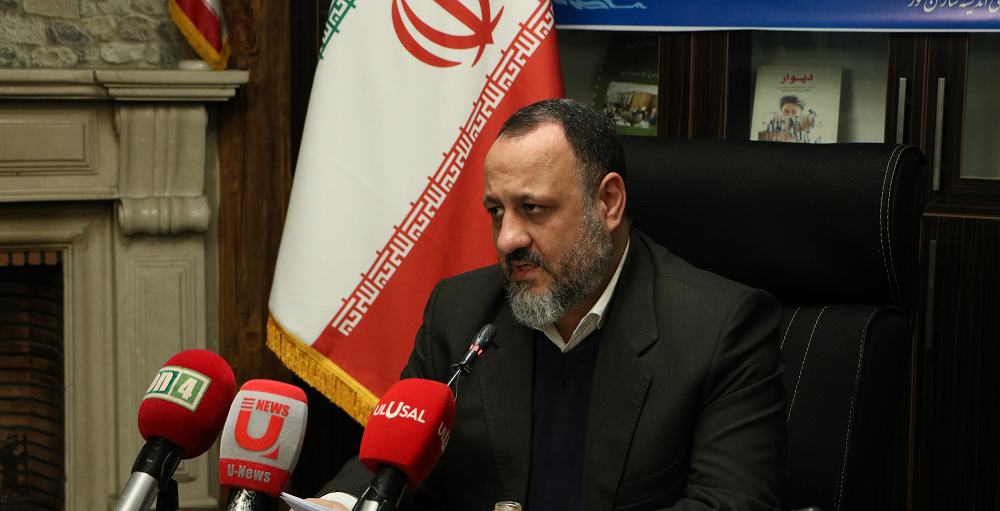


Alwaght- From Persian Gulf to Lebanon, the region is grappling with a conflict the Israelis in association with the Americans have ignited. Concerning the outcomes and the scenarios ahead, Alwaght arranged an interview with Ahmad Zarean, a West Asia affairs expert, asking him for comments about the future of this war.
Alwaght: What is the nature of these scattered clashes in the Persian Gulf and Lebanon amid the US claims that they are close to an initial deal with Iran and that the ceasefire still holds?
Zarean: The Americans and the Israeli regime hold a major plan for the region according to which the resistance should be essentially obliterated, all regional countries normalize ties with Tel Aviv, and finally the Israeli regime turn into a hegemonic power in the region. Then this hegemony will facilitate American dominance over the energy and transit of the region. If this happens, Washington can be hopeful that it will maintain its state of being a superpower, given the fact it is losing this position. This is why they waged regional wars after October 7, 2023 attack, with Israeli regime claiming they are meant to change the face of the Middle East with full alignment and support of the US.
But when it came to facing Iran, the Israeli regime knew it could not take them on alone. So the Americans and the Israelis teamed up, launching the 12-day war and the 40-day war together against Iran, hoping to achieve their big strategic goals in the region. But after those two wars, especially after the Ramadan War, the equations on the ground actually started shifting in Iran’s favor. Relying on its geopolitical strengths, Iran managed to put the US in a very tough spot, and in a wartime situation, that kind of pressure ended up costing the Americans and their allies dearly. That is when they came forward with a ceasefire proposal, and in the end, they accepted Iran’s terms to lock it in. But after the ceasefire was solidified on April 8th, the aggressors hoped they could use pressure tactics in negotiations to get what they had not won on the battlefield. That did not work either, because Iran still had the military upper hand and had firmly established its control over the Strait of Hormuz. Iran stood its ground, and the aggressors walked away from the talks empty-handed. At present, the Israelis are trying to push forward with their goal of destroying the resistance in Lebanon, while the Americans, through scattered skirmishes and a naval blockade on Iran, are trying to tip the balance back in their favor, so they can come to the negotiating table from a position of strength. And that is exactly the lens through which we should view the current conflict unfolding in Lebanon.
Alwaght: Is the enemy testing Iran's state of readiness for a new war? Or is it pushing for concessions?
Zarean: I have just mentioned that the aggressors are pushing to tip the scales in their favor on the ground and in the negotiations. They have imposed the blockade on Iran as a balance-making act in the face of Iran's execution of sovereignty in the Strait of Hormuz, all to press the Islamic Republic economically for concessions, and this is the main American aim. The aggression sides are assessing Iran's will to see how we are determined to fight. They are banking on internal differences and are hopeful to see rise of a surrender-resistance duality. They hope that the pro-surrender pole outweights the pro-resistance one. However, as the recent developments have shown, the motivation for resistance is highly strong in our country and the Iranians are ready for tough scenarios, including a new full-scale war.
Alwaght: Essentially, how prepared are we for a new war in military and social terms? How prepared is the enemy?
Zarean: We are in an existential war. And when a country faces an existential threat, its capabilities actually grow, just like a person who suddenly comes face to face with a wolf: the body produces an energy it would not have under normal circumstances. That is exactly where Iran is right now. We are facing a bloodthirsty wolf, and under these conditions, Iran has brought all its capacity to bear to preserve its existence. At this point, our resilience has reached its peak. So socially, we are in a strong position. Militarily, we have the ability to wage a full-scale, prolonged war of attrition against the US. In terms of social resilience, military capability, and national morale, we are fully prepared to confront the enemy, because the Iranian people know they have been aggressed against. The enemy’s goal is to erase Iran’s very existence.
Remember, Trump himself said during the war that he was thinking about changing Iran’s borders, and he repeatedly spoke of destroying Iranian civilization. When our people see these facts and understand true American objectives, they gain double the morale and energy to fight back. On the other side, though, its a different story. The aggressors are not fighting an existential war. So among their forces, that level of drive and commitment simply does not exist. Yes, the US military is technologically advanced, but technology still needs human hands to operate it. On the human side, the American military is riddled with doubt. They are questioning whether this war actually serves US interests, and whether it is doomed to fail or destined for victory. Those doubts have drained the resilience of the attacking forces. During the 40-day war, a significant number of American generals resigned from their posts. In Iran, by contrast, political and social cohesion, and the bond between the people and the leadership, only grew stronger throughout the war.
Alwaght: Arab countries complain about being targeted during Iran's responses. Is there any sign we can suggest they have learned lessons from the 40-day war about the need to quit their wrong approach?
Zarean: We should say that unfortunately these countries have not learned from the 40-day war and will not and they will continue their strategic cooperation with the Americans and there is a clear reason for that: The life and death of these countries is in the hand of the Americans. Their rulers are corrupt despots who have no power of themselves and they want to save their rule rather than save their countries. So, they cannot say no to the Americans. Actually, during the ceasefire, they provide their equipments to the US for aggression against Iran. It seems that after the circumstances are back normal, these countries will continue their military and security cooperation with the US for their rule to survive. But this is a wrong approach, detrimental to the regional nations, and actually serves the American aims and inteteets.
Alwaght: Let's return to the tensions in Lebanon. It seems the Israeli regime sees no ceasefire as an obstacle to continuing its aggression against Lebanon. The Lebanese government has also sided with the enemy, turning openly hostile to Hezbollah. In your view, how can the enemy's calculations be disrupted and the Axis of Resistance regain the initiative? How should Hezbollah handle this situation, and what role do you see for Iran?
Zarean: Since the beginning, Israel did not agree ceasefire with Iran includes also the Lebanese front. That is why they have violated the ceasefire over and over. They advanced in southern Lebanon to the Litani River and now insist that to the Zahrani River, it should be a safe zone for the Israelis. Then they threatened Beirut's Dahieh with bombardment and issued an evacuation order with the aim of destroying the resistance in Lebanon. The current government in Lebanon is the most pro-American one and is subservient to the US. Washington has entrusted Prime Minister Nawaf Salam with the project to destroy Lebanese resistance through political initiatives. The destructive positions of the PM and President Joseph Aoun shows that Hezbollah is facing a destruction project with dual blades of pressure, one from government and the other from the Israelis. In other words, Hezbollah is fighting two fronts. Now Hezbollah and other Shiite factions are facing difficult conditions in Lebanon and the solution is that the US and Israeli regime come up with the notion that Lebanon is part of the war equation and if Washington wants ceasefire, it should also include Lebanon. In any future war, the Americans will once again come to the Israelis' aid. So the Iranians and the Axis of Resistance need to press the Americans. That pressure should force them, in turn, to press the Israeli regime into stopping the war in Lebanon. This pressure has to be transmitted directly to the Israeli regime, and that is the fastest way to halt the regime's atrocities. As for Hezbollah's role, it must not allow the Israeli regime to advance. It needs to mobilize support inside Lebanon and make sure the Israeli project fails.










