















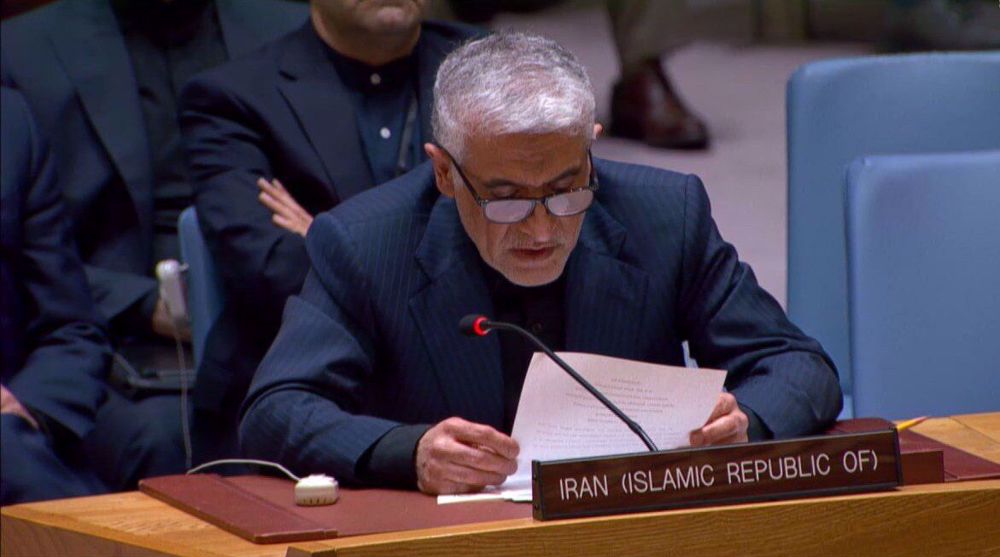


ALWAGHT- According to Iran's ambassador to the United Nations, multiple Persian Gulf Arab nations and Jordan have aided the American-Israeli aggression on Iran, and he called on the Security Council to hold them responsible for their illegal conduct.
Iran's UN Ambassador Amir Saeid Iravani submitted a letter to the UN Secretary-General and Security Council demanding that several Persian Gulf Arab states and Jordan be held accountable for assisting the US-Israeli aggression against Iran, insisting they are obligated to provide "full compensation" for both material and moral damages. Iravani dismissed recent letters from Kuwait and Bahrain as containing "baseless claims," arguing that the real issue is those states' participation in military operations against Iranian territory. He cited public statements by senior US officials, including the president and CENTCOM commanders, openly acknowledging that several Persian Gulf nations acted "shoulder-to-shoulder" with Washington during the war on Iran.
Iran specifically named Qatar, Bahrain, Kuwait, Saudi Arabia, the United Arab Emirates, and Jordan as states that facilitated or supported the attacks through granting military base access, logistical and operational support, intelligence sharing, air defense coordination, and airspace access. The letter stressed that these actions violated international law and constituted participation in acts of aggression under UN General Assembly Resolution 3314. Iravani further argued that claims by those governments of exercising self-defense under Article 51 of the UN Charter are legally invalid, asserting that Tehran itself—as the "victim of aggression"—possesses the legitimate right to self-defense.
Citing Article 16 of the International Law Commission's Draft Articles on State Responsibility, Iran highlighted that any state knowingly assisting another in committing an internationally wrongful act bears international responsibility. The letter also criticized UN Security Council Resolution 2817 (2026), arguing the body cannot lawfully compel states to comply with politically biased decisions inconsistent with the UN Charter. Iravani concluded by requesting the letter be circulated as an official Security Council record, escalating Iran's diplomatic campaign and highlighting growing tensions between Tehran and several US-aligned governments in West Asia.










