















ALWAGHT- A Princeton University researcher warns that the dangerous war jointly launched by the United States and Israel against Iran at the end of February has significantly raised the risks of an environmental catastrophe.
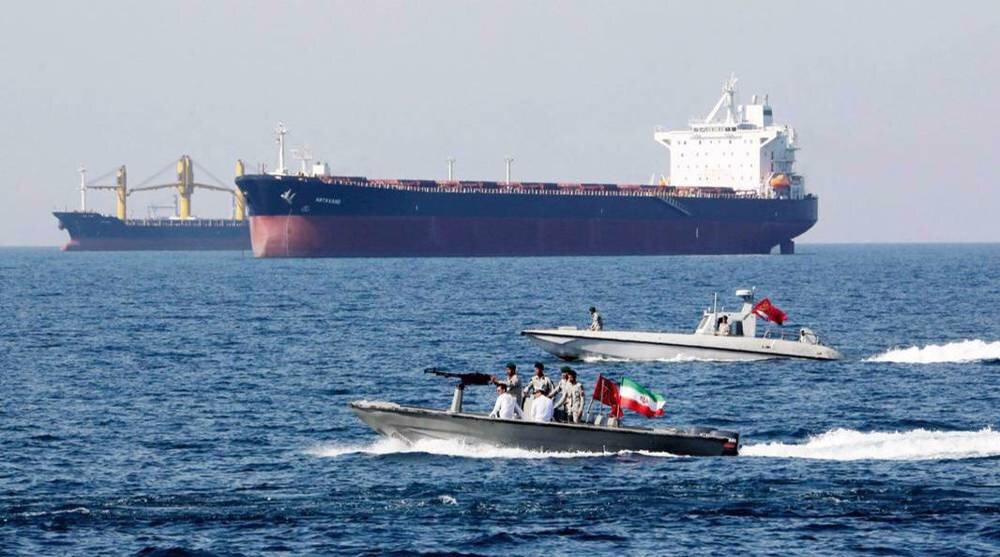
Seyyed Hossein Mousavian, a former Iranian diplomat, warns that recent military confrontations in the Persian Gulf have significantly increased risks of environmental catastrophe, including oil spills, destruction of marine ecosystems, and contamination of fisheries and coastal infrastructure. Experts note that the shallow, semi-enclosed nature of the Persian Gulf makes its marine ecosystems highly vulnerable to prolonged contamination from military conflicts. Mousavian argues that the Strait of Hormuz has evolved from a regional chokepoint into the central geopolitical fault line of the global economy, with commercial traffic severely disrupted, oil prices surging, and global shipping insurers warning of systemic economic risks beyond the Middle East.
Mousavian points out that while the US and European governments argue Iran cannot lawfully impose transit tolls on vessels passing through the strait under UNCLOS, the comparison with other coastal states is fundamentally flawed. He notes that no other littoral state governing a strategic strait has experienced three major illegal military confrontations—Saddam Hussein's invasion, prolonged US coercive policies, and direct Israeli-American military operations—while also bearing the primary burden of maintaining regional maritime security. Iranian government spokeswoman Fatemeh Mohajerani estimates Iran has suffered about $270 billion in damages since the start of the US-Israel war on February 28, 2026. Mousavian also highlights the historical imbalance that Iran never received compensation comparable to the UN Compensation Commission established after Iraq's invasion of Kuwait.
Mousavian proposes a four-point framework to resolve the crisis. First, Iran could lawfully establish specialized maritime service regimes tied to concrete operational services like pilotage, environmental protection, and navigational safety. Second, under Article 43 of UNCLOS, Iran could advocate for a multilateral "Hormuz Maritime Security and Environmental Protection Fund" under UN or IMO supervision for cooperative burden-sharing. Third, Iran could invoke the "polluter pays" principle, arguing that states contributing to militarization should contribute financially to environmental protection. Fourth, a future framework could integrate maritime security financing with broader reconstruction arrangements. He concludes that the future of the Strait of Hormuz depends not on military coercion but on diplomatic innovation, requiring de-escalation and a multilateral framework balancing freedom of navigation with equitable burden-sharing.










