












Alwaght- In a bid to shed more light on the reasons behind quick collapse of the terrorists' defense lines in eastern Aleppo, and the influences of Syrian army’s victory and conclusion of the battle of Aleppo on the entire war across Syria, Alwaght news and analysis website has conducted an interview with the Lebanese military and political analyst Amin Hoteit and the author and journalist Ibrahim Beyram, as well as the Syrian political analyst Salim Harba. Following is the English translation of the interviews.
Alwaght: What is the main reason behind the recent quick fall of the terrorist groups' defense lines in eastern Aleppo fighting? Is the battle over or is it yet to be concluded?
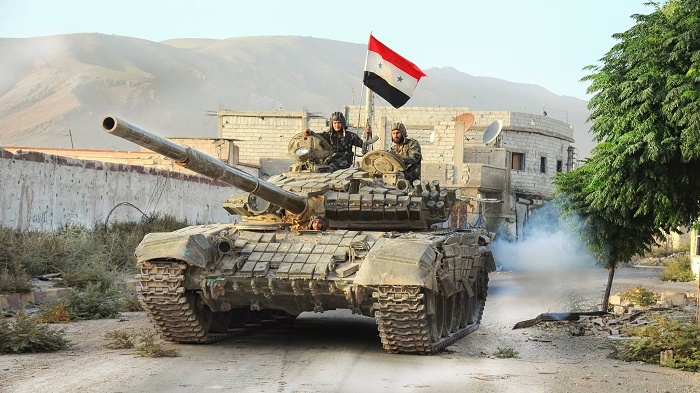
Hoteit: Two reasons stand behind the fast defeats of the terrorists: first is the military maneuver launched by the Syrian army and its allies which brought about both strategic and military surprises simultaneously. Actually, the army infiltrated the terrorist-held area in a big surprise, in a way that the militants could do nothing to contain the situation and address it. The first infiltration by the army came in the Masaken Hanano district. When the militants' combat plan fell in the initial clashes, they failed to later curb it because the assaulting forces (of the Syrian government) firmly kept anti-terror firepower standing, as besides they kept conducting surprise attacks one after another. This did not allow the militants to take a breath, and so they began to move back. Second, the ricketiness of the organizational bases of the armed groups had an essential hand in quick collapse of the terrorists' power. A majority of the militant groups tried to fight for themselves, and in fact they failed to create a united and firm power capable of asserting itself and actualizing its goals. The militants attempted to fix this loophole by announcing formation of "Army of Aleppo", but only after they received the first blow from the army. Everything went fast, and the Syrian army’s assaults did not give the new army, which was formed of remnants of the terrorists and not of the organized units, the chance to fix the weak spots that damaged the militants. Actually, they kept their disjunctive defense plans. But about your question that if we should consider the fight done or not, I must say yes it is over. We all know that ending the battle is a matter of time. The operation from now on will be limited to cleansing the Aleppo districts of the militants. Nobody in his right mind can imagine resistance of the remnants of the terrorists who only hold one seventh of their formerly held areas in Aleppo to the Syrian army’s push. Only 15 percent of the total area of eastern Aleppo remains in their hold, and it appears that it is falling back to the government’s forces very fast. This small size of the area held by the militants in addition to the encirclement imposed by the Syrian forces do not allow them to have a power to maneuver. They have only two options: either to flee from any way they can find or surrender, if they do not want to die by continuing the fight.
Beyram: Strategically, the battle is over. Perhaps some more time or days are needed to cleanse this historical city of any opposition force on the ground. But at the end of the road the terrorists sustained a defeat, and these groups are far from being able to restore their formerly-held areas. Rather, we are witnessing liberation of three quarters of the city. The reason for fall of the terrorists' defense lines is military primarily, in addition to some political reasons. Militarily, the Syrian army mobilized its powers perfectly for this fight, so we saw its win over the militants. It dealt crushing blows to the terrorist groups, making them collapse spiritually before militarily. This blow required some time. At the same time, we should not overlook the political realities as the change in balance of power began to surface in the region. The Russian military intervention and its determination to help liberate Aleppo fully as well as the Iranian and Lebanon's Hezbollah support left a great impact on the developments of the fight in Aleppo. The region as a whole was a failure ground of the other side. Therefore, I think that it was natural for the militants to be defeated. On the contrary, it was a surprise that they resisted to this degree in the battleground. Additionally, we can feel a shift in the Turkish stance, something stripped the militants of their support and cover.
Harba: Militarily, the Aleppo battle is done in favor of the Syrian army and its allies. Concerning the reasons behind collapse of the terrorist groups, there are a couple of factors. First, the arrangements and preparations the Syrian army made to prepare the ground for such a victory through repelling all of the assaults launched by the terrorists against the western districts of Aleppo and also through foiling their plans by killing thousands of them and so blocking any infiltration into the eastern Aleppo. Second, the offensive operation carried out by the Syrian army in Aleppo’s eastern areas starting from Masaken Hanano district to the rest of the eastern areas and making the gains we are seeing today. This displays the quality of the anti-terror military operations and the professionality of the used tactics. The third reason lies in the popular rejection of the terrorist groups and their abuses in Aleppo, the factor that also helped the Syrian army. The fourth reason is the failure of the pro-terrorist countries both in protection of the terrorist groups and in the UN Security Council, and also in other attempts that aimed at backing the terrorists under humanitarian excuses and other sham issues. As the Fifth reason, we should mention the disjunction of the terrorist groups, their infighting, and also outbreak of dispute between those of them who want retreat from Aleppo and those who want to remain and fight. In general, a collection of these factors led to fast defeat of the terrorists. Actually, these factors left them in front of limited, and perhaps, unviable choices.
Alwaght: How will victory in Aleppo influence the other Syrian fronts?
Hoteit: We believe that victory over the terrorists in Aleppo will be start of end of the Syrian crisis in general, as at the same time it will foil all of the basic and strategic projects by the anti-Syrian camp. We also can assert that victory in Aleppo will make a new history and calendar not just for Syria but the whole region. I tried to make a comparison between fall of Aleppo and fall of Constantinople, because if the terrorists could hold Aleppo, an important and sensitive part of Syrian could remain in an utter darkness, but now that it is retaken, the region should prepare itself for return of the governance, sovereignty, and independence afresh to Syria. Militarily, the recapture of Aleppo will overshadow the rest of the fronts in Syria, and the region in its entirety. Therefore, every party that engaged in anti-Syrian hostility will try to find a way out to help relax the pressures of defeat they sustained.
Beyram: There are two ideas. The first suggests that Aleppo battle conclusion is the beginning of end of the crisis. The reckonings have begun between different sides with a regard for the fact that the Syrian government is the winner. The other idea notes that the recapture of Aleppo is solely a strong punch deep into heart of the opposition. But there is a big change on the ground that pushes us to suggest that betting on upcoming victories for the Syrian government has just begun seriously, and there is no way back.
Harba: The conclusion of the battle against the terrorists in Aleppo will have its own effects: first in the quality development of the upcoming army’s operations in Al-Bab town or towards Nubl and Al-Zahraa for cleansing the northwestern outskirts of Aleppo or towards western and southwestern Aleppo outskirts to Idlib. Second, the negative effects on the terrorist groups and on the terrorist project under cover of the al-Nusra Front and its branches whom Washington and the terror backers want to promote as moderate Syrian opposition. By negative effects I mean the negative military and spiritual influences on the anti-Syrian project deriving from defeat. There is also an economic aspect of the Aleppo battle conclusion. Because Aleppo is an essential economic wheel for the Syrian economy and it can recover fast and push ahead the Syrian economy in general. And most importantly, due to the geostrategic significance of the Aleppo in the region, its recapture means downfall of plan for new Ottoman Empire the Turkish leaders were under its illusion. So, Syria after Aleppo win will be totally different from Syria before Aleppo win. This is also true about the whole (West Asian) region. This triumph is supplementary to the strategic achievements the Iraqis are making through their beating of ISIS and imminently taking it out in Mosul.