









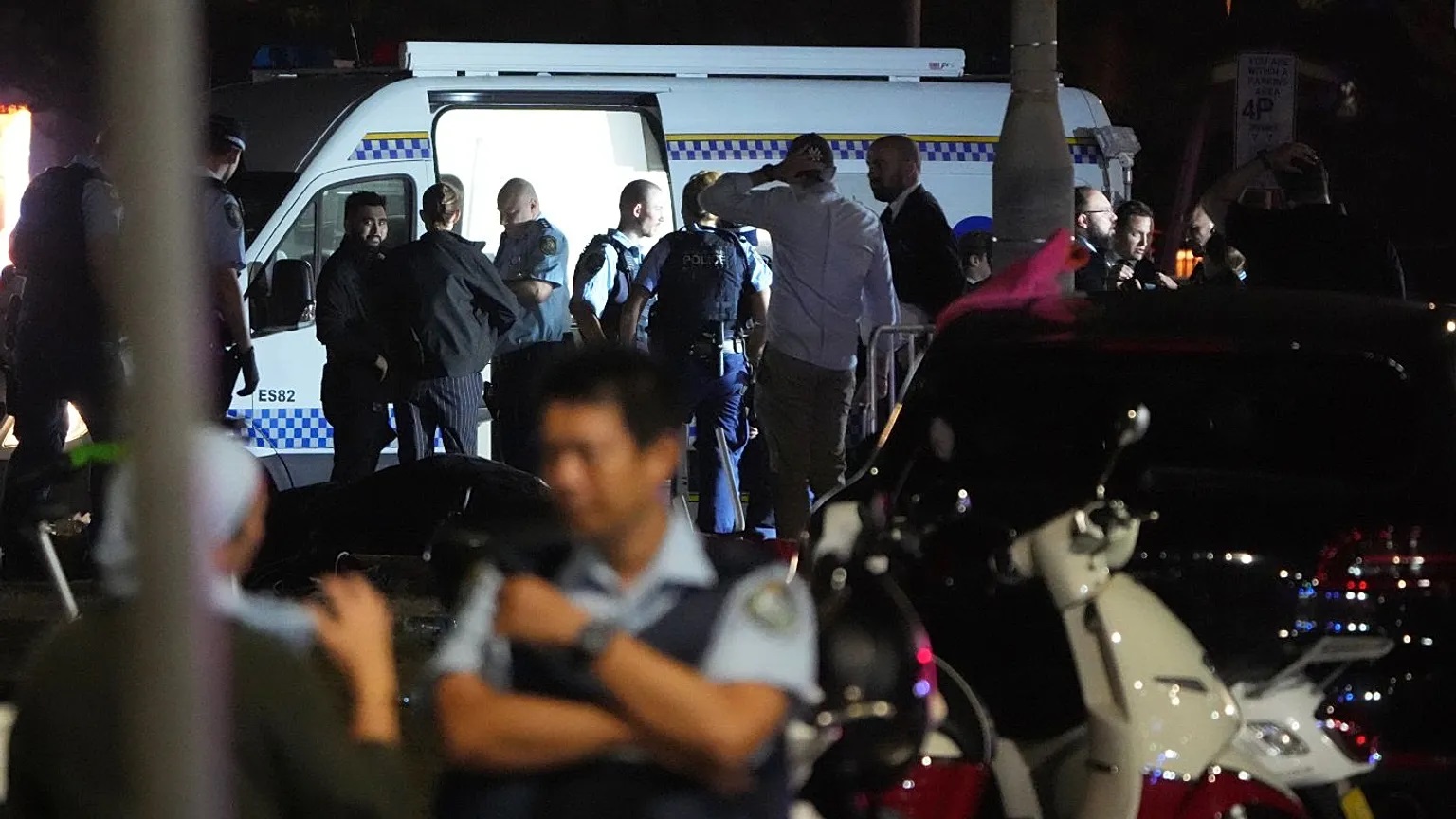


Alwaght- The recent terrorist attack on a Jewish ceremony in Sydney that led to the death of 16 people was fast to go beyond borders of a security incident to turn into an issue with broad media, political, and geopolitical dimensions. The way of Western media coverage, the speed of the Israeli reaction, and the launching of concerted effort to link the incident to the what Israelis and West call “global anti-Semitism” and also “threats attributed to Iran” have prompted serious questions about the real nature of the attack and its main gainers.
Some analysts believe this incident can be examined through the lens of a false flag or staged operation, a scenario where, regardless of the actors on the ground, the primary strategic benefit flows to the Israeli regime and its affiliated networks.
1. Reviving the threadbare anti-Semitism discourse to mend the largely damage Israeli image in the West
One of the most significant consequences of this incident is the forceful return of the concept of “anti-Semitism” to the center of the Western media and political agenda. This is a concept that, over the past two years and especially following the Israeli regime’s genocidal war on Gaza, had largely lost its prior effectiveness in swaying public opinion.
The Gaza war became a watershed moment, fundamentally shifting Western public perceptions of the reality and the oppressive, apartheid nature of the Israeli regime. Support for the regime among Western publics eroded to some of the lowest levels in recent decades, while anti-Israeli movements surged across universities, unions, and civil society. A relatively clear distinction emerged in public discourse between “Judaism” as a religious identity and “Zionism” as a political-colonial project. This shift was particularly pronounced in the US, the regime’s primary patron, where massive campus protests and the election of an anti-Israeli Muslim official in the nation’s financial capital sounded alarm bells for Israeli proponents.
In this climate, a bloody attack on Jewish civilians in a Western country presents a strategic opportunity for the Israeli regime. It allows Tel Aviv to once again reposition itself in the familiar role of “victim.” The event enables it to discredit any criticism of its policies and crimes by labeling it as anti-Semitism, to recast anti-Israeli protests and movements as security threats, and thereby to resuscitate and rebuild the moral, political, and media support from Western governments, a support that had shown significant cracks in recent months.
2. Direct interests of the Jewish Agency and the Reverse migration project
Another aspect is related to the growing crisis of reverse migration from the occupied Palestinian territories, that went faster after Gaza war and 12-day Israeli attacks on Iran. This crisis in recent years has become one of the most serious and strategic concerns of the Israeli security and political elites.
Research results published by Israel Democracy Institute (IDI) suggest that 27 percent of the Israelis are seriously considering migration, making Israeli regime experience the biggest reverse migration wave in its 8-decade history. According the Knesset report, over the past two years, more than 125,000 settlers left the occupied territories to their home countries.
The recent report by the Knesset Research Center paints a clear picture of the depth of this crisis: Israel’s migration balance has been consistently negative since 2020. In 2023 alone, over 83,000 people left the occupied Palestinian territories, a figure that marks a 39 percent increase from the previous year.
In contrast to past decades when the Israeli regime presented itself as a safe haven for Jews, a combination of chronic insecurity, deep political and social divisions, economic crisis, and ongoing wars has driven a growing wave of Israelis to seek to leave this usurped land. This trend directly challenges the foundational philosophy of the Zionist project: the idea of a “safe homeland for the Jewish people.”
Against this backdrop, attacks on Jews outside the occupied territories take on a dual and complementary function. On one hand, they send a message to Jews living abroad that lasting security for them is only possible within the framework of Israel. On the other hand, they warn Israelis inside the occupied territories that leaving Israel not only will not bring them greater security but also could expose them to even more serious threats.
This is precisely the narrative that the Jewish Agency has spent years trying to cement. Now, such incidents, regardless of who carries them out, serve as an effective psychological and propaganda tool to curb reverse migration and reinforce the survival logic of the Zionism project.
3. Rebuilding home cohesion and delaying political crises
In terms of home policy, Australia attack served Israeli officials and the interests of the Netanyahu government.
This attack came at a time the government is facing three simultaneous crises. Restoration of Netanyahu’s judicial case to the public attention, reactivation of partisan gaps and social protests, and erosion of political legitimacy. In these circumstances, the government is resorting to a familiar play book, one it previously employed following the October 7 attacks. The strategy is to transform an external security threat into a catalyst for internal cohesion. Just as that attack halted domestic protests, forged unity against a common enemy, and legitimized the Gaza war, highlighting this latest incident can once again sideline internal divisions.
By sustaining a state of “permanent security emergency,” it creates the necessary political conditions for the survival of the current coalition. This analysis underscores how a logic of “perpetual war and crisis” is being leveraged as a tool to overcome political fragility within the cabinet.
4. Instrumentalizing attack against Iran and legitimizing Mossad’s claims
Another critical dimension of this event is the potential it creates to resurrect Mossad’s previous claims about an “Iranian threat to Jewish communities in the West”, allegations that, in recent months, have been met with significant skepticism due to a lack of verifiable evidence.
This incident could retroactively lend credibility to Israel’s largely unsubstantiated narrative. Such a maneuver serves three primary objectives: First, to position Iran as a transnational security threat to the West. Second, to create the political space necessary for escalating international diplomatic and security pressure against Tehran. Third, and more operationally, to establish an informal layer of security for Israeli military personnel and reservists who fear legal prosecution abroad for alleged human rights violations. These are individuals whose identities have been exposed by human rights groups and who now risk legal action in foreign courts. By fostering a heightened perception of a “security threat against Jews,” a de facto, unwritten immunity could be extended to these individuals.
Within this framework, the Australia incident transcends being merely a tragedy; it becomes an “intelligence scaffold”, a structure upon which Tel Aviv can amplify its preferred security narrative and advance its broader geopolitical aims.
ISIS, manupulable terrorism aligned with Israeli interests
Another important issue is the behavior pattern of the takfiri groups, especially ISIS, in indirect alignment with the Israeli interests.
The record of direct practical cooperation between the two, including ISIS clashes with Hamas resistance movement in Gaza, ISIS war on Syrian government under Bashar al-Assad as strategic enemy of Tel Aviv, and reported treatment of ISIS fighters in the Israeli regime raise a conclusion: If the Sydney attack perpetrators are takfiri groups, their action pattern astonishingly aligns with the Israeli propaganda interests.
Picking a civilian Jewish target in a Western country reaps the maximum media and propaganda effect for the Israelis, while bearing the minimum direct cost for Tel Aviv.