




Alwaght- On January 17, 2025, President Vladimir Putin of Russian and President Masoud Pezeshkian of Iran signed Tehran-Moscow Treaty on Comprehensive Strategic Cooperation. The aim is to boost bilateral ties for the next 20 years at all levels. The treaty is welcomed by the two countries as a sign of deepening of the strategic convergence and indicating the two countries’ relations upgrade to strategic levels.
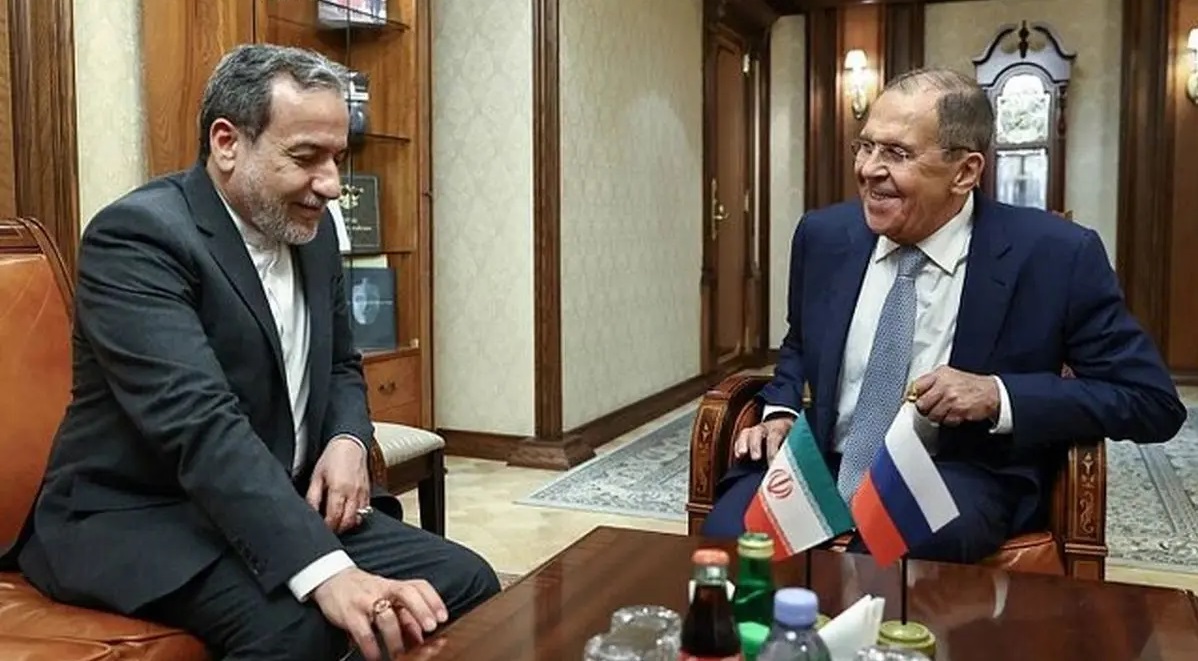
Iranian Foreign Minister Abbas Araghchi visited Moscow Yesterday. A statement published by the Iranian foreign ministry said that the top diplomat met his Russian counterpart Sergey Lavrov on Wednesday evening and discussed various matters.
The statement further said that the two sides discussed international and regional developments and Iran nuclear program.
The driving force of strategic Tehran-Moscow relations
Overall, ties between Iran and Russia have been on a steady upward trajectory in recent years. The primary engine driving this growing partnership is their shared confrontation with the West. Russia’s relations with Western powers have sharply deteriorated, first following the 2014 Crimea crisis and later with the outbreak of the Ukraine war in 2022, prompting Moscow to deepen its engagement with countries that openly challenge Western influence. Iran faces comparable pressures. Western sanctions and Tehran’s ongoing confrontation with Israel have further strained its relations with Western capitals. In this context, Iran and Russia have moved to broaden their cooperation, increasingly converging around shared interests and strategic priorities.
Mutual interests in strategic alliance
The deepening cooperation between Tehran and Moscow has been shaped and consolidated by sustained systemic pressures arising from major regional and global geopolitical shifts over the past decade. The deterioration of Russia’s relations with the West, particularly following the annexation of Crimea in and war in Ukraine, has played a pivotal role in Moscow’s strategic realignment. These developments triggered unprecedented Western sanctions targeting Russia’s energy exports, financial institutions, and access to global markets. In response, Moscow has actively sought closer ties with non-Western countries to reduce its economic dependence on Western systems. Strengthening cooperation with Iran, especially given Tehran’s long experience in navigating Western sanctions, has emerged as a key pillar of Russia’s strategy toward Iran.
At the same time, prolonged Western pressure on Iran’s economy has pushed Tehran toward an eastward pivot, prompting it to bolster relations with Russia and China in search of economic and political backing. Iran’s expanded engagement with multilateral organizations such as the Shanghai Cooperation Organization (SCO) and BRICS reflects this strategic shift toward the East, culminating in its full membership in both organizations by 2025. Tehran views Russia and China as central actors in the emerging multipolar global order and has prioritized strengthening ties with them at both bilateral and multilateral levels.
Military sector, the decisive part of bilateral relations
The Russian interest in the Iranian-developed drones is one of the determining factors in Tehran-Moscow relations over the past years when Russia has turned to jointly producing drones with Iran. According to reports, Russia has stepped up its cooperation with Iran in military technology, intelligence sharing, and technical support. Moscow has also facilitated military and defense cooperation with Russia’s traditional allies like Belarus and Tajikistan.
Gaza war as a turning point
The Gaza war has also served as a major catalyst for closer Iran–Russia relations. From Tehran’s perspective, the conflict goes far beyond a localized dispute; Israel’s military actions in Gaza and beyond are seen as reflecting a broader Western, particularly US-led, agenda to reshape the West Asian regional order.
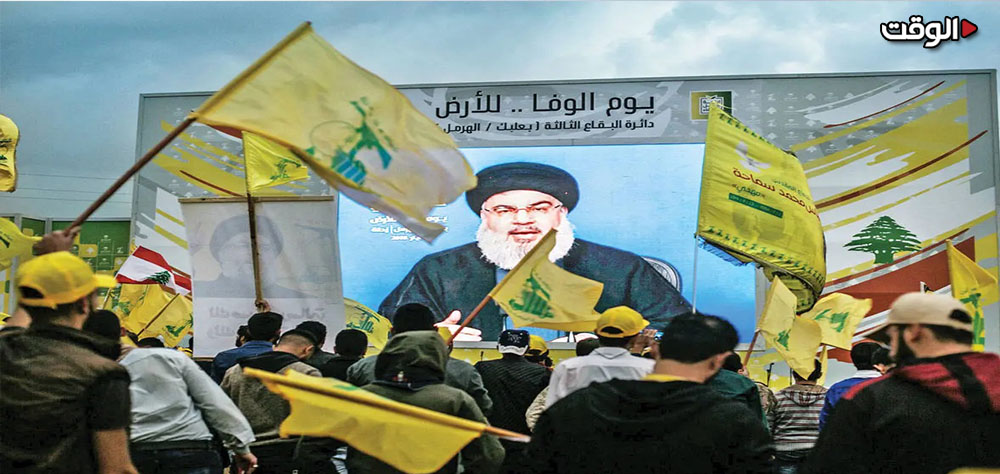
At the same time, Russia’s increasingly vocal criticism of the war in Gaza has aligned closely with Iran’s narrative, further reinforcing bilateral cooperation. From the outset of the conflict, Moscow backed calls for a ceasefire and opposed Western-sponsored resolutions that offered unconditional support for Israel, positioning itself squarely alongside Tehran’s diplomatic stance. The war has also provided Russia with an opening to expand its engagement with Iran’s regional allies within Axis of Resistance, including Hezbollah in Lebanon and Ansarullah in Yemen.
Amid escalating Israeli threats and aggression against Iran, Russia, viewed by Tehran as a key strategic partner, has also facilitated Iran’s access to advanced air-defense capabilities, including systems such as the S-400 surface-to-air missile platform and Russian-made Sukhoi Su-35 fighter jets.
Growing economic cooperation
The two allies have expanded their cooperation in response to the Western economic pressures and sanctions. By 2022, their trade volume hit $5 billion annually, bit it had increased now.
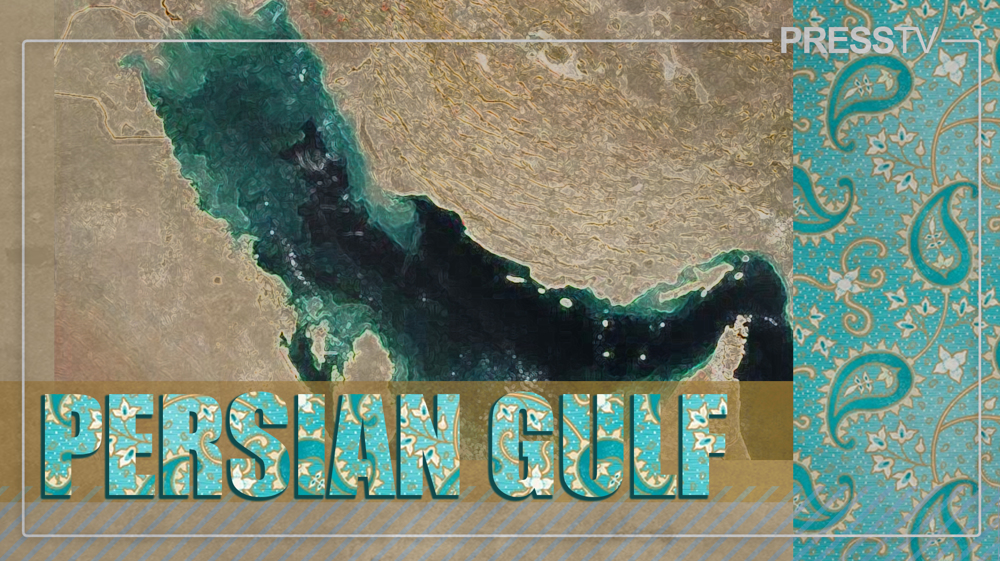
The two countries’ cooperation within the European Economic Union (EEU) along with advancing joint infrastructural projects and energy initiatives indicate Tehran and Moscow resolve to expand partnership. The North-South Corridor of Iran, Russia, and India establishes a vital link between Persian Gulf and North Europe as it is planned to boost trade and regional connection and to reduce dependence on Western trade routes.
Comprehensive trade pact
Iran and Russia are actively pursuing a “Comprehensive Strategic Partnership Treaty,” a move that crystallizes the significant evolution of their bilateral ties, marked by both burgeoning opportunities and inherent constraints. The 20-year agreement, comprising 47 articles, commits both nations to broad cooperation across security, energy, trade, and cultural exchange sectors, establishing a formal framework to deepen their alliance.
On the security front, the pact prioritizes collaboration in defense industries, military training, and intelligence sharing. It explicitly provides for joint military exercises designed to enhance operational coordination between their armed forces.
Economically, the treaty reveals a clear strategic alignment. It advocates for a major boost in bilateral trade, champions the use of national currencies over the US dollar, and emphasizes joint projects in infrastructure and energy. This push to conduct trade in ruble and rial is a transparent effort to insulate their economies from Western financial systems and blunt the impact of international sanctions. Echoing this drive, Leonid Bryisovich Lozhechko, Chairman of the Russia-Iran Business Council, recently highlighted Moscow’s determination to expand economic ties with Tehran. He revealed that over 80 percent of commercial transactions between the two countries are already settled in national currency, adding that both sides are taking concrete steps to streamline trade regulations and expand technological cooperation.
Ultimately, the landmark pact underscores the deepening strategic convergence between Tehran and Moscow, a partnership fueled by a shared opposition to Western pressure and intertwined economic and military interests.
The outlook
Quitting bilateral cooperation by the two allies sounds quite unlikely. Systematic pressures including Western sanctions, military threats, and broader push to marginalize the two countries gives a credible reason for Moscow and Tehran to bolster ties.
Furthermore, recent efforts by both countries to institutionalize their relationship, including the 2025 Strategic Cooperation Pact and their increased coordination in multilateral forums, have deepened their structural interdependence. These institutionalized ties mean that even if a diplomatic thaw with the West emerges, neither Tehran nor Moscow is likely to abandon the strategic partnership entirely. Instead, their cooperation may shift toward a more flexible and transactional arrangement, with each side calibrating the scope of collaboration based on evolving calculations of national interest.
Furthermore, geography and strategic realities remain the defining factors driving Tehran-Moscow closeness. Iran and Russia as neighbors in the Caspian Sea cannot ignore each other’s regional reservations. Even before 1979 Islamic Revolution that installed the Islamic Republic, Western-aligned Shah of Iran sought to walk a tight rope between the East and West.
Looking ahead, the developing partnership between Tehran and Moscow is likely to persist along a spectrum of transactional cooperation and strategic alignment. Ultimately, the Iran-Russia partnership endures as a paradigm of pragmatic alliance within a shifting global landscape.