















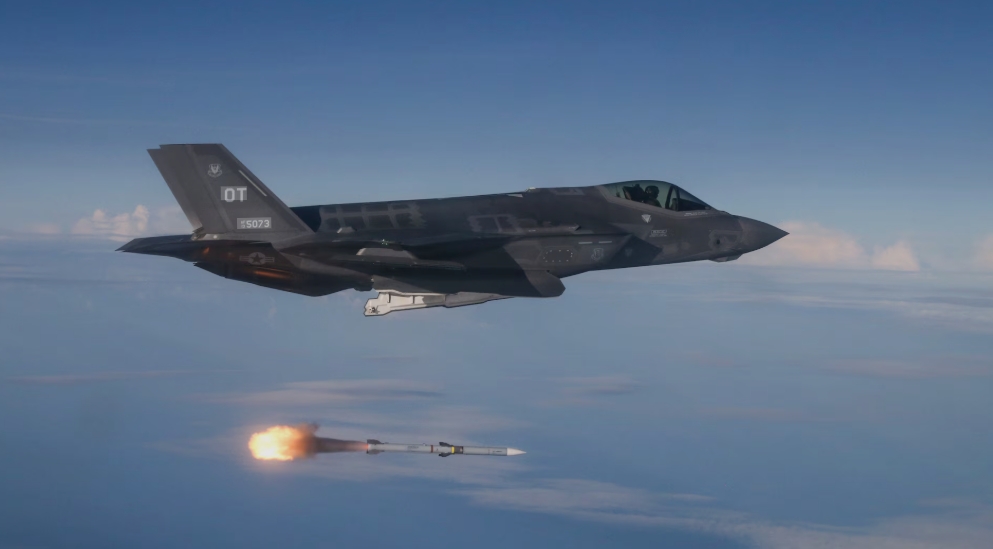


ALWAGHT- A review of the US–Qatar F‑35 talks, focusing on Israel’s qualitative military edge, the technical constraints of the Persian Gulf stealth airpower, and the broader effects of fifth-generation fighter exports on regional security dynamics.
Qatar and the United States are reported to be in advanced discussions over a potential sale of F‑35 stealth fighter jets to Doha, marking a significant step in US–Qatari military cooperation and signaling a broader US policy shift on advanced aircraft sales in the Persian Gulf. Qatar first expressed interest in acquiring F‑35s in 2020, but concerns in Washington over Israel’s Qualitative Military Edge (QME) delayed progress. Israeli officials remain concerned that any Persian Gulf acquisition of F‑35s could challenge their regional air superiority, although the US emphasizes safeguards to maintain Israel’s advantage.
Qatar has a history of acquiring US military aircraft, such as F‑15QAs, and operates cooperative training and basing arrangements with the United States, including a facility at Mountain Home Air Base in Idaho. These agreements aim to improve interoperability, training, and combat readiness under US operational control. The potential F‑35 sale would further modernize Qatar’s air force, although no contract has been signed and congressional notification would be required for any final deal.
While the F‑35 could enhance Qatar’s defensive capabilities, analysts note that it would not have prevented a recent precise Israeli strike on Qatari soil, which exploited stealth, standoff weapons, and intelligence gaps. Technical and operational limitations, including basing distances and reliance on US support for aerial refueling, AWACS coverage, and electronic warfare, mean that Persian Gulf F‑35s would face constraints in projecting power against Israel. Any offensive capability would depend heavily on coalition support rather than solely on aircraft numbers.
Despite these limitations, Israel remains cautious about potential F‑35 sales to Persian Gulf states, including Saudi Arabia, Qatar, and Turkiye, as a growing network of advanced fifth-generation fighters could gradually reduce its operational freedom. While Israel’s F‑35I “Adir” fleet currently retains a “first-look, first-shot” advantage, a wider distribution of stealth platforms and modern sensors across the region could complicate Israeli planning and surveillance, particularly in a prolonged conflict involving multiple adversaries.










