















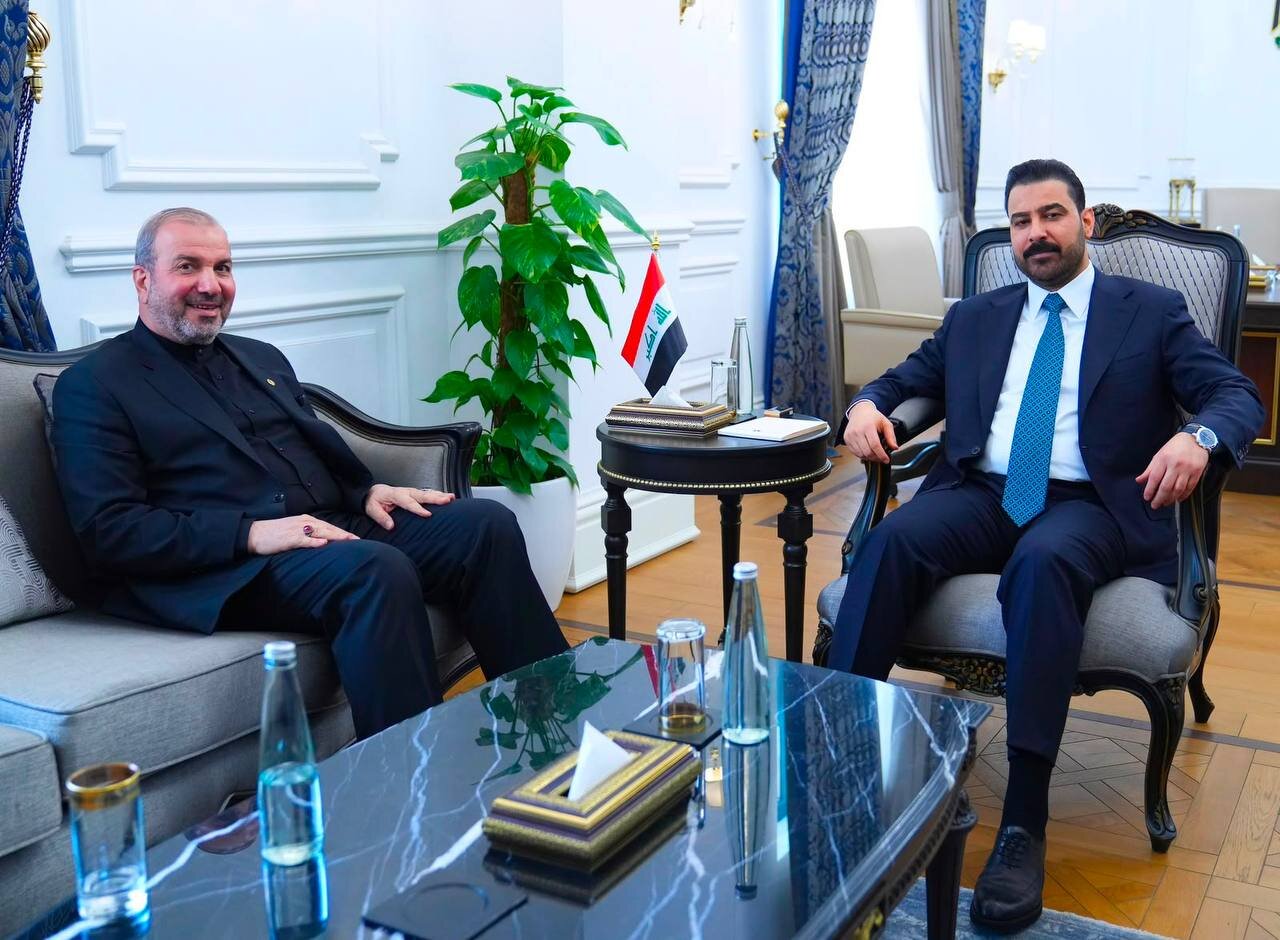


Alwaght- Iraqi Prime Minister Ali al-Zaydi’s trip to Tehran today is far more than a routine diplomatic visit between neighbors. Scheduled in the first months of Baghdad’s new government, in line with Iraqi political tradition, the visit underscores that Iran remains a decisive factor in Iraq’s strategic calculations, and that no administration in Baghdad can stabilize its foreign policy without first recalibrating ties with Tehran.
Even as the Trump administration and its special envoy Thomas Barrack deploy a mix of political pressure, security leverage, and economic inducements to curb Iranian influence in Iraq, al-Zaydi’s decision to place Tehran at the top of his foreign trips signals that the new Iraqi government fully grasps the geopolitical realities and Iran’s undeniable weight in the country’s security, economic, and political equations.
Against that backdrop, it is certain that the visit is under the influence of the military tensions of the US and Iran as the two main actors of the Iraqi developments. According to informed sources, al-Zaydi is expected to propose in Tehran that Baghdad host direct talks between Iran and the US. These unconfirmed reports also suggest that during his last week to Washington, he advised President Trump to halt strikes against Iran and pivot toward negotiation.
From Baghdad’s perspective, continued American-Iranian tensions threatens Iraq’s security and economy more than any other country’s. Mediation, then, is not merely a diplomatic initiative but a necessity for preserving domestic stability in Iraq.
Echoing that view, Iraqi political analyst Mashaal al-Tamimi said: “Al-Zaydi will underscore his government’s commitment to a policy of geopolitical balance, a strategy aimed at maintaining simultaneous ties with neighbors, regional powers, and international actors.” That approach, in effect, continues Baghdad’s yearslong effort to prevent Iraq from becoming an arena for great-power confrontation.
Economy, the main element of bilateral relations
But the significance of al-Zaydi’s Tehran visit does not stop at the mediation case. Iran and Iraq are old partners with a deep and multifaceted bilateral relationship, and high-level diplomatic meetings routinely address that breadth, particularly in the economic arena.
A major chunk of the talks will focus on expanding economic, trade, energy, and transit ties, areas where current capacity still falls far short of what both countries actually need.
Iran has long ranked among Iraq’s top trading partners. According to Yahya Al Eshaq, head of the Iran-Iraq Joint Chamber of Commerce, “Official two-way trade stood at about $12 billion last year. This year, the figure has dipped slightly, mainly due to a drop in Iran’s gas exports.”
Given the vast potential between the two neighbors, the current volume remains well below the proper level. That is why officials in Tehran and Baghdad have repeatedly set a target of boosting annual trade to $20 billion.
With the longest shared land border with Iran, Iraq is one of the Islamic Republic’s most vital export destinations. Of Iran’s total foreign trade, roughly $110 billion in the past fiscal year, nearly $12 billion came from exchanges with Iraq.
Iraq also accounts for more than 17 percent of Iran’s non-oil exports, making it the second-largest destination after China. Hundreds of product categories flow across the border, from construction materials, agricultural goods, and food and pharmaceutical products to industrial equipment and engineering and technical services.
Logistical advantages and strong trade potential aside, economic relations still face headwinds: U.S. sanctions, intensifying regional competition for a slice of the Iraqi market, and Iraq’s own political and security volatility. Still, many experts believe Iraq could play an even more significant role in sustaining and expanding Iran’s foreign trade in the years ahead.
That is precisely where al-Zaydi’s own background could make a difference. Unlike many of his predecessors, who came from security or political careers, Iraq’s current prime minister brings an economic lens to the job, and that could unlock long-neglected opportunities for cooperation. Joint projects in trade, investment, transport, banking, and industrial partnerships may finally gain real momentum under his watch.
Cooperation potentials in energy sector
Energy is one of the most critical pillars of Tehran-Baghdad cooperation. Iraq still relies on imports of Iranian gas and power to meet a portion of its electricity needs, and Iran's gas exports feed several major Iraqi power plants, playing a vital role in preventing widespread blackouts during peak demand periods.
Under a five-year deal renewed in 2024, Iraq imports up to 50 million cubic meters of natural gas per day from Iran, with an estimated annual value of $4 billion to $5 billion. Iraq's Electricity Ministry has stated that more than 30 percent of the country's generated power depends on Iranian gas, and that a cutoff would take roughly one-third of national production offline.
Beyond gas, Iran also exported electricity to Iraq until recent years' restrictions, further underscoring Tehran's primacy in meeting Iraqi energy needs.
Though Washington has pressed Baghdad to seek alternatives, technical and economic realities suggest no short-term option can fully replace Iran's energy partnership. Alongside gas and electricity exports, Iran's engineering and technical capabilities offer another major avenue for cooperation.
The 40-day US aggression against Iran demonstrated that the country, despite the difficulties, was able to meet its own needs in power generation, transmission, and grid maintenance, as well as oil, gas, and refining, without relying on foreign companies. That indigenous expertise, delivered at a fraction of the cost of Western firms, could prove equally valuable in rebuilding and expanding Iraq's energy infrastructure.
Petrochemicals represent another promising frontier. According to reports from the Petrochemical Industry Employers' Association and customs data, Iraq is one of the top destinations for Iranian petrochemical exports, with a share estimated at $1.5 billion to $2 billion.
Geographic proximity, low transport costs, and the complementary nature of both countries' industrial needs make this one of the most lucrative areas for joint cooperation. In addition to exports, joint ventures in downstream petrochemical industries could generate significant added value for both economies.
Beside economic cooperation, transit occupies a special place in bilateral ties. The disruptions in recent months to tanker traffic through the Strait of Hormuz have laid bare Iraq's vulnerability more starkly than ever. The bulk of Iraq's oil exports flow through the Persian Gulf and the Strait, and any insecurity along that route hits Baghdad's revenues directly.
While Iraq is exploring alternative routes via Turkey and Syria, those projects face security and infrastructure hurdles that will take years to resolve. For Baghdad, then, dialogue with Iran on energy route security and maritime passage facilitation is of strategic importance, and al-Zaydi is expected to raise the issue with senior Iranian officials.
For Iran, meanwhile, Iraq is not just a neighbor or an export market; it is a strategic link in east-west transit corridors. Completing the Shalamcheh-Basra railway and connecting it to Iraq's rail network would tie Iran's transit corridors to Mediterranean ports, bolstering Tehran's position in China's Belt and Road Initiative (BRI).
In this context, Iraq is not only the gateway for Iranian goods into the Arab world and the Mediterranean; it is also a strategic bridge that could transform Iran into a hub for east-west transit. That potential could generate billions of dollars in transit revenue for both countries and raise their geopolitical standing in the calculations of China and other Asian economic powers.
Regional matters
Perhaps the most sensitive part of al-Zaydi’s Tehran talks will center on security and regional developments.
The prime minister’s trip comes just days after his meeting with Trump, a clear sign that Iraq’s new government is scrambling to walk a tight rope in its ties with both Iran and the US amid the region’s escalating tensions. Baghdad knows all too well that any further escalation between Tehran and Washington could have direct consequences for Iraq’s internal security and stability.
That concern has taken on added urgency given Iran’s repeated warnings about the potential US use of Iraqi territory as a staging ground for operations against Iran, joint US-Israeli exploitation of Iraqi airspace, and efforts to foment insecurity through separatist groups. Seen through that lens, al-Zaydi’s visit to Tehran looks very much like an attempt to manage those sensitivities and keep Iraq from becoming an arena for great-power confrontation.
Separately, the massive funeral processions for the martyred Iranian Supreme Leader Sayyed Ali Khamenei in the two holy cities of Najaf and Karbala were, in many observers’ eyes, far more than a religious ritual. They were a stark display of the social and political weight of the resistance movement in Iraq, and of the depth of popular solidarity and support among a significant segment of the country’s political forces. Those scenes sent a clear message to Baghdad’s politicians: any decision on national security or foreign policy must inevitably reckon with on-the-ground realities and Iraq’s internal balance of power.
Al-Zaydi’s government, which emerged from the Shiite Coordination Framework (SCF) coalition and the resistance factions, is acutely aware that if the US-Israeli aggression on Iran expands, Iraqi resistance groups, driven by their ideological and political commitments, will join the fray alongside other Axis of Resistance actors. Baghdad is therefore trying to walk a fine line: preventing Iraq from being pulled into direct confrontation while also keeping internal disputes from spiraling into a full-blown security crisis.
Therefore, Iran can provide a reliable path to al-Zaydi’s government to evade a trap the US government has set for it to bring it face to face with the home resistance groups through raising the idea of disarming.
The resistance groups want the end of the American occupation and interference in Iraq's internal affairs and pressure for disarming, and if the new Iraqi government further yields to these pressure disregarding the home dynamics, it will certainly find itself in front of challenges.










