
















Alwaght- As Gaza war unfolds, in recent weeks a group calling itself "June 26 Movement" issued calls for Gaza people to take to the streets on June 26 and protest against Hamas, the resistance movement that has been holding Gaza since 2007. However, reports suggested that the call did not receive major reception and so failed to meet its stated objectives.
June 26 Movement: Failure in first test
The June 26 Movement is not a political party or established organization. It is a campaign that has taken shape largely online in recent months, with one clear goal: organizing protests against Hamas inside Gaza. The movement is trying to channel war-weariness, the humanitarian catastrophe, and daily economic misery into street anger directed squarely at the resistance group.
According to Arab media reports, the campaign is being directed from outside the Palestinian enclave. Its core messaging consistently pins blame for Gaza's current plight on Hamas, an approach that critics say conveniently sidelines Israel's military responsibility for the war and the unfolding humanitarian crisis.
But the movement flopped badly on its very first call to action, failing to draw any significant number of Gazans into the streets. Observers say the failed turnout signals an early collapse for this protest drive.
Media activity and supporters of campaign
The movement is largely active on social media platforms like Facebook, Instagram, and X. The movement chants for better living conditions, end of war, fighting hunger and displacement, and also criticizing Hamas’s performance.
Reports suggest that a major number of those producing content for the movement are living outside Gaza, mainly in the European or Arab countries.
Among the figures associated with the movement, we can point to Abdulhamid Abdulati, an Egypt-based Palestinian journalist. Meanwhile, Saudi-run media outlets like Ashargh Al-Awsat and Al Arabiya have given a major coverage to the activities of this movement.
Palestinian reactions
The June 26 Movement has run into a wall of fierce pushback from Palestinian users and activists online. Many Palestinian pages and social media accounts have branded the campaign "suspect," arguing that its fixation on internal divisions distracts public attention from Israel's crimes, effectively doing Tel Aviv's bidding.
Against that backdrop, a number of Gaza elders and tribal figures pushed back last week in interviews with the Shehab news website. They made it clear that any move that undermines internal security within Palestinian society, or any collaboration with the Israeli occupiers, must be met with firm legal action. Anyone proven to be cooperating with the enemy or participating in destructive activities, they warned, will be held to account.
Holding funeral in response to the call for anti-Hamas protests
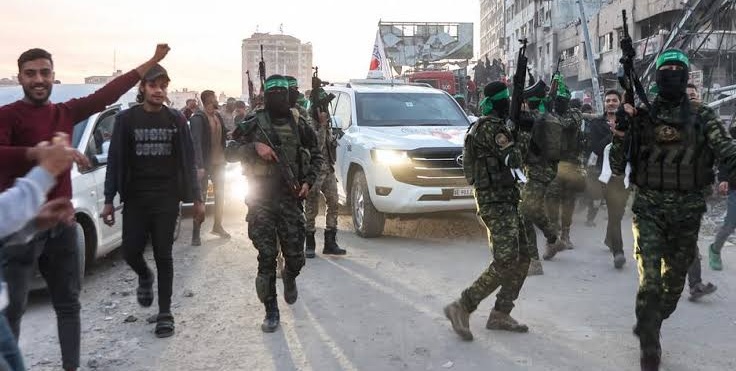
What is striking is that the new movement's call for anti-Hamas protests did not just fall flat, it was effectively overshadowed by Palestinian resistance factions, who staged a massive funeral procession for the nephew of martyred Hamas leader Ismail Haniyeh, drawing thousands of Gazans into the streets.
Tens of thousands of Gaza residents, reports said, turned out last Friday in Gaza City for funeral service of Walid Majdi Haniyeh, Ismail Haniyeh's nephew, who succumbed to wounds sustained in an Israeli army strike near the Italian residential complex in the Al-Nasr neighborhood, west of Gaza City.
Mourners chanted takbirs and hurled slogans against the occupying regime's crimes as they escorted the body to its burial site. Funeral prayers were held beforehand. The crowd rallied with chants like "Our movement is Hamas... our army is Qassam" and "Khaybar, Khaybar, O Zionists... October 7 will return", pointing to the October 7, 2023 attacks on the Israeli occupation by Hamas.
For some observers, the timing of this mass funeral, coinciding with the protest call, sent a clear signal, telling the enemies of Hamas that significant swath of Gaza's population still prefers to channel their grievances through the resistance factions, Hamas included.
Admission to defeat
Israeli media that have published reports on sporadic anti-Hamas protests later reported on failure of the campaign. Walla in a report said that the failure to mobilize large numbers against Hamas is a sign of stability of the governing mechanism of this movement in Gaza, adding that any plan for the day after Hamas is unrealistic and doomed to failure.
At the same time, Kan reported that senior intelligence officials have warned Chief of General Staff Ayal Zamir that Hamas is rebuilding its capabilities in Gaza and is bolstering its military power through recruiting young people and making hand-made bombs.
Not the first, not the last
Protest campaigns like June 26 Movement are hardly the first to emerge in Palestine and Gaza with a critical stance toward the resistance. And given Israel's sustained efforts to weaken Palestinian resistance factions, it is likely that similar groups will crop up again in the future.
Actually, anti-Hamas dissent in Gaza is nothing new. Back in 2011, 2012, and again in 2019, gatherings broke out over economic, social, and political grievances. But according to some observers, a portion of the currents that have emerged since the latest war began, fixating almost exclusively on Hamas-bashing, appear to enjoy media, political, or financial backing from outside Gaza. That dynamic, they say, makes it all but certain that comparable movements will surface again down the line.
Armed groups aligned with Israeli occupation
All of this is playing out against a backdrop of formal Israeli military acknowledgment of cooperation with certain anti-Hamas militias inside Gaza. The most prominent case was that of Yasser Abu Shabab, who, backed by the occupiers, tried to seize control of Rafah, only to be killed in clashes with Hamas forces in early December 2025.
Additionally, reports have surfaced of smaller armed factions operating with Israeli army support, raiding homes and tents of displaced families, looting their belongings, and feeding intelligence on Hamas fighters back to the Israeli occupation forces.










