














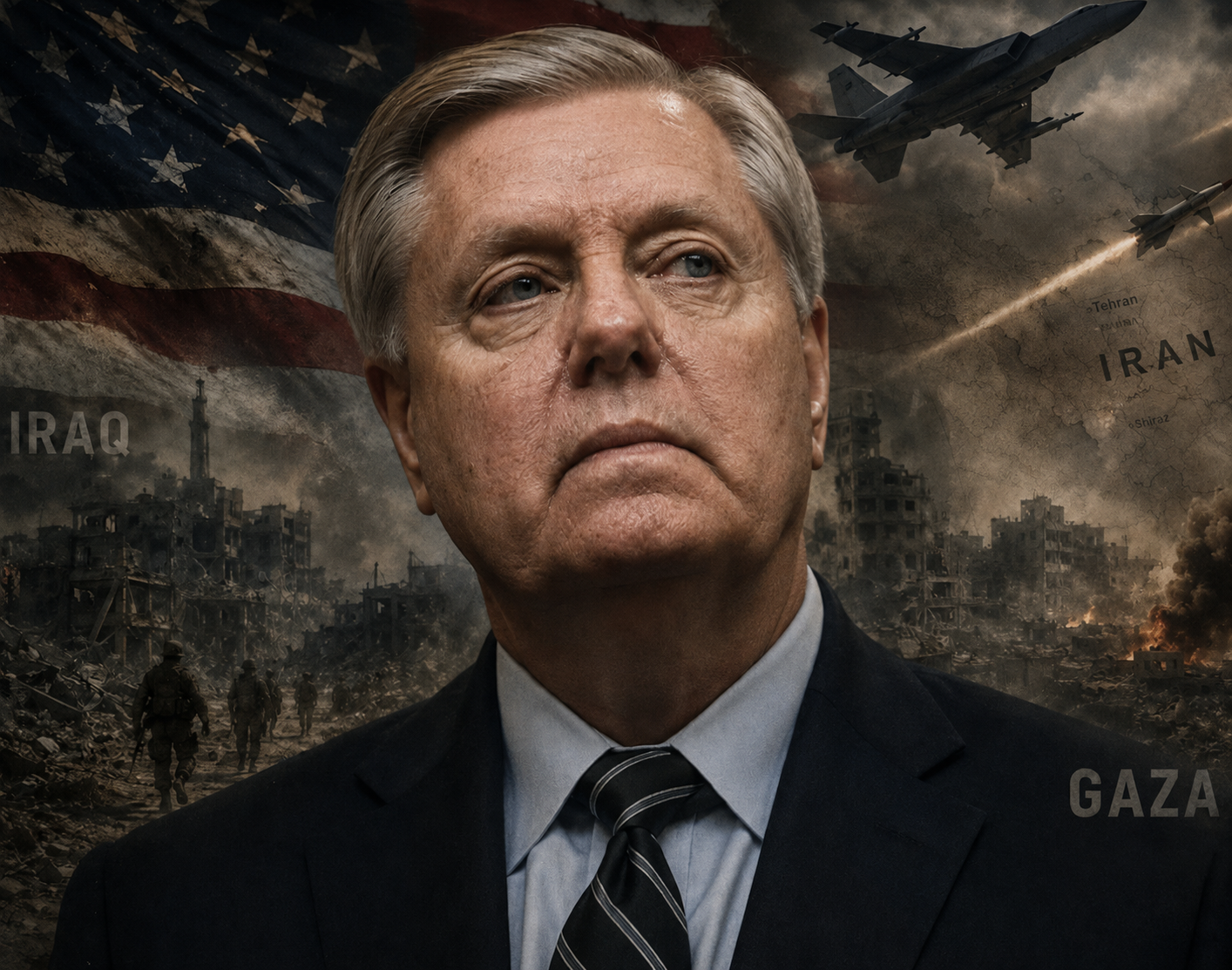


ALWAGHT- Lindsey Graham's death has reignited debate over the wars, foreign interventions, and strategic alliances that shaped his controversial political career, from Iraq to Gaza and Iran.
The death of US Senator Lindsey Graham prompted an outpouring of tributes from US President Donald Trump and Israeli officials, who praised him as a steadfast ally and one of the strongest supporters of US-Israeli relations. Israeli leaders described him as a loyal friend whose backing remained unwavering throughout his political career.
His passing also reignited debate over a deeply divisive legacy centered on military intervention, economic sanctions, and an assertive US foreign policy. While supporters viewed him as a defender of American interests, critics argued that he championed prolonged wars and regime-change policies.
Throughout his career, Graham backed the US-led invasion of Iraq, supported military intervention in Libya, advocated arming anti-government groups in Syria, and opposed the withdrawal of US forces from Afghanistan. He consistently argued for maintaining a strong US military presence abroad.
Graham also adopted a hardline stance toward Iran, repeatedly calling for tougher sanctions and threatening military action against the country's energy, military, and nuclear infrastructure. During the Gaza war, he strongly supported Israel's military campaign and rejected calls to restrict US military assistance.
Reactions to his death reflected these contrasting views. While political allies honored his commitment to US alliances, many critics cited his support for wars in Iraq, Gaza, and elsewhere as defining features of a legacy they associated with conflict, destruction, and civilian suffering.










