















Alwaght- Russia has said that it would partially pull its forces out of Syria, surprising many who are following the regional developments, stirring many arguments, analyses and speculations on the secret of such move and the reasons behind the timing which is coincident with Geneva peace negotiations. There is conflicting information about the present number of the Russian forces that are set to be withdrawn from Syria. To know about the drives of the Russian step, Alwaght has talked to the Lebanese military expert General Amin Hotait. Here is what was exchanged in the interview:
Alwaght: What is the secret behind the timing especially that it is coinciding with start of peace negotiations between the Syrian government and the opposition groups in Geneva?
Hotait: Downsizing the Russian military presence in Syria at this specific time and its timing could be looked at from different angles. First, everybody knows that Russia has agreed with the Syrian government’s request for military deployment for a limited timetable, Moscow determined it to be four months, then it extended it to six months. Second, the Russian campaign was also specified in goal as it aimed at striking the terrorist groups and depriving them of their assault capabilities. Now these two objectives are realized. The timeframe of six months is at its end and the mission is done successfully as we see recapture of over 10,000 kilometers of the Syrian territory, and the Syrian army forces are now standing at the gates of the (ISIS-held city of) Palmyra. They have regained control over most of the oil fields in the center of the country. Additionally, they have freed more than 400 towns and villages and therefore the mission for which the Russian forces were deployed to Syria was concluded successfully as the timetable has expired.
Furthermore, the second point, which is seriously significant, is that Russia and the US are the drivers of the political process in Syria and through this cooperation Russia has reached an accord with the US based on which the Resolution 2854, which dictates that all kinds of combat operations must be halted, was adopted, and it is logical that Russia pulls forces out of Syria because it wants to implement the Resolution 2854. We cannot determine whether Russia is battling or stalling its combat operations in Syria. Here the Russian distinction was in two points from a military viewpoint. Moscow broke its military operations into three parts; it halted one of them and kept the two others going. The first part is taking part directly in combat in support of the Syrian Arab Army, in this section Russia has scaled down its assistance to comply with the requirements of the UN resolution’s dictation for halting combat operations. The second part is battling ISIS in Syria. Russia has decided to stay in the confrontation and provide the necessary fighter jets to ensure that the counter-terrier operation rolls on. The third part is providing the deterrent air cover especially in the face of Turkey, and this is what Russia is insisting on, particularly through keeping its S400 air defense systems operating in Syria.
By this move, Russia has considered both the military interests and support of Syria along with political interests to step up and encourage the political process in Geneva. Thereby, the Russian decision is directly related to the political process of Syria.
Alwaght: Do you have any accurate information about the number of the Russian forces being pulled out of Syria as we hear conflicting news about the type and number of the equipment Russia is intending to withdraw from Syria?
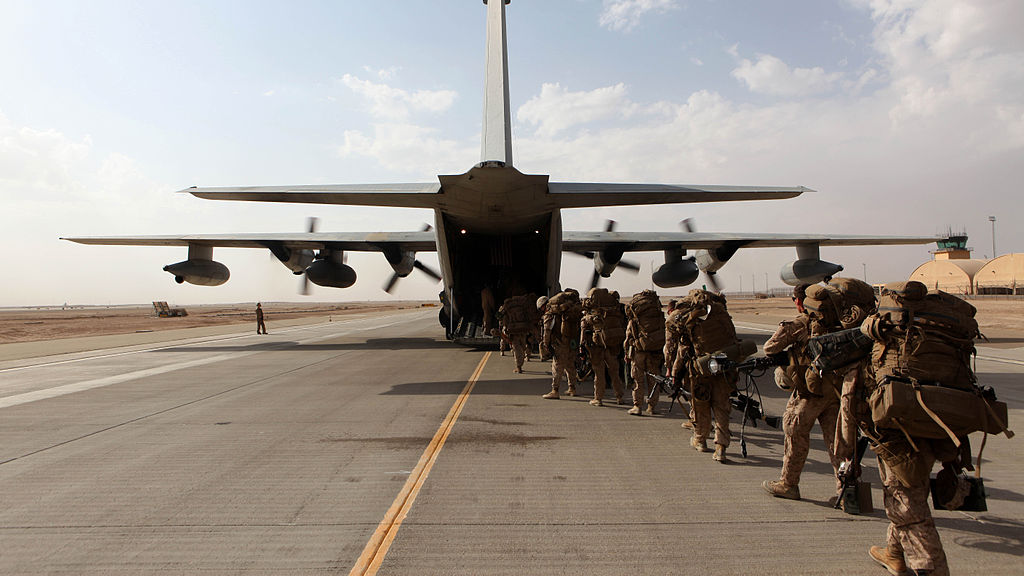
Hotait: First of all, the forces that would be withdrawn from Syria are essentially aerial. Regarding the present forces and which are set to be pulled out, there are 40 Sukhoi planes, including combat, air-fueling and air support planes, certainly together with the crew that are operating them. There is no force but air force in Syria that is going to be withdrawn. But the logistic Hmeymim and Tartus military bases would continue to operate and this is what was highlighted by Russia. So, the withdrawal would be confined to the air forces which have been adopting the air campaign.
Alwaght: Would withdrawal of Russian forces affect the speed of the military operations conducted by the Syrian army in the country’s north as well as other fronts?
Hotait: No, the Syrian forces would continue to receive logistic and military assistance from Russia in order to renew their fighter jets and get the spare parts. The Syrian air forces, after receiving overhaul, are qualified to carry out missions they would be tasked with in the future operations.
Alwaght: We are hearing that some sides claim that the Russian move was all a surprise and without coordination with Syria. Their justification is that the announcement has come from Moscow and without a Syrian presence. They take this as a subordination of Syria’s independent decisions. What do you think?
Hotait: This is wrong. Russia has announced military deployment to Syria from Moscow at the Syrian government’s request. Now that the Russians want to pull out of Syria, they have announced their decision from Moscow, adding that it was made in coordination of the Syrian President Bashar al-Assad. Even more, the Russians have said that the Russian-Syrian relations were strategic and not to be affected by scaling down such assistance.
Alwaght: We hear many hypotheses for example those that say there is a deal according to which Russia would withdraw part of its forces from Syria and in exchange Turkey would close down borders with Syria. The theorists justify their claim by saying that the Turkish President Recep Tayyip Erdogan has unusually not attacked the Syrian president yesterday in his speech. What is your idea?
Hotait: I think that there is no deal; rather, there is an international commitment to stop all the combat operations. Actually, commitment to the (UN) resolution covers all sides that are relevant to the Syrian crisis; everybody adheres to the decision based on the specified directions set for them. Russia has accused Turkey of intervening in Syria and expanding in Syria’s territory. This Russian withdrawal decision or rolling back assistance to Syria would put further strains on Ankara, making the international community, and particularly the US, push Turkey in an angle even more humiliating. For two reasons Turkey, sooner or later, would find itself forced as much as it could to close its borders and refrain from providing the terrorists with equipment and safe havens. First, for implementing the Resolution 2854 and second for protecting its national security, especially that terrorism has begun to strongly backfire inside Turkey.
Alwaght- There are other speculations about pressures being put on President Assad, specifically after recent remarks of the Syrian Foreign Minister Walid Muallem, while the Syrian opposition are shown leniency in a bid to push the political process to move faster than before in Geneva. What is your idea?
Hotait: Certainly, every decision has those who seek fishing in troubled water. Syria’s enemies want to take advantage of this situation. But Moscow’s backing is not just for Syria but also for the national security of Russia before any other element. Russia could not act like a silly person who bothers milking and then pours the milk. So, any disruption of the Syrian security and allowing the terrorism to expand would extraordinarily impact Russia. Therefore the logic that produces such speculations is that of simple people who know nothing of strategy as well as national and collective security. Therefore, I don’t think that they are touching the reality through their speculations.










