











Alwaght- The Israeli-American war of aggression against Iran has now gone far beyond the battleground and Strait of Hormuz, becoming one of the factors squeezing the European citizens economically. In France, rising fuel prices and living costs and growing social discontent with public services combined have triggered a new wave of protests, putting the government of President Emmanuel Macron in one of the most difficult political conditions in the closing months of presidency.
The surging oil prices and higher living expenses have pushed up the public discontentment in this European country. The demonstrations first were led by students about deteriorating education conditions, but gradually spiralled into an inclusive protest movement.
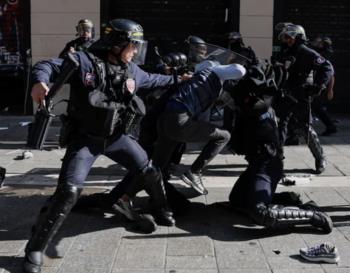
During these demonstrations on Saturday, about 550,000 people took to the streets, stated the interior ministry. CGT, a labor union, put the number of demonstrators at 800,000. On the sidelines of these gatherings, clashes with police, fires, and destruction of some public buildings and shopping centers. Reuters reported described the unrest as one of the biggest protests waves and riots in recent decades in France.
When war impacts petrol stations
One of the key transmission belts linking the war against Iran to French discontent is the global energy market. Disruptions to oil transit routes, anxieties over shipping security in the Strait of Hormuz, and rising energy procurement costs have pushed fuel prices higher across Europe. For a country like France, where households, farmers, drivers, and a wide swath of businesses depend directly on fuel, that pressure translates into higher costs for commuting, freight, and production.
Reuters reported on September 30 that France's inflation rate hit 3.4 percent in September, up from 2.6 percent in July. Surging oil and gas prices in the wake of the Iran war were identified as a principal driver of the acceleration. The figures make clear that the energy shock, contrary to claims that the war's consequences would remain confined to the region, has spilled over into Europeans' everyday economy.
The squeeze from fuel prices has compounded problems the French were already confronting before the war: eroding purchasing power, anxiety over the future of public services, and the government's budget constraints. Rising energy costs, then, should be counted as one of the forces amplifying the protests.
Macron's admission: A war we are paying its costs
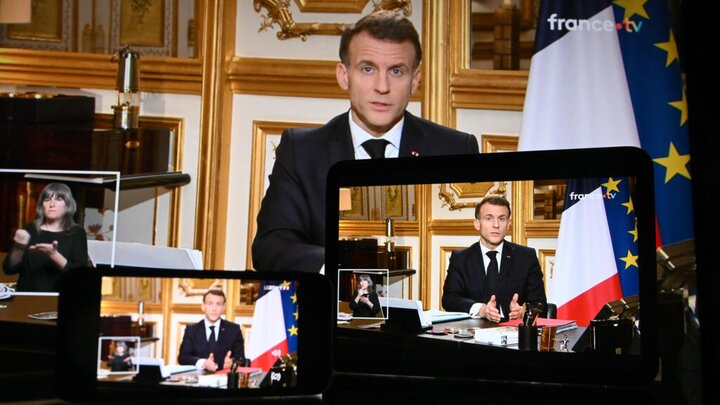
Perhaps, the most important admission to the impact of the aggression against Iran came out from mouth of Macron. On October 18, Macron explained why he has begun his tour of Persian Gulf states, saying that he wants to ensure energy flow to France and assuage economic pressures of rallying fuel prices.
Macron, pointing squarely at the source of the energy crisis, said the surge in fuel prices stems from the Middle East and from a war that the US and Israeli regime launched in February against Iran.
"This is a conflict France did not take part in, and we are bearing its consequences," he stressed.
The remarks, reported by Le Monde, amount to a plain acknowledgment that the war's fallout has reached well beyond the region's borders. The French leader now speaks of the need to secure energy supplies and ease price pressures even as his government must contend with a wave of social discontent and widening protests.
From failing to condemn the war to bearing its consequences
The French president's admission comes even though Macron stopped short, when the US-Israeli war against Iran began, of taking a stance that could be described as an explicit condemnation of the conflict. Now he himself concedes that France, despite not taking part, is paying its costs.
The situation makes plain that a war's consequences cannot be contained simply by geographic distance from the battlefield or by non-participation in military operations. In a globalized economy, higher oil and gas prices, disrupted shipping lanes, and market uncertainty can drive up the cost of living in countries thousands of kilometers from the war zone.
French government between critical living conditions and financial inability
Macron is confronting the protests at a moment when his government faces severe constraints in reining in the budget deficit and controlling public debt. Reuters reported on October 19 that the French president is squeezed simultaneously by financial markets demanding fiscal discipline and by protesters demanding more support.
What is unfolding in France today is a case study in the indirect costs of war, costs borne not only by the governments involved but by citizens of other countries. Rising fuel prices, pressure on households and businesses, and deepening economic anxiety can turn simmering discontent into wider protests.
For Macron, the current predicament is not merely an energy or foreign-policy challenge, but it has become a domestic and political one. He must now answer to citizens who feel the rising cost of living in their daily lives and expect the government to take effective action to contain it.