












Alwaght- While the Israeli regime army with occupying south of Litani River region has put strains on the movement of Hezbollah forces and on the network of tunnels for transfer of forces and equipment, the resistance fighters are also facing a challenge in unoccupied parts of the south and it is the interference by Lebanese government forces.
Under pressure of Washington, Beirut government has embarked on disarming Hezbollah and recently seized a track carrying explosives belonging to movement.
In this connection, Prime Minister Salman Nawaf of Lebanon said that the army stopped a truck moving from Dhahr al-Baydar of Bekaa region to the capital Beirut, carrying hundreds of kilograms of highly explosive C-4 materials. He said that there will be no tolerance or ignorance regarding the case and truth and accountability will be the top priority.
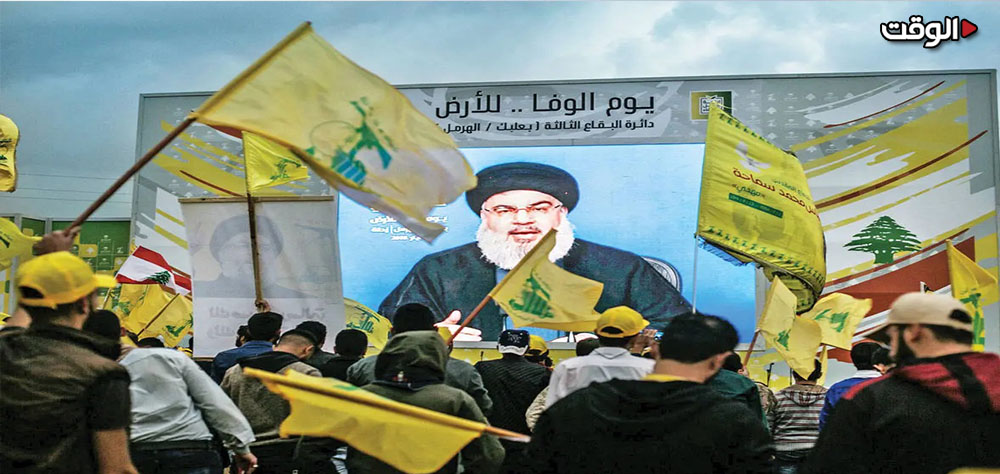
Reacting to the confiscation, Hassan Fadlullah, a Hezbollah lawmaker, said that the movement informed the Lebanese officials that the seized truck belonged to Hezbollah and that they tried to settle the case without any internal argument.
He called on officials to abandon their current approach, adding that anti-Hezbollah actions are a "great service to the enemies of the Lebanese people. He warned "we will not close our eyes to any measures against Hezbollah by any side that executes American agenda."
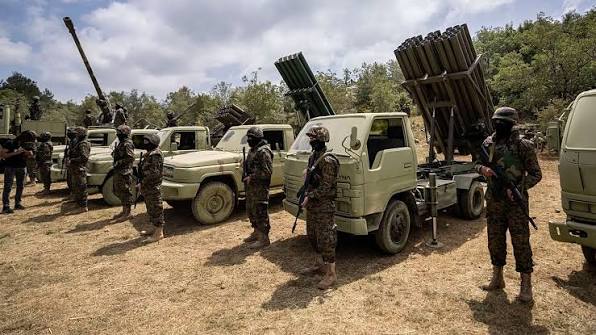
Reacting to the propaganda run against Hezbollah’s weapons shipment, he said that all of Hezbollah's arms, including the handmade bombs are made to counter the Israeli occupation.
He went on that launching such a campaign will not force Hezbollah to forsake its defense of the country and working to liberate Lebanese lands from Israeli occupation by all means.
Lebanese government obstructing Hezbollah fight against Israeli occupation
The seizure comes as Hezbollah has spent recent years locked in military confrontation with Israeli occupation, and as Beirut's support for the resistance has become one of the sharpest fault lines in Lebanese politics. Yet, in this climate, Beirut has chosen to focus not on confronting occupation or backing the forces fighting the enemy, but on curbing Hezbollah's military capacity, an approach that sends unmistakable signals to Tel Aviv and could pave the way for the continuation of Israel's occupation policies.
Beirut officials insist these measures are meant to clear a path to peace with Israeli regime and end the war. But multiple rounds of political talks with Israeli representatives in the US have gone nowhere, to the point that Salam acknowledged in his UN speech that Tel Aviv forces have still not withdrawn from Lebanese territory, accused them of reneging on their commitments and dragging out negotiations, and urged Washington to pressure the Israeli government to pull back from southern Lebanon.
Nearly two years after the Lebanon-Israel ceasefire agreement, the south remains mired in tension and dispute over implementation. Under the deal, the Israeli military was to withdraw from occupied areas and the Lebanese army was to take responsibility for security south of the Litani River. Instead, Tel Aviv has held onto positions inside Lebanon under various pretexts and continued its attacks.
For its part, the Lebanese army, expanding its deployment north of the Litani, is pressing ahead with the government's plan to rein in weapons outside its control. More than 7,500 Lebanese troops have been stationed at 116 positions along the Litani, and rather than confronting Israeli occupation, they are trying to push resistance fighters out of the area. In that context, focusing on uncovering and confiscating Hezbollah's weapons while Israeli regime occupies parts of Lebanese soil can only weaken Hezbollah.
Lebanon government playing in Israeli-American game
Seizure of Hezbollah explosives shipment by the army has precedents. In August 2023, in a road linking Beirut to Bekka, the army confiscated a truck carrying munitions claiming it belonged to the resistance movement. The army and the government demonstrate through such clampdown on Hezbollah that instead of guarding national security and sovereignty, they are unconditionally implementing American and Israeli policies.
In this regard, the American Secretary of State Marco Rubio in a phone conversation with Lebanese President Michel Aoun urged the government not to give in to Hezbollah’s push to hand over the explosives shipment.
Beirut's policy, thus, dovetails with Washington's demand that Hezbollah disarm, and in practice can only serve Tel Aviv's strategy of containing the resistance movement.
The Lebanese government appears to believe that weakening Hezbollah will extract concessions from Tel Aviv at the negotiating table, even though Prime Minister Benjamin Netanyahu and other Israeli officials have repeatedly made clear they have no intention of withdrawing from southern Lebanon, and have even seized further Lebanese territory over the course of the talks.
Against that backdrop, confiscating Hezbollah's weapons, the very arms meant to confront an occupying enemy, amounts to feeding the enemy's agenda and contradicts the government's own responsibility to defend Lebanese national sovereignty. Lebanese public opinion, meanwhile, stands with Hezbollah in insisting on confronting the occupation, yet Beirut's politicians are charting a course at odds with the will of their people.