
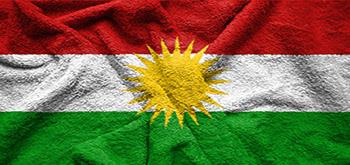



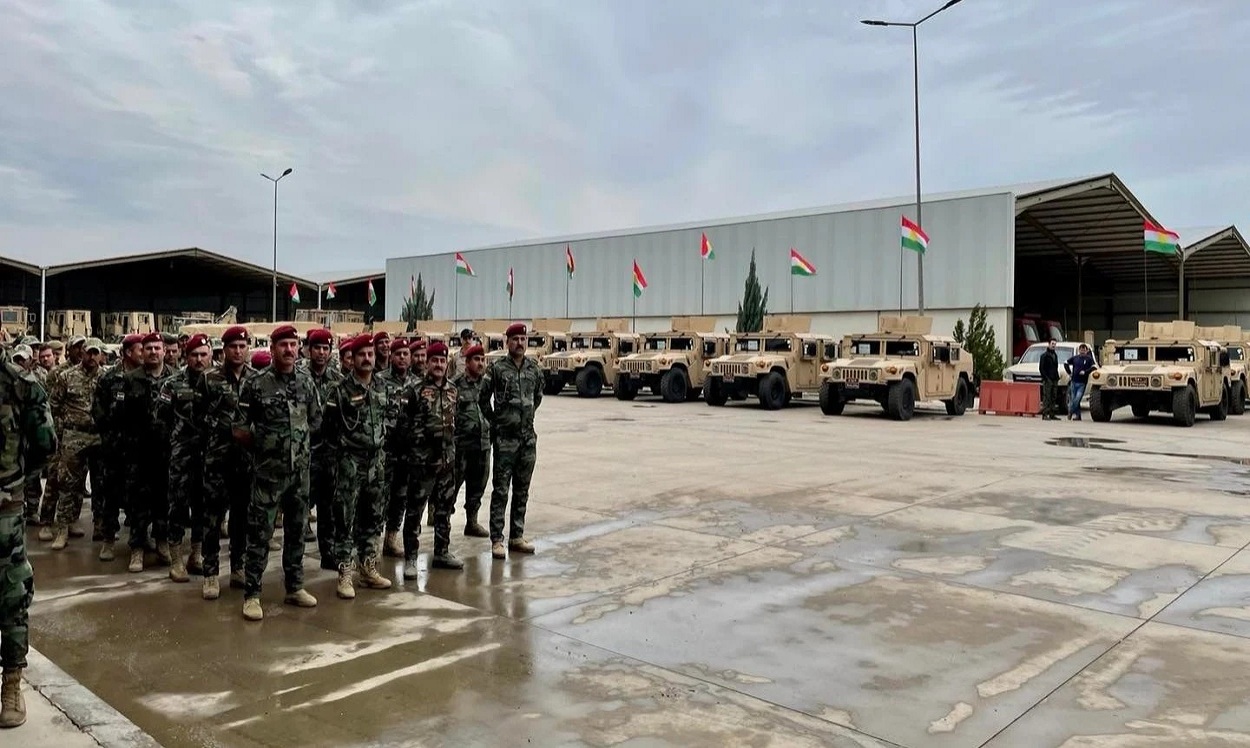


Alwaght- The unification of the Peshmerga forces in Iraq's Kurdistan region these days presents itself as one of the salient security developments of the autonomous Kurdish region. O the surface, it may look like a military and organizational project to create a unified structure of the Peshmergas, but in its deeper layers, it is interwoven to one of the region's oldest political issues, namely the relationship among the parties, the regional government, Baghdad and foreign powers.
According to official reports, the unification process has neared its conclusion and the Peshmerga Ministry announced its aim to be completing a 11-division structure under two local commands by September's end.
Meanwhile, Monday’s first-ever joint training course for senior commanders from the two commands offered a sign that the project is moving toward forging a unified command culture. Still, organizational progress should not be mistaken for a full resolution of political differences.
It is noteworthy that the Peshmerga structure has for decades been more than just a military force; it has formed part of the power architecture of the Kurdistan region’s two dominant parties, the Kurdistan Democratic Party (KDP) and the Patriotic Union of Kurdistan (PUK). That very fact has made unification far more complicated than merely transferring a few units from one organization to another.
At present, the KDP-affiliated structure, known as Unit 80, has moved faster along the merger track, with a substantial share of its personnel and equipment already transferred to the Ministry of Peshmerga. By contrast, the full merger of the PUK-linked Unit 70 remains bogged down in political and organizational disputes. The gap is not merely an administrative one; it reflects the long-running Erbil–Sulaymaniyah rivalry and the PUK’s fear that too much security power is being concentrated in a structure that could fall under KDP influence.
For that reason, the true yardstick of the project’s success should not be merely the number of divisions stood up. What matters more is which institution ultimately holds real command over forces in the field. If commanders, troop movements, military operations and security decisions remain subject to party leaders, then even the formation of 11 divisions cannot be taken to mean a fully unified military force has been created.
Put another way, Peshmerga unification has three phases: first, the transfer of personnel and equipment; second, the creation of a joint command structure; and third, the genuine handover of decision-making authority from the parties to formal institutions. The first two phases appear to be advancing at considerable speed, but the third remains the most delicate part of the project.
The stakes rise further because the unification process has coincided with a shift in US security policy in Iraq.
The decline in direct American support for the Peshmerga Ministry and Washington’s changing model of military assistance stand out as among the most important variables shaping the project’s future. The US War Department’s budget request for fiscal year 2027 shows a sharp drop in direct funding earmarked for the program to train and equip Peshmerga forces, though the request has yet to complete final approval and the cut in direct aid should not be read as a full halt to American military cooperation with the Kurdistan Region.
Seen in that light, the significance of this shift lies in the fact that Washington has for years been one of the most important backers of Peshmerga professionalization and unification. So an apparent contradiction has now taken shape: Washington supports Peshmerga unification while simultaneously scaling back some of its direct financial support for those forces.
Actually, this shift of approach by the US must be seen not necessarily as forssking the autonomous region, but as a shift of model of security responsibility. The Americans want the security structure of Kurdistan fall within the framework of the Iraqi official institutions more than ever and transfer the cost and responsibility of saving this structure from shoulder of Washington to Baghdad and Erbil.
The coincidence of this process with the end of presence of the US occupation forces in Iraq has doubled the significance of the matter.
Gradual withdrawal of the American and Western forces from Iraq means that Kurdistan must shoulder the responsibility for a larger part of security relying on home capabilities. So, after the US exit, the main issue is not vacuum caused by absence of foreign forces, but is the funding, training, intelligence, air defense, and rapid action.
The funding issue could turn into the project’s single biggest vulnerability. Building a unified military requires regular salaries, equipment, ammunition, training and infrastructure. A structure that has until now covered part of its costs through foreign aid must, at a moment when the Kurdistan Region faces fiscal constraints and budget disputes with Baghdad, also foot the bill for a large standing force.
From this angle, the Peshmerga's future will hinge directly on the Erbil–Baghdad relationship. If the Iraqi government takes on a bigger role in financing Peshmerga forces, those forces will be defined more than ever within the central government’s security framework. But that shift could at the same time erode one of the components of the Kurdistan region’s operational independence.
On the other side, if Erbil wants to fund the Peshmerga on its own, it will need more foreign financing. That could preserve the region’s dependence on outside actors and, in practice, undercut the goal of building an independent and sustainable security structure.
Therefore, the Peshmerga faces a difficult equation: the more its financing depends on Baghdad, the more it is folded into Iraq’s security architecture; and the harder it fights to preserve financial independence, the greater the odds of deeper reliance on foreign sources.
It should also be noted that another factor must weigh in any assessment of the Peshmerga’s future: the region’s weak air defenses. Missile and drone attacks in recent years have shown that Kurdistan, despite a sizable ground force, remains vulnerable to aerial threats. That weakness will matter more after the drawdown of the US military presence.
The announced agreement to supply counter-drone and counter-missile systems could close part of that gap, but acquiring a handful of defense systems does not amount to building a full air-defense network. For real deterrence, the Erbil needs an integrated web of radar, surveillance, command and control, and interceptors, an undertaking that is both costly and difficult without cooperation from Baghdad and foreign partners.
From Iran’s viewpoint, too, Peshmerga unification cannot be judged simply as a positive or negative development. It is a double-edged sword.
On one hand, professionalizing and unifying the forces could curb the ability of various parties to exert direct influence over the military structure, limiting the traditional room for maneuver enjoyed by outside actors, Iran among them. On the other hand, ending parallel armed structures could help stabilize the Iran–Kurdistan border and reduce the risk that internal Kurdish political disputes in Iraq escalate into a security crisis.
The PUK’s position is especially important here. The party’s closer ties to Tehran mean that developments affecting its share in the new Peshmerga structure matter to Iran. Still, that should not be read as meaning Iran can control or directly penetrate the region’s future military structure. If unification genuinely succeeds, its very purpose will be to reduce the parties’ direct role in military command.
On the other hand, if the new structure takes shape mainly under KDP influence, the region’s political-security balance will shift as well. The KDP has extensive ties to the US, Turkey and some Arab states, and a bigger KDP share in the new security structure could shape the region’s strategic orientation.
The more likely short-term scenario, however, is not necessarily the elimination of one of the two parties. It is more probable that a formal, unified structure will emerge while part of the traditional Erbil–Sulaymaniyah balance persists in the command and political layers. In other words, organizational merger may outpace political merger.
Turkey, too, is a key player in this equation. Ankara could welcome a more coherent security structure on its southern border, but it will also watch closely how these forces are used against the activities of the outlawed Kurdistan Workers’ Party (PKK), its archenemy at home. So, one important gauge of the region’s foreign and security policy after Peshmerga unification will be how it handles developments in border areas and the PKK question.
At a deeper level, what is now unfolding in the Kurdistan region could lead to the gradual “Iraqization” of Kurdistan's security structure. For years, the Peshmerga occupied a space somewhere between a regional armed force and part of Iraq’s security architecture. But the confluence of three shifts, internal unification, reduced direct US support, and greater responsibility for Baghdad, could change the force’s legal and operational standing.
If the process succeeds, the Peshmerga could transform from a collection of largely party-affiliated forces into an official security force of the region within Iraq’s federal structure. Such a shift would alter not only the Peshmerga's military character but also the Erbil–Baghdad relationship.
The main risk along the way, however, is not sudden failure but the emergence of a partial merger. If forces are placed under the Ministry of Peshmerga on paper while commanders still keep their primary loyalty to the parties, the new structure may amount to little more than an administrative veneer for the continuation of the traditional power balance.
So, September's end should not be considered as marking the completion of the Peshmerga unification project, but the start of the phase of the true test of this project.
After September, four factors must be followed precisely. The real scale of merger of Unit 70, the way of funding of the new forces, the extent of Baghdad's involvement into Kurdistan's security structure, and the form of the operational command of the forces at the time of crisis.
If these four issues are settled, it can be said that Peshmerga is evolving to a institutionalized and professional military force. But if only the organizational structure changes and the real power chain remains partisan, the main crisis will only transfer to the next stage.
Finally, the fundamental question is no longer whether the Peshmerga will be unified. The more important question is: once unified, who will actually command the Peshmerga?
The answer will determine whether the current project amounts to a historic overhaul of the Kurdistan region’s security structure, or merely a cosmetic rebranding of the same old rivalry between the KDP and the PUK.
September could mark the end of an era, but what begins after it will likely matter more than the merger process itself: the test of transferring military loyalty from party to institution, of shifting the cost of security from Washington to Erbil and Baghdad, and ultimately of redefining the Peshmerga's place in Iraq’s new security architecture.