





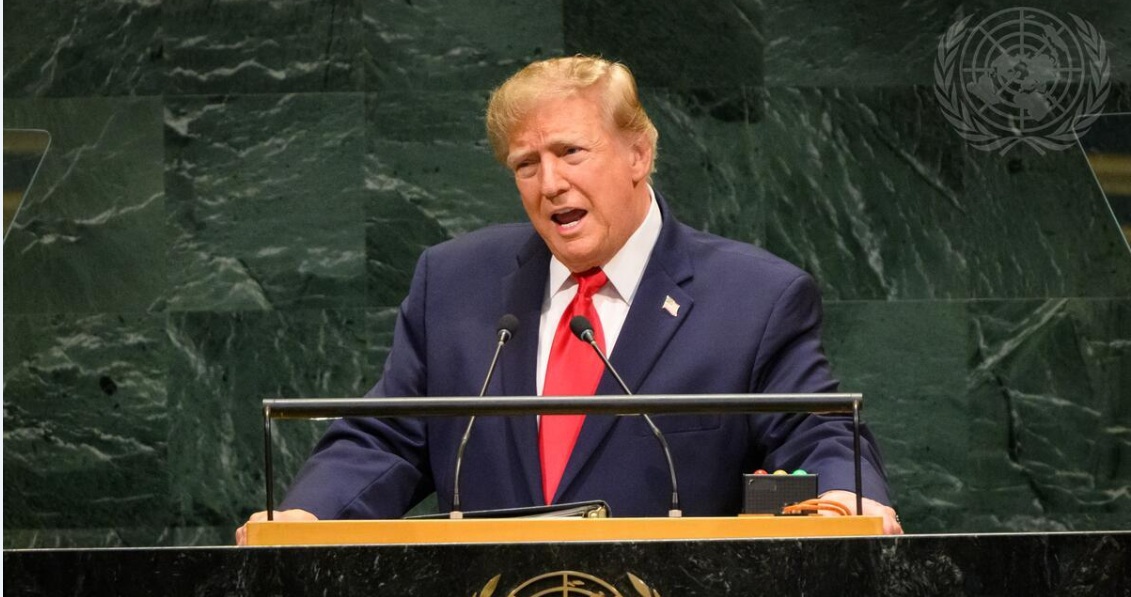


Alwaght- The US President Donald Trump went to the UN to address the annual gathering of the General Assembly. A considerable part of his speech was more like a list of threats and warnings than a normal one. He addressed the UNGA while the world is living an array of war and security crises, but instead of going diplomatic to de-escalate the tensions, he once again bragged about the US military power as the main instrument of his administration's foreign policy, at a time his war against Iran has gone nowhere.
The US war against the world
Iran topped Trump’s agenda. Defending the war the US and Israeli regime launched against Iran, the American president said that absent a deal, Washington could “obliterate” the Islamic Republic. He even invoked phrases about “wiping out” Iran and doing it swiftly, while calling on other countries to join Washington in strangling Iran’s economy.
Trump’s remarks came as the US war against Iran entered its seventh month with no clear end in sight, and as many experts, even inside the US, have concluded that Trump has failed to achieve his objectives against Iran.
Clearly, Trump framed the Iran issue not merely as a Washington–Tehran dispute but as a demand that other nations enlist in US economic pressure campaign. His message to the world was that the countries must now choose between falling in line with US policy and maintaining economic ties with Iran. All this, even though over the past seven months, Trump has had no direct military partner in his operations against Iran, with the sole exception of Tel Aviv.
But Iran was not the only country came under attack of Trump during speech.
In another stretch of his remarks, the American president said the US would no longer tolerate threats emerging against it in the Western Hemisphere, citing Washington’s military actions in Venezuela as a template for a new American posture. Those operations, he said, signal that the U.S. is prepared to wield military force to preempt any threat before it takes shape.
Trump then turned his fire on Mexico, branding it a “hub of cartel violence” and demanding that the Mexican government seize control of its own territory. He once again championed a military approach to drug cartels. The stance makes clear that even toward the US neighbors, the language of threat and coercion remains a core element of Trump’s foreign policy discourse.
Cuba, too, was not spared Trump’s verbal assault. He called it a “failed state” and predicted its collapse. As he spoke about Cuba, members of the Cuban delegation walked out of the General Assembly hall, a moment that became one of the speech’s defining images.
Even the UN was not spared Trump’s barrage. The American president once again tore into the body’s administrative and bureaucratic machinery, defending his push to shrink its role and its costs. He also took aim at the International Criminal Court, declaring that Washington would never allow its troops to be investigated or tried by such an institution.
On the war in Ukraine, the US president said he is in contact with Russian and Ukrainian leaders and vowed to bring the conflict to an end. His speech, however, offered no concrete details on how such a deal would be reached.
Election speech at UNGA
A striking share of Trump’s address, meanwhile, was devoted essentially to domestic American concerns. The Associated Press reported that he opened his speech in the cadence of a campaign rally, dwelling far more on the economy, immigration, crime and his administration’s record at home than on laying out any sweeping vision for international cooperation.
That matters because Trump was standing before nearly 200 nations, yet part of his remarks were still aimed squarely at a domestic audience. The General Assembly became a stage on which the American president sought to showcase his administration’s homegrown achievements while selling his aggressive foreign policy to the American public. The AP underscored in its report that Trump was, to a large degree, talking to American voters.
Trump’s claims about US military might were equally noteworthy. He insisted the US faces no shortage of munitions or advanced weaponry, saying it has more ammunition than anyone could imagine. But in the same report, the AP cited experts and officials in allied countries who have warned of depleted stockpiles of certain weapons and of the lengthy timelines needed to replace cruise missiles and Patriot and THAAD interceptors.
That gap between Trump’s assertions and the experts’ assessments carries particular weight: Trump is touting unlimited military superiority even as a protracted war with Iran has placed heavy strain on the weapons stockpiles of the US and some of its allies.
War against media
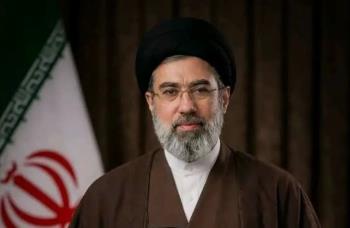
Even before start of the speech, the UN atmosphere are under influence of Iran war. According to the AP, the Iranian representatives left the hall when Trump started his remarks on Iran war. The president and foreign minister of Iran were absent and the Iranian delegation left about 10 minutes after Trump began his speech.
The media atmosphere surrounding Trump’s UN appearance was itself shaped by his bitter feud with the American press. In protest of restrictions imposed on CNN, MSNBC and Politico, major US television networks refused to tske part in the joint television pool covering Trump’s trip. CNN reported that other networks in the media group declined to fill its slot in the presidential trip coverage.
Even as Trump entered UN headquarters, his running battle with the press continued. Reports from New York indicate that Trump got into a verbal confrontation with CNN correspondent Kaitlan Collins.