














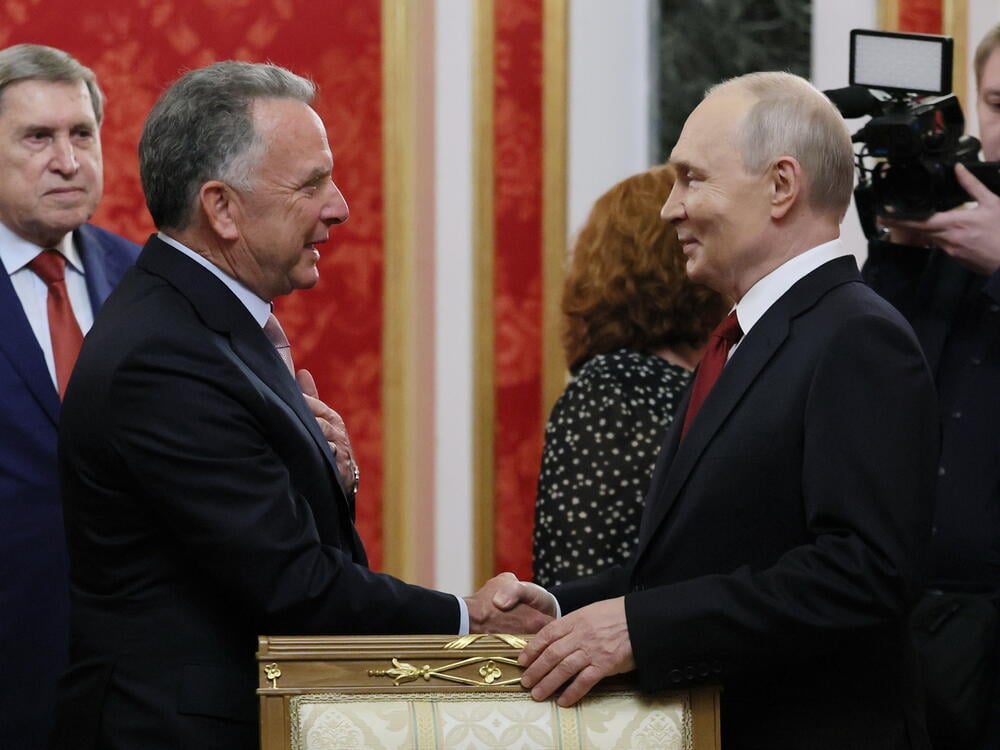


Alwaght- As the Ukraine war moves toward its sixth year, and two years past Donald Trump’s pledge to end it within 24 hours of returning to the White House, two of the president’s most trusted envoys are shuttling from Moscow to Kiev this week, seeking any glimmer of a deal that would deliver a settlement Trump promised.
The visit to Russia and then Ukraine of Trump's son-in-law and advisor Jared Kushner and chief negotiator Steve Witkoff came while since the beginning, the expectations of the outcomes were low. The talks that started with the US mediation between the two warring sides have stalled after a couple of fruitless rounds and the two sides are still at loggerheads over some issues like territories and the future security arrangements.
Even the Washington-backed 20-point peace proposal presented by Kiev has not managed to fill the gap and in addition to the fact that the Ukrainian side does not trust Trump's support role, it is afraid of being victimized in the course of Trump's insistence on making a foreign policy gain a month to the midterm elections in the US.
In fact the main issue in the talks now is not the absence of a communication channel. The problem is that there is still a considerable distance between what Moscow wants and what Kiev is ready to accept and meanwhile Washington has so far failed to win confidence of both sides.
Negotiating in the shadow of war
American officials are painting the negotiations in hopeful tones, speaking of progress, but the reality on the ground tells a different story. After his initial round of talks with Zelensky on Sunday, Witkoff told reporters the discussions had been "substantive" and "important." "We are very encouraged," he added.
Kushner, in separate remarks, stressed that Trump is "very determined to see this war end."
Yet even as Trump's envoys shuttled between Moscow and Kiev, the Ukrainian capital and its surrounding regions kept coming under drone attack, and Kiev, for its part, kept striking back deep inside Russian territory, all the way to the capital Moscow itself. A drone strike on the headquarters of Ukraine's security service in Kiev, just a day before the American delegation arrived, made clear that military logic still holds the upper hand.
The three-day halt in Russian strikes on Kiev could be read as a modest opening to de-escalate and carve out safe space for diplomacy. But taken alone, it hardly signals a strategic shift in Moscow. Putin has stuck to his prior demands, and the Kremlin has made plain that no concrete preconditions for a peace deal are yet in place.
That distinction matters. A temporary ceasefire is a far cry from a lasting peace. Moscow can dial back the intensity of its attacks for a limited stretch without yielding on any of its core demands. Kiev, meanwhile, may want the strikes to stop, but it is also counting on the West to keep the military and security aid flowing. In his remarks yesterday, Zelensky called for continued financial and military backing from the West, saying Ukraine is "really counting on the winter package" from the US and Europe to survive another winter at war.
Talking about LNG, the Ukrainian president said that "we specifically raised the issue with Jared and Steve, as well as with our European partners. Air defense, energy support, and as we know we seriously count on using the US LNG."
Many Ukrainians are bracing for the war to drag into a fifth year, dreading the winter ahead. This week, Serhii Beskrestnov, a defense technology adviser to Zelensky, told The Guardian that the government should consider evacuating the elderly from the capital, warning that Putin has ordered Russian forces to "prepare and conduct massive strikes" on Ukraine's energy infrastructure.
Ukraine is also acutely short of American-made Patriot interceptor missiles. Many of Russia's recent attacks have been carried out with new jet-powered drones that can reach speeds of 250 miles per hour, making them notoriously hard to shoot down.
Now, in part because the US is bogged down in its own war with Iran and the resulting Patriot missile crunch, Ukraine's air defenses are dangerously thin against the bombardment.
As a result, both sides can talk up "negotiations", but they have very different visions of what a successful outcome would actually look like.
Cold distance of Moscow and Kiev
Russian postures suggest that Moscow still does not see ceasefire just a matter of halting military operations and wants root causes of the conflict addressed. In his meeting with the American envoys, Putin talked about advances of the Russian forces on the battleground, expressing his conviction that his forces will realize the determined goals.
This makes one thing clear: The Kremlin still finds inadequate the Ukrainian and Western will to settle the disputes and face the new geopolitical and border realities.
Kiev, for its part, has not budged an inch from its own positions, and is banking on continued European and American support to keep fighting and reclaim its territory. Ukraine's air-defense shortfalls and Patriot missile shortages are putting real pressure on the capital, but European military aid keeps flowing, and long-range drone production programs for Ukraine are moving ahead.
So Moscow does not consider this war over, and Kiev does not see itself as forced into accepting an unfavorable deal. In that climate, Washington faces a challenge that goes well beyond conventional mediation: to bring the two sides closer, it must first fundamentally alter the strategic calculus of both.
Trump's diplomacy under pressure of criticism
Among the sharpest critiques is the one aimed at Trump's choice of envoys. Steve Witkoff, a real-estate developer with no diplomatic experience before stepping into this portfolio, was tapped by Trump in 2024 as his personal peace envoy. Jared Kushner is best known as Trump's son-in-law and adviser, though he did play a role in the so-called Abraham Accords during Trump's first term.
But the issue here is not just about individual credentials. The Ukraine war is a file that simultaneously encompasses military, territorial, security, economic, and the future of Europe's security architecture. Critics can fairly argue that Trump's deal-making diplomacy, which relies on personal trust in inner-circle figures and the possibility of direct leader-to-leader agreements, faces serious limitations in a crisis this complex.
Witkoff and Kushner may be able to open a direct channel to the Kremlin. But building a relationship with Russia's leader is not the same as bridging the fundamental chasm between Russia and Ukraine.
A ray of hope or buying time?
In the end, the Witkoff-Kushner mission looks less like a sign that the war's end is near and more like a bid to keep the diplomatic door from slamming shut entirely. Even if the talks are described as "substantive," "important," and "constructive," there is still no visible sign of agreement on the core issues.
From this lens, Trump's problem is that he needs a quick deal to claim a win, while neither side yet feels an urgent need for such a deal. Putin still sees room to improve Russia's position on the battlefield, and Kiev, leaning on European support and continued Western aid, has little incentive to accept what it would regard as a capitulation.
That is why the Moscow and Kiev trips should be read more as an effort to buy time for diplomacy than as a final push for a peace treaty. Until the gap between the two sides' demands narrows, and until one of them is willing to pay the real price of compromise, even the resumption of talks does not necessarily mean the war is drawing to a close.
In this situation, Trump's promise of a quick end to the war remains at odds with the reality on the ground. And if this mission ultimately fails, it will once again raise the question: Can the American president's personal, deal-centered diplomacy actually resolve Europe's most complex war since World War II?










