









Alwaght- West Asia and North Africa regions are facing growing water crisis. Now around 60 percent of their population is suffering from water tensions. A recent report by International Water Management Institute warns that climate change in the coming years will compound this situation and so will impact the food, economic, and human security of the countries in these two regions.
Responding to this crisis, many Arab countries over the past decades have tried to establish mechanism for saving and sharing fresh water resources through bilateral and multilateral agreements with their neighbors.
Water agreements between Iraq and Turkey
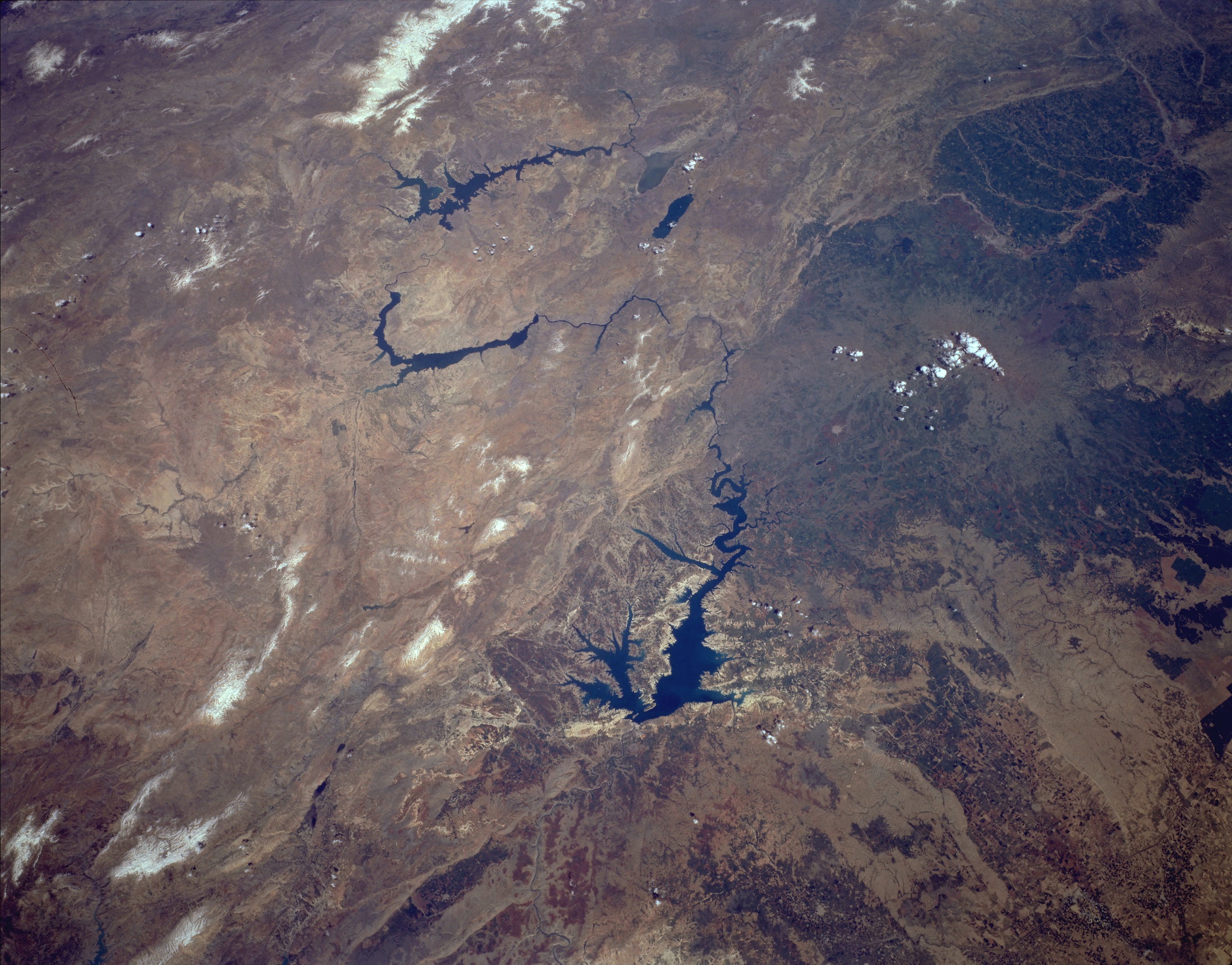
One of the most important water cases is the dispute between Baghdad and Ankara over sharing of water of Tigris and Euphrates rivers. Both rivers originate from Turkish territory and reach Iraq after crossing this country and Syria, something giving Turkey a geopolitical lever.
In 1946, the two countries signed a "Treaty of Friendship and Good Neighborly Relations" that included six protocols. The first protocol was dedicated to regulating the use of the waters of the Tigris and Euphrates rivers and their tributaries. However, disputes over the volume and timing of water releases persisted, particularly in the wake of Turkey's extensive dam-building policy on both rivers.
In the following decades, the two nations signed additional protocols on the matter in 1970, 1980, and 2021. However, these agreements failed to fully resolve the structural problem of water sharing.
Finally, in April 2024, Iraqi Prime Minister Mohammed Shia al-Sudani announced the signing of a ten-year agreement on water resource management during a joint press conference with President Recep Tayyip Erdogan of Turkey. Beyond establishing a framework for water management cooperation, the deal includes provisions for Turkish companies to participate in developing Iraq's irrigation infrastructure, implement joint projects, and facilitate technology transfer and the adoption of modern irrigation techniques.
Despite initial optimism, many Iraqi experts have criticized the agreement for what they describe as "severe ambiguity" and a lack of sufficient enforcement mechanisms. According to them, the text fails to specify the percentage or volume of water to be released to Iraq and has done little to alleviate water tensions this year.
On this issue, Iraq's Al-Zaman newspaper recently published a fresh warning from the Iraqi Green Observatory regarding the country's escalating water crisis. The observatory described Iraq's current water reserves as critically low, estimating they would last only a few months at most.
"The level of rainfall this season cannot sustain this high rate of consumption for a long period," the observatory's statement read.
The statement also pointed to reduced water releases from Turkey as a key factor in the continuous decline of water levels in Iraq. According to the observatory, while water was a central topic in recent talks between al-Sudani and Erdogan, no concrete agreement has been announced to increase the water flow into Iraq.
The newspaper, citing Iraq's Director General of Groundwater Maytham Ali, reported that the groundwater levels in Al-Kawir region of Erbil, Sheikhan region of Duhok, Sinjar and Tal Afar in Nineveh, as well as Kirkuk’s suburbs have decreased 60-70 meters and this reaches to 100 meters in some areas, figures that set off the alarm bells to the water security of these regions.
According to the Iraqi official, the provinces of Najaf, Muthanna, Karbala, Salah al-Din, and Diyala are facing a similar crisis with their groundwater reserves. The continuation of this trend could have far-reaching consequences for agriculture, trigger internal displacement, and threaten food security and even social stability in Iraq. This is especially critical as the country simultaneously grapples with climatic, managerial, and geopolitical challenges related to its water resources.
Entebbe Declaration and Nile Basin countries
The division of the Nile River's waters represents one of Africa's oldest and most sensitive water disputes. Water allocations among the basin countries were established by agreements reached in the 20th century, the most significant being the treaties of 1902, 1929, and 1959. The 1959 agreement allocated Egypt an annual share of 55.5 billion cubic meters and Sudan 18.5 billion cubic meters.
However, in May 2010, five upstream countries of Ethiopia, Uganda, Kenya, Tanzania, and Rwanda signed the "Cooperative Framework Agreement" for the Nile Basin in Entebbe, Uganda. This document, which media outlets dubbed the "Entebbe Declaration," emphasizes equitable water distribution among Nile Basin nations without basing allocations on historical quotas. According to its provisions, the agreement enters into force 60 days after ratification by six member states.
Cairo's reaction to this development was sharply critical. That same year, Mohammed Nasr Allam, then Egypt's Minister of Water Resources and Irrigation, declared that Egypt considers the agreement a violation of international law and non-binding on itself, adding that Cairo would resort to international legal mechanisms to protect its "historical rights."
In recent years, debate over the agreement has reignited following South Sudan's announcement that it had ratified the document. These developments cannot be separated from the concerns of Egypt and Sudan regarding Ethiopia's Grand Ethiopian Renaissance Dam project, a dam Ethiopia has constructed on the Blue Nile, viewing it as a symbol of national development, while Cairo considers it a threat to its water security. This complex set of factors has led to heightened political tensions and even mutual military threats between Egypt and Ethiopia in recent years.
The UAE, Jordan, and Israel: power for water
In Eastern Mediterranean, too, water and energy cooperation has taken a fresh shape. After 1994 agreement between Jordan and Israeli regime, which made Jordan the second country establishing official diplomatic relationship with Israel after Egypt, the ground for broader cooperation was prepared.
In November 2021, on the sidelines of the Expo 2020 Dubai, representatives from both sides signed a declaration to cooperate on solar energy production and water desalination. Under this project, Jordan, which faces a severe freshwater shortage but has high solar energy capacity, would supply solar power to the Israeli regime. In return, Tel Aviv would provide Amman with approximately 200 million cubic meters of desalinated water annually.
In November 2022, on the margins of the COP27 climate summit in Sharm el-Sheikh, Abu Dhabi, Tel Aviv, and Amman signed a new agreement to advance the project. According to this deal, the UAE committed to building a major solar farm in the Jordanian desert while simultaneously participating in the construction of desalination facilities in Israel to secure water supplies for Jordan.
However, political developments once again cast a shadow over water cooperation. In November 2023, in response to the Israeli regime's aggression against Gaza, Jordan decided to halt electricity exports to the occupied territories. Concurrently, Amman sought a five-year extension of the water supply agreement with Tel Aviv. Ultimately, under pressure from Washington, the deal was extended for only six months.
All these suggest that water agreements in West Asia and North Africa are not just technical documents for sharing of water sources, but are strictly interwoven with geopolitical reservations, balance of power, and political dynamics. In these regions where water has become a strategic commodity, each cubic meter of water can make a pressure leverage and bargaining chip, or even a spark for broader tensions.