















Alwaght- The US war of aggression against Iran continues as the aspects of attacks on civilians more than ever come to focus of the international organizations.
A recent report by the UN fact-finding committee about Iran provides one of the most important published documents about the US military and illegal actions in this war. The report says there are "reasonable grounds" to conclude that the US committed a war crime in attacking a school and a sports hall in Iran.
Bloomberg reported that officials engaged in Pentagon's internal prove have said that some of the Department of War had concluded in the early hours of the attack that targeted Minab elementary school was carried out by the US forces. They add that the attack was not a result of a single person decision, but was a product of a chain of decisions, errors, and lost opportunities that could avoid this tragedy.
UN admits to the US war crime
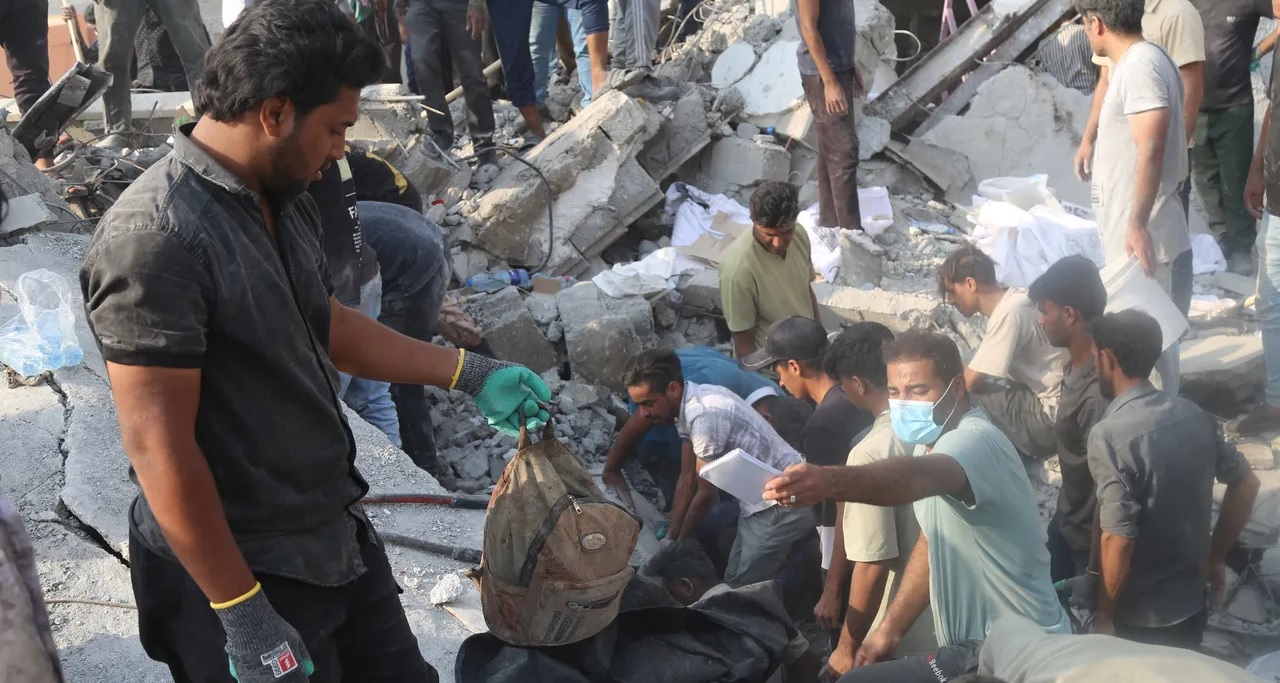
The UN’s Independent International Fact-Finding Committee on Iran said in a new report that there are “reasonable grounds” to conclude that the US was responsible for two military strikes in southern Iran on February 28, and that the attacks amounted to war crimes. The two incidents under review are the strike on the Shajareh Tayyebeh elementary school in Minab in Hormozgan province and an attack on a sports complex in Lamerd, in Fars province. According to Reuters, the two attacks together killed at least 178 civilians.
In the Minab strike, the Shajareh Tayyebeh elementary school was hit. The fact-finding committee said the school’s civilian character was evident from visible markers, including children’s drawings, school signs, a playground and satellite imagery showing people identifiable as children in the courtyard before the attack.
According to published reports, more than 120 children were killed in the strike. The fact-finding committee said the US failed to take adequate precautions in identifying and selecting the target to ensure it was military in nature. In the committee’s view, the issue was not merely a simple operational error.
The significance of the finding is amplified by Bloomberg’s reporting. According to a report published by Bloomberg, some officials involved in the Pentagon’s internal investigation said department staff realized within the first hours that the Minab strike had been carried out by the US. Bloomberg also reported, citing officials involved in the Pentagon’s internal investigation, that the catastrophe was not the result of a single decision but involved a chain of decisions, mistakes and missed opportunities.
If its details are confirmed in official investigations, the report will carry particular weight for the debate over command responsibility and military decision-making, because the question is not only what weapon was fired but also why the attack was carried out on an elementary school.
The second US war crime confirmed in the report occurred in Lamerd. The UN fact-finding committee also examined the attack on a sports hall and surrounding residential areas and said the available evidence was consistent with an American strike. That attack also led to civilian deaths. US Central Command (CENTCOM), however, has denied responsibility for the Lamerd attack.
Although the fact-finding committee is not a criminal court and its report does not by itself issue a judicial verdict against individuals or the US government, its findings can be used as part of the documentary record in future investigations and judicial proceedings.
White House rejects the UN report
Washington has rejected the UN report. The White House Deputy Press Secretary Anna Kelly in response to the report said the body "accomplished nothing for human rights while spouting unserious nonsense for decades."
"The only party in this conflict that has committed war crimes is the Iranian regime,” Kelly claimed.
The US State Department has also said the Trump administration does not regard the UN Human Rights Council’s findings as credible and takes the responsibility to protect civilians very seriously. For specific questions about US military operations, the department referred reporters to the US Department of War.
Washington’s official position, then, is to reject the credibility of the UN report. The fact-finding committee, by contrast, reached its conclusion that there are reasonable grounds to believe war crimes occurred in the two attacks based on evidence including satellite imagery, video footage, weapons analysis and publicly available information.
Broad US war crimes in Iran
Beyond the US war crimes in the strikes on an elementary school and a sports complex in Lamerd, other documented reports indicate that the list of American war crimes against Iran in the recent war is far longer.
Attacks on residential areas in Tehran and other Iranian cities are among other examples of US war crimes in Iran. Amnesty International has also investigated some of the strikes on residential areas in Tehran and called for independent reviews of cases it says could constitute human rights violations and unlawful attacks.
Attacks on civilian infrastructure are another prominent category of US war crimes in the war against Iran. The strikes on the Karaj bridge, the desalination plant on Qeshm, gas and oil facilities in southern Iran, including in Assaluyeh and Kharg, and the steel industrial complex in Isfahan are among other examples of US war crimes in the recent war, each of which could be the subject of a legal case against Washington.
Continuous crimes
The US war crimes in the region are not limited to Iran. Actually, the Americans have a long history of committing war crimes against regional nations. Over the past two decades there were many cases of crimes committed by the US or the military coalition under its leadership in Iraq, Afghanistan, Syria, and Yemen.
In Iraq, Human Rights Watch examined cases of civilian casualties in airstrikes and ground operations in its reports on the 2003 war and warned about the use of certain banned munitions in urban areas. The group also called for reviews of cases where laws of war may have been violated.
In Afghanistan, the 2015 attack on a Doctors Without Borders hospital in Kunduz became one of the most notorious cases of civilian casualties in US operations. The AC-130 gunship strike on the medical facility killed at least 42 people. A US military investigation identified some violations and errors, and human rights groups questioned the accountability process.
In Syria, too, the US-led coalition’s operations against ISIS, particularly the battle for Raqqa, were accompanied by numerous reports of civilian casualties. In its investigations into the battle for Raqqa, Amnesty International called for reviews of the attacks and the use of weapons in urban areas against women and children.
In Yemen, US drone strikes and so-called counterterrorism operations have a long history. Human rights groups have in some cases investigated and criticized attacks on wedding parties, villages and targets where civilians may have been present.
Together, these cases show that issues such as misidentification of targets, use of firepower in densely populated areas, reliance on incomplete intelligence and the extent of post-strike accountability have recurred repeatedly in US military operations, and that Washington has sought to evade responsibility for its war crimes by repeating such statements.
Now the Minab case stands on different footing. Here, a UN-affiliated fact-finding committee has said there are reasonable grounds to believe a war crime occurred, while Bloomberg’s reporting on the Pentagon’s internal investigation also speaks of US officials’ awareness that the attack was American and of a chain of errors and decisions that led to it.
In effect, the US strike on an elementary school in Iran could become one of the most important cases for examining US responsibility for civilian casualties in war, a case in which the issue is not only the number of victims but a far-reaching pattern of continued US war crimes under various pretexts.
Exiting the Human Rights Council: Way to escape responsibility?
Amid reports of the US responsibility for Lamerd attack, other reports suggest the US plan to exit the HRW. The record of the US treatment of the UN's rights body shows that whenever Washington found the performance of this organization running counter to its policies, it has avoid participation in it. In June 2018, the Trump administration withdrew the US from the Human Rights Council, with American officials at the time citing what they called the body’s “anti-Israel bias” and ineffectiveness. In February 2021, the Biden administration announced that the United States would re-engage in the council’s work and even ran for a seat for the 2022–2024 term.
But that return did not last either. In February 2025, Donald Trump announced in an executive order that Washington would not participate in the Human Rights Council, would not seek membership in it and would not allocate funding to the body. In explaining the decision, the US government accused the council of allowing human rights abusers to evade accountability and stressed that its work was not consistent with American interests.
In practice, the policy did not stop at the Human Rights Council. In 2025, the US also refused to take part in the periodic review of its own human rights record under the council’s Universal Periodic Review mechanism, a point the council president raised in a formal session, and after the US delegation’s absence, the Human Rights Council held a session on the country’s “non-cooperation” with the review mechanism.
All this comes as the US presents itself as a defender of human rights and international accountability while, at moments when international bodies investigate or assess its own record, it distances itself from participation in some of their mechanisms. Washington’s critics interpret this approach as an effort to ease human rights pressure and limit international oversight of US actions.
Now, the release of the UN fact-finding committee’s report on the two attacks in Iran, coinciding with the White House’s sharp stance against the Human Rights Council, has once again put a central question in focus: how can international mechanisms investigate and hold the US accountable, especially when Washington has halted its participation in those very mechanisms?
Within this framework, the case of war against Iran is not just about several specific attacks, but a test of credibility of the international accountability mechanisms. If the findings of the fact-checking committee, media reports, and human rights documents about attacks on civilians are finally ratified, the main issue is no longer the victims, but the question will be: What institution should ensure accountability of the those responsible and can the big powers be avoid political and legal consequences of their actions by simply withdrawing the oversight mechanisms?










