















Alwaght- The recent official admission of the US Department of War to the strategic depletion of the munition stockpiles is ond of the key indications of the heavy price of the Iran war for the American military. The war, the US dubs Operation Epic Fury, has not only costed the US billions of dollars, but also has depleted the munitions and put strains on the supply chain of the country's defense industries.
The Pentagon's inspector general, in its first mandatory report to Congress on the scope of the war with Iran, has concluded that the massive expenditure of munitions during the operation caused a "strategic depletion of stockpiles" and laid bare sweeping shortfalls in the US industrial capacity to replace its weapons. The report covers the period from the war's start on February 28 through June 30.
According to the report, the cost of the US war against Iran through the ceasefire declared on April 8 was estimated at roughly $33.4 billion, $22.3 billion of it spent on munitions alone. Another $3.7 billion covered damage to or loss of equipment, and $7.4 billion went to other operational costs.
The report's key Pentagon phrasing on the state of weapons stockpiles reads: "Munitions consumption in Operation Epic Fury led to a strategic depletion of stockpiles and exposed existing bottlenecks in the industrial base for resupplying munitions."
Blow to chain of weapons production
The significance of this admission does not lie just in the decrease of the munitions in the stockpiles. The report warns that fast increase in production of weapons faces structural restrictions, including manufacturing solid-fuel rocket engines, high-degree explosives, propellers, and skilled manpower. So, even allocation of funds will not lead to immediate production and actually production capacity boost takes considerable time.
The stakes are higher still given that the US is simultaneously engaged in military operations across several regions, and must keep enough in reserve for any scenario that lies ahead. Citing the same Pentagon report, The Financial Times wrote that the weapons shortfall could cast doubt on the US ability to sustain a protracted war or enter a new conflict.
The US military damage in figures
The inspector-general's report has revealed another aspect of the war costs. It says that at least 30 big drones of MQ-9 Reaper model were shot down by Iran during war. Additionally, the US military lost four F-15s, and an F-35 and seven fuel tanker aircraft of KC-135 sustained damage.
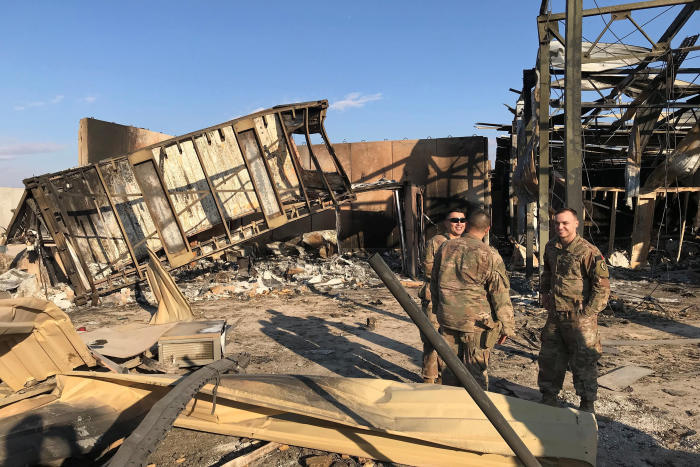
The report also marks the first time a US government oversight body has confirmed that Iran struck American main naval logistics hub in Bahrain with missiles and drones. According to The New Arab, the Iranian attacks also damaged hundreds of buildings and structures at US bases in Kuwait, Bahrain, Qatar, the UAE, Saudi Arabia, Iraq, Oman, and Jordan, with reconstruction costs not yet factored into the $33.4 billion figure.
$22.3 billion for munitions
The report's most telling figure is that $22.3 billion munitions tab, a number that shows the war with Iran was not merely a costly operation for the US military machine, but a direct drain on the country's strategic munitions reserve.
CBS News likewise stressed in its coverage that this is the first mandatory, official report from the inspector general of the US Department of War to specifically quantify munitions consumption and its impact on American stockpiles.
The admission lands after months in which Trump administration officials repeatedly sought to play down concerns about shrinking US weapons stockpiles.
Trump himself said recently that the US has "unlimited munitions," and after reports of depleted stockpiles emerged, insisted the country is producing advanced weapons "more than at any time in history." Now, however, the inspector general's official report effectively confirms that the war has opened a real shortfall in stockpiles, and that the production chain cannot close it quickly.
Failure of the narrative of unlimited stockpiles
The contradiction between Trump's remarks and report of the inspector-general of the Pentagon is one of the political points of this report. Earlier, Trump had denied munitions shortage and labeled "fake news" the reports of media on the matter. New Arab reports that the gap between Trump and his staff about the munitions has run so deep that the Washington Post published a report about a tense meeting between the president and his War Secretary Pete Hegseth about the shortage.
Now, however, an official body under the War Department is stating plainly that munitions consumption in the Iran war has created a strategic shortfall in stockpiles. The phrase carries real weight in military terms: it does not refer merely to a temporary dip in the inventory of a few depots, but to the level of reserves deemed essential to keeping the force ready for the crises to come.
An issue going beyond Iran war
The shortfall matters all the more because, even as it fights in Iran, the US faces the prospect of a widening conflict elsewhere in the region.
The New Arab reported earlier that the US military has burned through a large share of its long-range precision missiles, including ATACMS and the precision strike missile PrSM, deepening concerns about American readiness for future conflicts.
Another report pointed to heavy use of US air-defense systems. CNN reported earlier that stockpiles of THAAD interceptor missiles have fallen sharply.
Seen that way, the new Pentagon report completes a chain of reporting from recent months, each installment exposing another slice of the strain on weapons stockpiles. Now, for the first time, an official War Department body has confirmed the core fact: a strategic depletion.
War cost is not just $33.4 billion
$33.4 billion is actually the recorded war cost by end of June and does not include all of the prospective costs. The cost of repairing the facilities and building at the military bases are not completely specified yet. Additionally, replenishing the munition stockpiles and production capacity increase will have separate costs.
The report also documents the movement of more than 20,000 US military personnel and diplomats as a result of evacuations and troop transfers during the war. American forces flew roughly 5,000 sorties from European bases in support of combat operations. The State Department, meanwhile, has logged more than $208 million in damage to its facilities in Iraq, Kuwait, Saudi Arabia, and the UAE.
The Iran war, then, has left America with more than a $33.4 billion bill: munitions stockpiles drawn down, industrial bottlenecks exposed, military equipment lost, and US infrastructure damaged across the region.
One major question Washington now faces: Can its military, still replenishing the munitions it spent in Iran, simultaneously take on another major war? The Pentagon inspector-general's new admission suggests that, for American commanders and planners, the answer is no longer a simple one.