





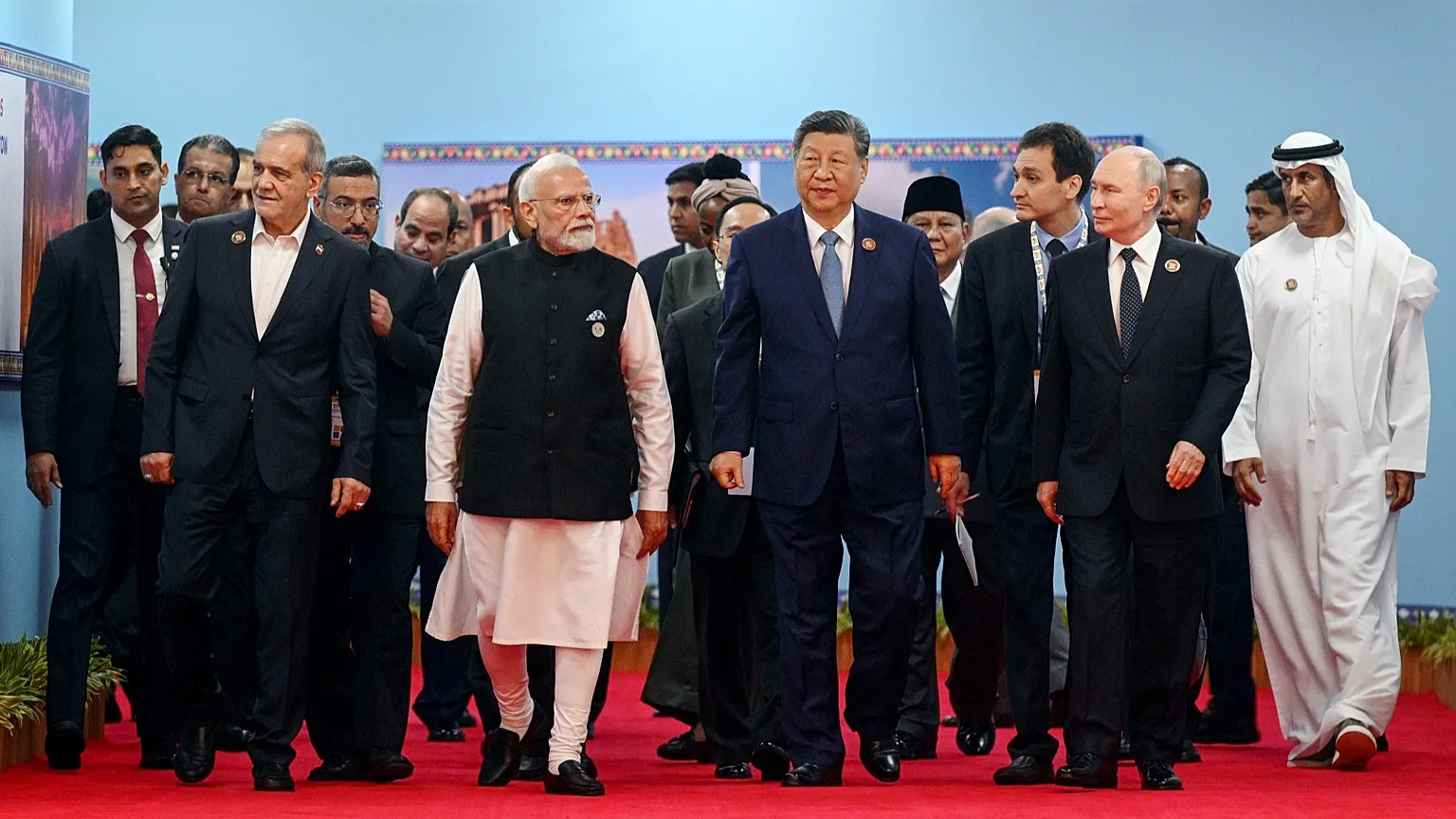


Alwaght- The 18th BRICS summit was held in India, drawing leaders of the world's emerging powers to set the stage for the group's next chapter, naming its incoming chair, mapping out an economic agenda to deepen cooperation, and tackling the thorny issues shaping the bloc's trajectory as it gathers speed. The gathering also aimed to stake out a role for the bloc of rising economies in steering an international order that is shifting toward multipolarity.
Meanwhile, against the backdrop of a global energy crisis driven by instability across West Asia, above all in the geostrategic Persian Gulf and Red Sea regions, Iran's presence at the highest level lent the Delhi summit outsized, two-way significance. Tehran brought to the table its weight as a decisive player in energy markets and West Asian stability, while also carrying its own expectations for a forceful seat among non-Western emerging powers at a moment of full-blown confrontation with Washington.
Chinese leadership over BRICS: Moving towards the AI age
The 18th summit of this group can be viewed as more than a routine gathering of the group’s leaders.
What began in 2006 with four members has evolved into a broad platform for cooperation among emerging economies and developing countries. The group has now reached a stage where its central challenge is no longer simply expanding its membership or issuing political declarations, but turning its potential into practical mechanisms for cooperation.
Against this backdrop, Chinese President Xi Jinping stressed the need for practical cooperation among BRICS’ 11 members and 10 partner countries to deliver tangible results.
At the New Delhi summit, Beijing put forward a series of proposals spanning open-source AI, trade and investment facilitation, the digital economy, smart manufacturing, and the development of scientific and technological talent. The significance of these proposals lies in China’s effort to move intra-BRICS cooperation beyond political coordination and into areas directly connected to the architecture of the global economy of the future.
China has also said it will help other members establish an open-source AI community within BRICS, build the group’s digital-ecosystem cloud platform, and develop smart factories. From Beijing’s perspective, political consensus can translate into geopolitical power only when it produces joint projects, investment, technology and shared economic value chains.
This approach is particularly important for the leaders of this bloc because greater economic weight among its members does not necessarily translate into a cohesive political bloc. The group’s members have divergent interests, and that diversity is at once one of BRICS’ greatest sources of potential and one of its most significant constraints.
One group, several views to the world order
While BRICS draws its identity from emerging powers and the Global South, its members have yet to reach full consensus on what the bloc is ultimately for. China casts BRICS as a pillar of a more multipolar international order. India, though an active participant, is wary of letting the bloc become a vehicle for Chinese dominance. Russia and Iran, for their part, want to reduce their vulnerability to Western sanctions and their reliance on a dollar-based financial system. India and Brazil, by contrast, have little appetite for turning BRICS into an explicitly anti-Western alliance.
Therefore, the bloc's future defies any simple "East versus West" framing. What is taking shape is a network of non-Western and Global South powers that share interests in some areas but pursue their own disputes and calculations on many others.
Still, given the West's enduring dominance as a rival, BRICS members will ultimately be forced to answer a core question: can they build independent and effective mechanisms for trade, investment, technology, energy and finance? How they answer it will determine just how much of a role BRICS can play in a global order in transition.
Iran; BRICS's real test in crisis
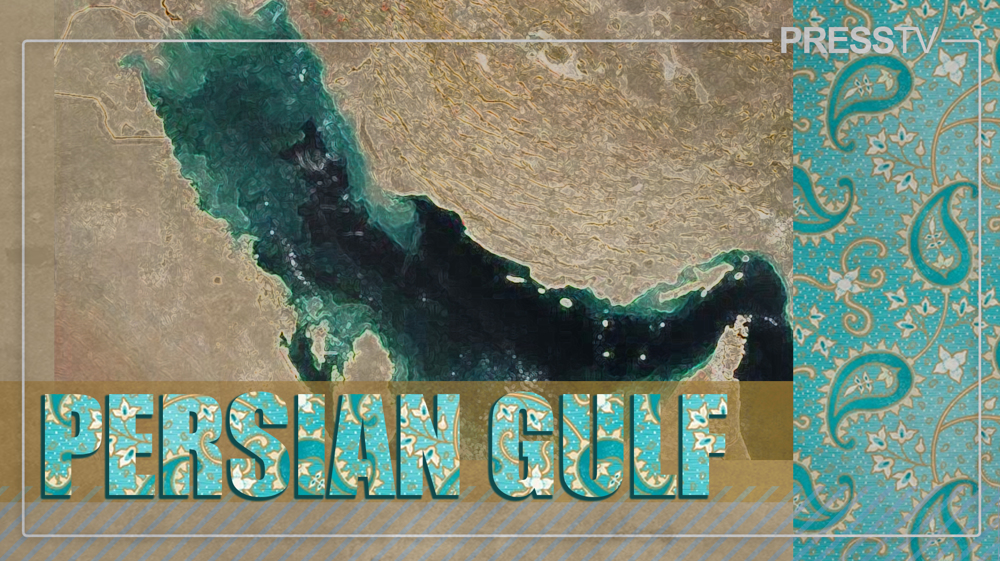
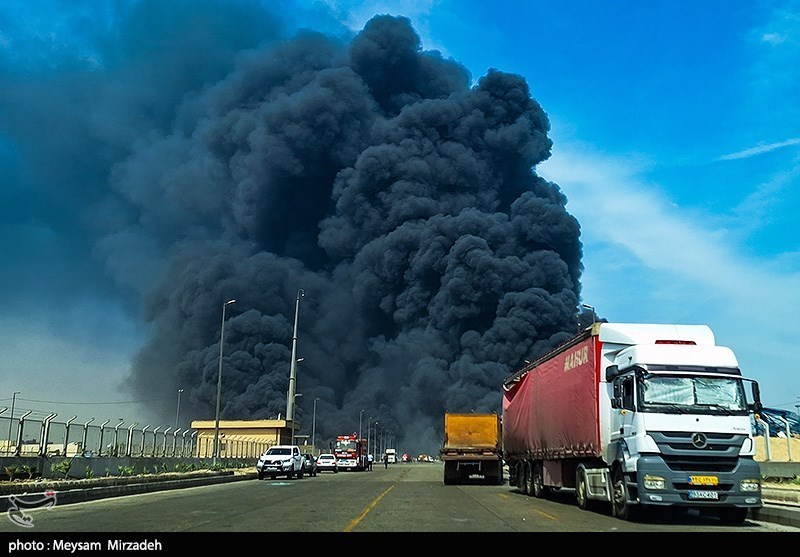
In such conditions, Iran's presence in Delhi carried weight beyond that of a newly admitted member. Tehran arrived at a moment when war and instability across West Asia have unsettled energy security, shipping lanes and global trade. Its expectations of BRICS, accordingly, go well beyond political statements: Tehran wants mechanisms that can actually blunt US economic and financial pressure.
Iranian President Masoud Pezeshkian drove that point home in his remarks, calling on BRICS to move from political statements toward practical mechanisms that bolster economic resilience, expand trade and deepen financial cooperation. Among Tehran's proposals are broadening trade in national currencies and strengthening the bloc's New Development Bank.
The demand by Tehran lands in a context where American sanctions have targeted a significant share of Iran's economic ties with the wider world. Should BRICS succeed in building a network of independent financial, banking and trade mechanisms, Iran's membership could amount to more than a diplomatic trophy, and it could become a tool for whittling down some of its economic vulnerabilities.
That path, indeed, is far from easy. Closing the gap will require banking infrastructure, common standards, settlement mechanisms and sustained political will among members, precisely the ground Iran's operational proposals sought to cover.
Chabahar Port, Iran's linking ring to BRICS
Another major plank of Iran's presence in New Delhi was its geopolitical capacity in transit. The Iranian president spotlighted Iran's geographic position, energy reserves and transit potential, casting Chabahar port as a hub linking north to south and east to west. Tehran frames that capacity as a platform for expanding trade, investment and economic cooperation among BRICS members.
Chabahar's significance in this framework extends well beyond Iran-India ties. With the right infrastructure in place, the port could form part of a network connecting Asian economies to regional markets and north-south trade corridors. Iran's welcome mat for greater Indian investment in Chabahar fits the same logic.
In other words, Tehran is pushing to convert its geography into a strategic asset within BRICS, one that speaks both to energy and to transit and market connectivity. That argument gains force amid crisis in the Persian Gulf and Red Sea: the more disruption mounts along traditional trade routes, the more geopolitical value accrues to reliable alternatives.
Russia a diplomatic backing, China, an economic bond
Among BRICS members, Russia and China each matter to Iran in distinct ways.
Moscow has spent two decades building up defense and strategic ties with Tehran. With Russia's military capacity strained by the war in Ukraine, its most consequential contribution to Iran in a crisis now lies less in hard power than in diplomacy: helping break the sanctions siege through trade and the north-south corridor, and cooperating behind the scenes on military, security and intelligence matters.
China, by contrast, looms larger for Iran on the economic front. Throughout the sanctions years, Beijing has remained a major buyer of Iranian oil, and the two countries' economic ties have opened channels for trade outside conventional dollar-based mechanisms. More formal Chinese investment in Iran could offer another route to reducing the Iranian economy's dependence on the lifting of the American sanctions.
Yet China has interests of its own. Continued crisis in West Asia, and the disruption it brings to oil flows and shipping lanes, impacts the Chinese economy directly. So while Beijing profits from deeper economic ties with Iran, it is simultaneously working to keep regional instability from spreading.
India, a development of different player in Tehran and Washington equations
India, though, occupies a different position from both. New Delhi is at once a close security partner of Washington and a strategic partner of Iran on Chabahar and trade access to Central Asia. That dual identity has allowed it to keep lines open to both Tehran and Washington in a way few other players can match.
From Delhi's view point, continued instability in the Persian Gulf carries steep costs of its own: India's energy security and trade depend on the region's stability. That gives India a distinctive capacity, alongside its economic role in BRICS, to practice quiet diplomacy and de-escalate tensions among the parties involved.
That position only amplifies the New Delhi summit's importance for Iran. Tehran has taken its seat among the emerging powers at a meeting hosted by a country that simultaneously enjoys close ties to Washington and cooperates with Iran on Chabahar. For Iran, therefore, BRICS is not merely a venue for drawing closer to China and Russia, but it can also be a platform for leveraging India's ties to the West.
BRICS facing big test
Finally, it can be said that perhaps the current West Asia crisis presents one of the key practical tests of the bloc. This bloc, on the one hand, has become one of the most important pillars of the Global South's role in the global order shift thanks to the economic and political weight of its members and on the other hsbs it is yet to reach a full consensus.
For Iran, it is clear that its membership should yield practical cooperation in trade, energy, investment, transit, and independent financial system, not just bs a set of political statements. Pezeshkian's calm for moving from statements to practical mechanisms precisely serves this agenda.
BRICS, for its part, needs such tests to prove its own worth. If the bloc can, amid crisis, shore up trade and energy routes, turn financial cooperation into practice and move joint projects from agreement to implementation, its role in the emerging multipolar order will take on a more tangible shape.
From this lens, the New Delhi summit should be read not as the end of a road but as a waypoint in BRICS' defining test, one where war and the West Asian energy crisis, American economic pressure and great-power rivalry all converge.
For its part, Tehran can leverage its position as a weighty player in energy, transit and West Asian security equations to deepen economic ties with the Global South. That position could hand BRICS a proper opportunity to convert political convergence into durable, practical mechanisms.