
















Alwaght- The seventh round of direct talks between Lebanon and Israel kicked off in Rome on Monday, but after months of dialogue, Israeli forces have not withdrawn from occupied parts of southern Lebanon, cross-border strikes have not ceased, and Beirut has failed to secure any enforceable guarantees from its enemy. Against that backdrop, critics of the process argue that history shows Israel has consistently used negotiations not to resolve disputes but to cement battlefield gains and impose new realities on the ground.
The latest talks, brokered by the US and set to run from August 4 to 6 in the Italian capital, focus on implementing a framework agreement, expanding so-called “pilot” zones, deploying the Lebanese army in the south, resolving border disputes, overseeing an Israeli withdrawal, and moving toward a comprehensive deal. But a review of the previous six rounds reveals that a significant portion of the commitments meant to de-escalate tensions remain stuck on paper, with Israeli occupation unwilling to act on their obligations.
Exit that never completed
One of the central pillars of the talks has been the withdrawal of occupation forces from occupied southern Lebanon, a demand Beirut has framed as a non-negotiable prerequisite for stabilizing any ceasefire. Yet Israeli regime has maintained its military presence in several strategic areas and hilltops, conditioning any pullback on new security terms and on the disarmament of Hezbollah resistance movement.
For its part, the Lebanese army has said that Israel’s continued operations and strikes are directly hindering the full deployment of Lebanese troops in the south. The result is a negotiating loop in which each side accuses the other of bad faith and refusal to meet its obligations.
Negotiations in the shadow of ongoing military operations
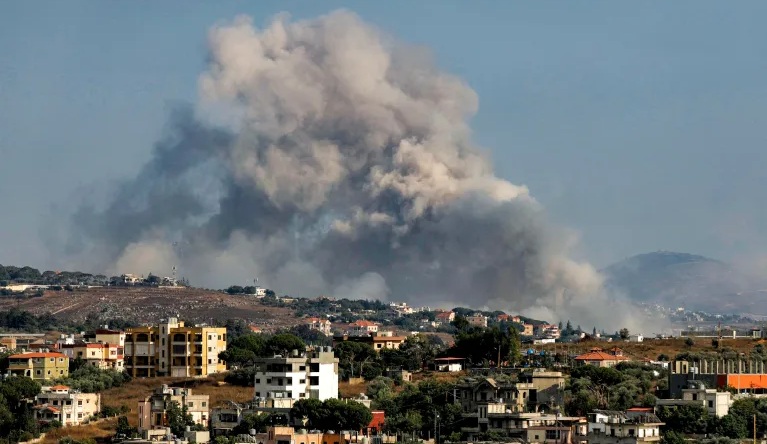
One of the most persistent criticisms of the current process is that the talks have done nothing to halt Israel’s occupation. Even as the seventh round got underway, reports from southern Lebanon described ongoing large-scale blasts, infrastructure destruction, and military operations by Israeli forces.
International media have reported that in the days leading up to the Rome talks, the Israeli army continued demolition operations in southern Lebanon using massive quantities of explosives, a move that Lebanese officials have condemned as incompatible with the spirit of the agreement and with any good-faith confidence-building effort.
In the view of many Lebanese analysts, the message from these operations is unmistakable: Tel Aviv has no intention of relinquishing its military presence or freedom of action in the south until it has fully secured its objectives, regardless of the will of the Lebanese people.
Historical experience: Deep-rooted distrust
Lebanese distrust of Israeli promises is hardly a product of the current talks alone. From the 1982 invasion of Lebanon to the 2000 withdrawal and the 2006 war, Israeli military occupation of the south, cross-border incursions, and repeated violations of Lebanese sovereignty have remained a central axis of conflict for decades.
Beirut has repeatedly accused Tel Aviv of breaching its airspace, launching cross-border strikes, and occupying pockets of territory along the frontier, even after previous ceasefire agreements. That long history has left a deep imprint on public opinion here, with broad swaths of the Lebanese population viewing any direct deal with Tel Aviv through a lens of profound skepticism.
Hezbollah: Direct talks with Israel an eternal disgrace
Against this backdrop, Hezbollah Secretary-General Sheikh Naim Qassem has staked out an unequivocal position against the negotiating process, declaring that "direct talks with Israel would be an eternal stain on Lebanon" and insisting that the resistance movement will never grant legitimacy to a regime that continues to occupy Lebanese territory and sustain its attacks.
In Hezbollah's view, decades of experience have shown that Israel only withdraws from occupied land when confronted with battlefield pressure and military costs, and that negotiations alone have never compelled it to fully meet its obligations.
In a speech marking the Arbaeen commemoration, Qassem asserted: "We believe today that direct negotiations have brought Lebanon nothing but disgrace, humiliation, failure, and endless concessions." He accused Israel of spending the past 15 months pursuing a strategy of gradually destroying the resistance, using "every diabolical tool" to target their movement. He also addressed the Lebanese officials, warning that "with this approach, Lebanon's political leadership will secure no gains for the country." The government, he argued, should focus on national sovereignty, strengthening the Lebanese army, securing Israel's withdrawal from occupied lands, reconstruction, the port explosion case, investigations, and restoring depositors' funds, without giving the US and Israel credibility and legitimacy in return for nothing.
US pressures and objectives beyond ceasefire
Washington, which has cast itself as mediator from the start, has made no secret that its goals go well beyond a stable ceasefire. From the outset, Washington has framed the talks as a vehicle not just to halt hostilities but to disarm Hezbollah, fully deploy the Lebanese army in the south, and move toward a lasting security arrangement. That agenda has only deepened skepticism among critics in Lebanon, who see the process as less about ending occupation and cross-border attacks than about reshaping Lebanon's internal balance and curbing the role of Hezbollah.
Yet after seven rounds of negotiations, Israeli forces have still not fully withdrawn from southern Lebanon, military strikes continue, and disputes over implementing commitments remain unresolved. For opponents of the talks, the conclusion is stark: the current process, at least so far, has failed to compel the Israeli occupation regime to meet the obligations Beirut expects, and has amounted more to crisis management than to a genuine resolution.










