













Alwaght- Over the past years, whenever there was a talk about the US military bases in West Asia, the eyes went to the American facilities in Qatar, Bahrain, the UAE, and Kuwait as the backbones of the air support and logistics of the US military in the region, but the new round of clashes with Iran has changed the geopolitical map of the region.
In this connection, Jordan that until recently has been marginal to the West Asian security dynamics in recent developments has shifted from a passive player to one of the most important centers for the US command, logistics, and force deployment, a change of role that has directly engaged this country in the deterrence and confrontation equations between Tehran and Washington.
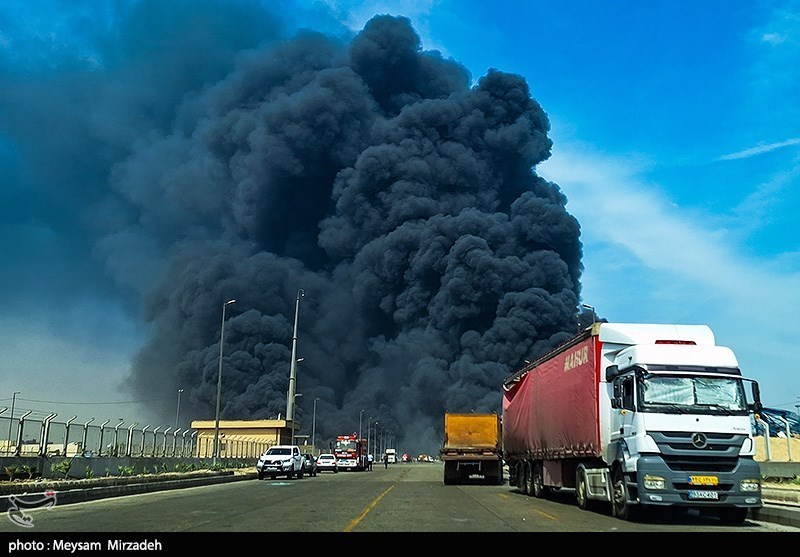
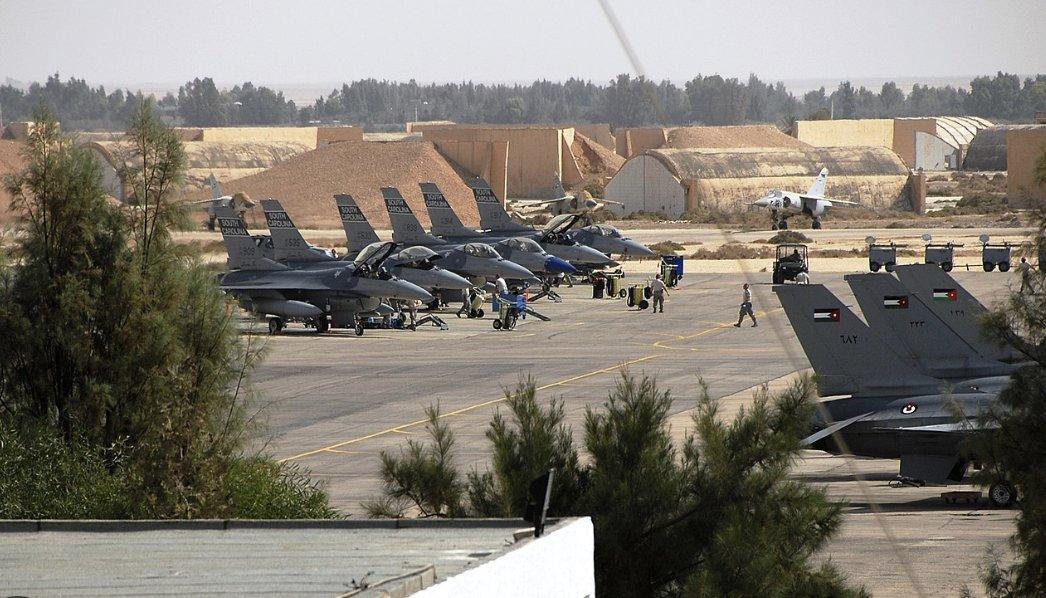
To maximize the cost on Washington, Iran has zeroed in on military bases in Jordan as its primary target. Friday's devastating strike on the Muwaffaq Salti airbase in eastern Jordan marked a turning point, proving that the battlefield is no longer confined to the Persian Gulf monarchies.
According to the US military, the attack killed two American service members, left one unaccounted for, and wounded four others. Washington officials have conceded this is the first instance of US personnel being killed in direct Iranian attacks since the current round of tensions erupted.
The New York Times, citing American officials, reported that the strike was just one of four missile-and-drone operations Iran has launched against American positions in Jordan over the past five days. Beyond the human toll, the effective strikes have inflicted significant damage on equipment, including multiple helicopters and support systems.
Donald Trump’s response underscored the gravity of the moment. Calling the attack" a very sad thing" he expressed remorse over the American deaths, a reaction that laid bare Washington's growing unease as the crisis becomes increasingly difficult to manage and the costs keep climbing.
Why's Jordan grown important?
In the current conditions, the main question is that why such a small country as Jordan has become the key US operations base.
The answer should be sought in a change of military formation of the US in the region. Over the part two decades, the American bases in the Persian Gulf Arab states were the backbone of the US Central Command (CENTCOM) operations, but the escalated tensions with Iran and increasing military vulnerability of the US bases have driven Washington leaders to gradually move some of their operational capacity to safer locations.
Jordan’s proximity to both Iraq and the occupied territories makes it a geographic linchpin, capable of supporting multiple fronts simultaneously. And because it sits farther from Iranian territory than Persian Gulf bases, particularly Qatar’s Al Udeid, Washington had assumed it offered a safer haven for troop deployments.
That assumption is now shattered. Iran’s missiles slipped past Jordanian and US interceptors, proving that relocating forces to Jordan has not delivered the security Washington banked on. What was once a strategy to reduce American vulnerability has backfired: those very bases have become direct targets, driving up Washington’s logistical and security costs.
Meanwhile, as US operational freedom shrinks in Iraq and the Persian Gulf monarchies, and with Turkey’s Incirlik base off the table, Jordan’s role has ballooned. It is no longer just a staging ground. Today, it serves as a coordination hub for surveillance flights, drone operations, logistical support, aerial refueling, and a key node in the US early-warning network across the region. Any disruption here could ripple through CENTCOM’s entire operational architecture.
Jordan’s geopolitical weight becomes even clearer when you consider this: part of the US early-warning system for intercepting missiles and drones headed toward the occupied territories relies on equipment based in Jordan. So, any disruption to operations of these centers will degrade threat-detection timelines and response of air defenses to any possible attacks on Israel.
US offensive power weakness
By questioning the US military superiority and highlighting the US offensive power that was developed with much noise and media propaganda, Iran has introduced new dynamics in military terms, to an extent that the American officials and media have admitted that Iran's missile power is even stronger than before.
According to the US military assessments, Iranian missiles now have greater maneuverability in the final flight stage, making it hard for most advanced air defenses like Patriot to intercept them. American officials told Wall Street Journal that the number of attacks and the toll they take on the US military assets show that Iranian forces still have large numbers of missiles and have honed their capability to outmaneuver air interceptors.
Sunday's missile strike on Jordan's Aqaba port laid bare a harsh truth: early-warning and interception systems lack the muscle to defend Israel effectively. That hit signaled that if the conflict expands, the occupied territories and US support bases across the region will face a far heavier barrage, and the assets parked in Jordan simply do not have the capacity to contain such a threat.
All of this undercuts Donald Trump's repeated boasts that Iran's military capabilities have been gutted across every domain. The missiles that slammed into US positions tell a different story: Washington's assessments of Tehran's firepower are dangerously out of sync with ground realities.
In general, Iranian attacks on Jordan, beyond a military action against a specific position, bear signs of a change of West Asia security calculus in which the geographical and strategic depth alone can no longer save them from consequences of the competition of powers.