









Alwaght- Over the past few days, the American-Iranian military confrontation has elevated to new heights and the clashes that in the beginning were limited to trade of missile and drone strikes now developed to include viral infrastructures.
Washington’s new strategy, executed through nighttime strikes on bridges, railway stations, and power and water networks in southern Iran, is designed to cripple the country economically and logistically, forcing Tehran to the negotiating table to extract maximum concessions.
While it is still too early to definitively call this an “infrastructure war,” Iran, relying on its doctrine of “mutual security,” has not only refused to back down but has also recalibrated the equation by striking back at US allies in the region, sending a clear message: security is either for everyone, or for no one.
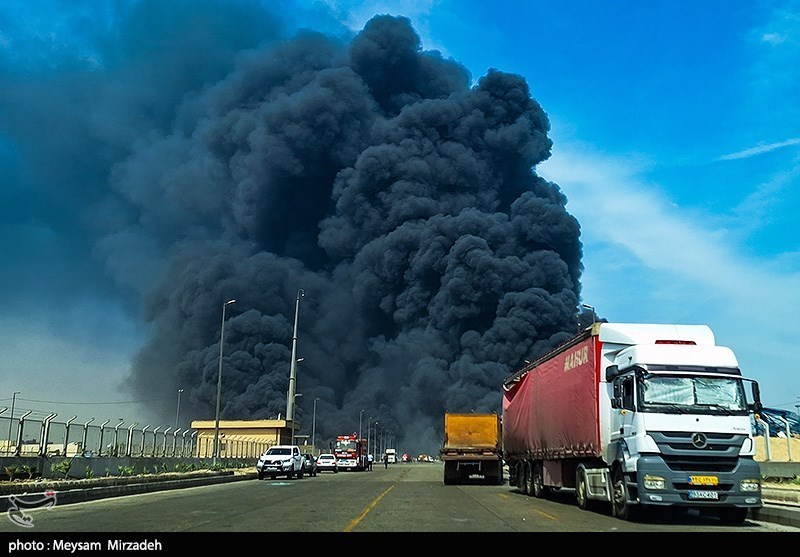
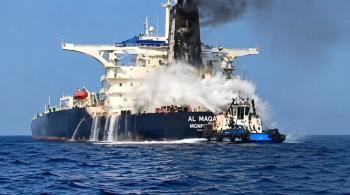
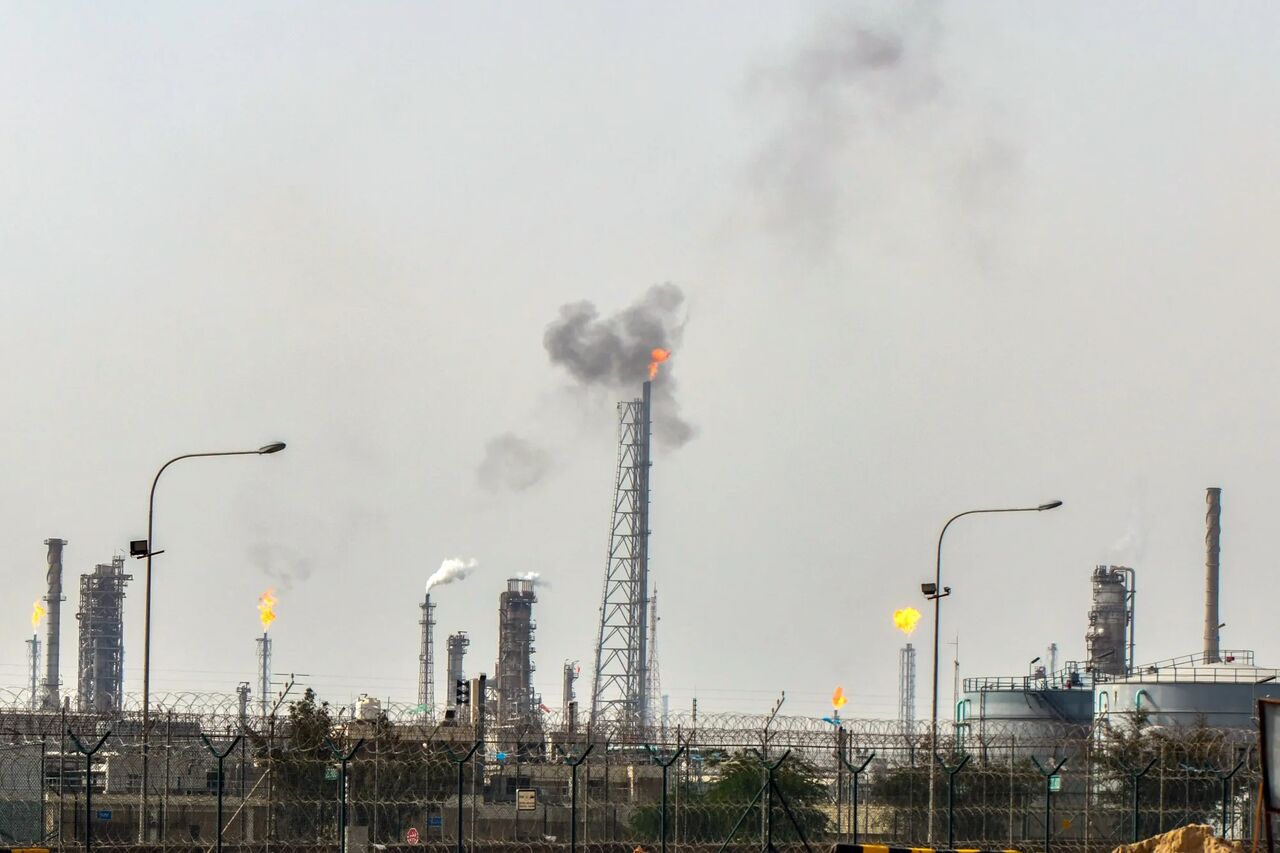
In line with this policy, Iran’s armed forces launched their first retaliatory strikes against American infrastructure attacks by targeting critical facilities in several Arab countries. On Friday, Kuwaiti officials confirmed that a power plant and a desalination facility had been hit and damaged in Iranian missile strikes. Then on Saturday, Iran struck the northern terminal of Kuwait’s state-owned oil company (KNPC), which exports crude—a move that underscores the depth of Tehran’s reciprocal strategy.
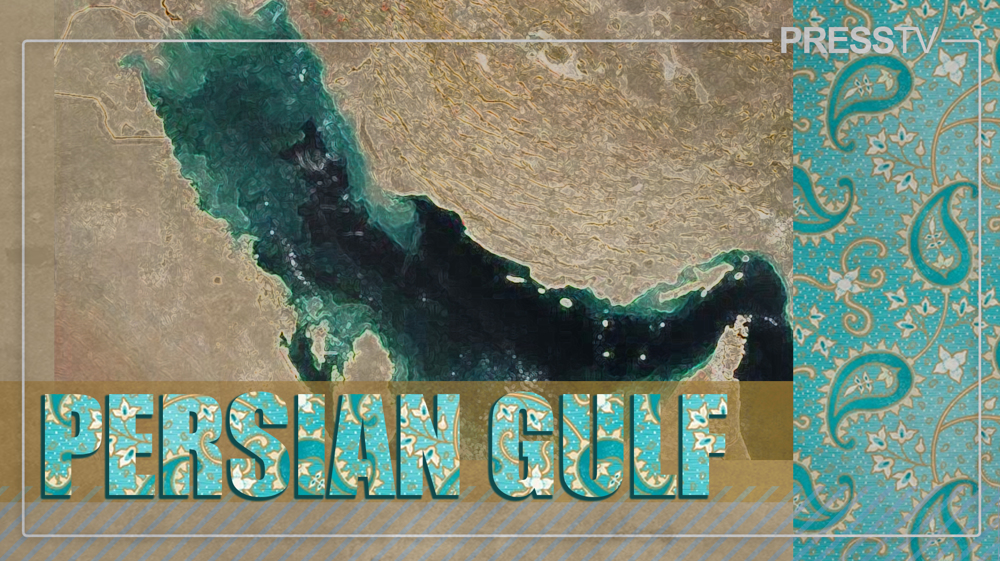
Should American strikes continue and an all-out infrastructure war officially begin, Tehran has declared that every critical installation in Persian Gulf Arab states hosting US forces will be considered a legitimate military target. These warnings are no longer mere threats, and they have been transformed into an operational targeting database for Iran’s armed forces.
Iran's target bank
Persian Gulf Arab monarchies have invested heavily in recent decades on their energy, ports, refineries, petrochemical industry, power grid, and water desalination facilities. Economies of many of these countries is dependent on energy exports and oil routes and any disruption of the chain can hit the world energy markets. So, should tensions escalate, these infrastructures will be Iran's easy targets.
In the energy sector, Iran’s armed forces have drawn up a comprehensive target bank that includes, if necessary, Saudi Arabia’s Ghawar oil field, the Abqaiq oil processing facilities, and the Ras Tanura terminal, Abu Dhabi’s energy installations and the UAE’s petrochemical and refining complexes, Qatar’s North Field and the Ras Laffan LNG facilities, Kuwait’s Burgan oil field and its export terminals, as well as Bahrain’s petrochemical plants and Oman’s Qarn Alam and Yibal oil fields.
Beyond oil and gas, a vast array of desalination plants and power generation facilities across the region are now within missile range, among them Saudi Arabia’s Shuaiba thermal power plant, the UAE’s Barakah nuclear plant, and Qatar’s Umm Al Houl power station.
Transportation infrastructure is also firmly in the crosshairs: the (Persian) Gulf Cooperation Council’s rail and road networks, particularly the King Fahd Causeway linking Saudi Arabia and Bahrain, the Sheikh Zayed Bridge in Abu Dhabi, Qatar’s Lusail Bridge, Kuwait’s Sheikh Jaber Al-Ahmad Al-Sabah Bridge, and Oman’s Khor Al-Brimi Bridge are all considered legitimate targets in any infrastructure war.
Commercial and industrial ports are no exception either. Jebel Ali and Fujairah in the UAE, King Abdulaziz Port and Jubail Port in Saudi Arabia, Hamad Port in Qatar, Shuaiba, Shuaibah, and Mubarak Al-Kabeer ports in Kuwait, and Sultan Qaboos Port and Duqm Port in Oman, all vital nodes in global trade, are now part of Iran’s military targeting database.
Iranian officials have been unequivocal in recent months about their reciprocal response to any strikes on their infrastructure. In late remarks during the final stretch of the 40-day war, Parliament Speaker Mohammad Baqer Qalibaf warned that Iran’s enemies, backed by one regional country, were preparing to occupy one of Iran’s islands, and that if they made any such move, all of that country’s critical infrastructure would face relentless, unrestricted retaliation.
Iran's IRGC has echoed these warnings in repeated statements, making clear that "the American enemy and the hosts of its bases in the region should know that crossing red lines and attacking civilian infrastructure will carry a devastating and crippling price." They have vowed that if the enemy persists, even more crushing responses are on the way, responses that will leave a lasting mark on history of wars.
The spokesman for the Khatam al-Anbiya Central Command, the core of Iran's military decision-making, recently cautioned that if Trump's threats to target Iran's infrastructure are carried out, "everything that has so far remained intact in the region out of Iranian restraint will be pounded to rubble."
Brigadier General Abolfazl Shekarchi, spokesman for Iran's armed forces, also weighed in on Trump's recent threats, stating flatly: "If the US strikes the Islamic Republic's infrastructure, then all regional infrastructure will become legitimate targets for the Islamic Republic."
Over recent months, Iran has largely confined its retaliatory strikes to US military bases in the region, deliberately avoiding hits on Arab countries' infrastructure, even though those nations are not blameless in Washington's aggression. But if Washington moves against Iran's vital infrastructure, those security and neighborly considerations will be cast aside, and a new "infrastructure-for-infrastructure" equation will become the defining reality of this confrontation.
Iran has proven in recent months that it possesses the capability to strike regional infrastructure at will. Advanced US air defense systems like Patriot and THAAD, despite massive investments and deployment across multiple bases, have consistently failed to intercept Iranian missiles and drones.
This technical failure exposes a stark truth, suggesting that despite Western boasts about their military prowess in direct confrontation, they are deeply vulnerable when it comes to defending themselves and their allies, and their defense technology falls short against Iran's modern warfare tactics. The Persian Gulf monarchies, therefore, should not pin their hopes on US air defenses to shield their facilities and infrastructure from Iran's armed forces.
Taken together, the trajectory of events shows that Trump's "maximum pressure" campaign, waged through infrastructure warfare, has not only failed to force Iran to its knees but has instead deepened the security crisis across the entire region.
Tehran's capability to strike vital infrastructure has shifted the deterrence dynamics in West Asia, leaving the US allies in the region face to face with the potential painful consequences of Washington-Tehran confrontation.
Now the Arab rulers in the region should understand that alignment with the US's warlike policies can cost their economy and security dearly, since any miscalculation risks bringing about a comprehensive and uncontrollable crisis in the region.