
















Alwaght- In a considerable development in the already tense West Asia's political atmosphere, fire of Yemen rose from under the ashes once again, ending the state of no war, no peace that in recent years dominated Sana'a-Riyadh relations.
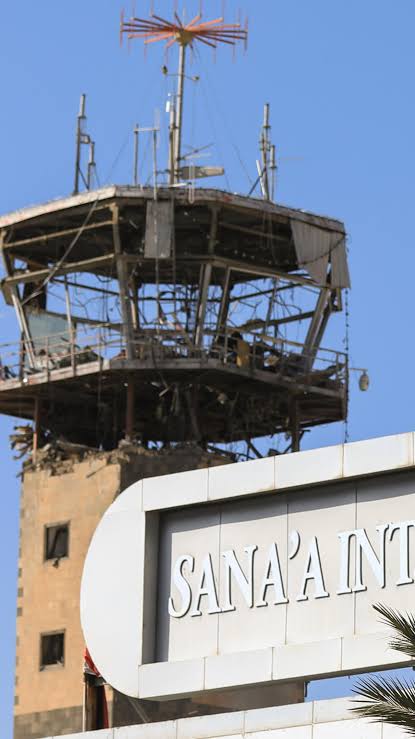
The spark came with Saudi bombardment of Sana'a International Airport following resumption of flights to the besieged airport and the Ansarallah leadership's resolve to shatter the American-Saudi siege. That chokehold, a toxic leftover from the Saudi-Emirati aggression backed by Washington, had persisted in blatant disregard for the new realities on the ground in Yemen and the broader region, not to mention the power equation Ansarallah has forged as an emerging regional force. Then came last week's Iranian flight, carrying officials and dignitaries to the funeral of the martyred Iranian Leader, and it was the wake-up call. Ansarallah answered, heeding the people's rising demand to break the siege, once and for all, especially the aerial blockade.
Ansarullah resistance movement has made a resolute decision to break this choking blockade. This decision is driven by deep understanding of the issue that dignity of the people of Yemen cannot remain hostage to the will of Riyadh and Washington. The remarks by the Sana'a officials bears the message that the time of surrender is gone and the airport must be reopened.
However, bombardment of the airport under the ruse of the Iranian arms delivery to Yemen has practically violated the ceasefire with Sana'a, giving the Yemeni side the legitimacy for renewed military pressure against Riyadh. In addition to shifting the dynamics in the Arabian Peninsula, this development can carry serious messages about boosting deterrence power of the Axis of Resistance and carrying out punitive actions against the adversaries.
Ansarullah, from breaking the siege to gaining the opportunity to expel Saudi Arabia from Yemen
Saudi Arabia's uncalculated strike on Sana'a airport handed Ansarallah a golden opportunity, a chance to break free from the costly ceasefire constraints that had kept the shadow of economic war hanging over Yemen through a continued siege. Over the years of truce with Riyadh, Ansarallah had quietly transformed, bolstering its deterrent capacity, cementing its regional role, proving mastery over the Bab-el-Mandeb Strait, and shoring up the domestic and international legitimacy of its rule.
Then came direct military confrontation with Israel, a regional power, and the US, the global order's hegemon. That clash opened a new window, showcasing to the world Yemen's military, defensive, offensive, and technological might. After Operation Al-Aqsa Storm, Ansarallah formally joined the "unity of frints" against the Israeli regime's US-backed genocide in Gaza, declaring war on Tel Aviv. Over three years, they not only imposed a naval blockade on the Israelis but also repeatedly punched through advanced air-defense systems with missiles and drones, inflicting heavy human and economic costs on the regime.
In this war, Ansarallah's missile capabilities leaped forward with the unveiling of hypersonic missiles, and that missile and drone power proved decisive. It carried Sana'a to victory in another fight, against the Western naval coalition Washington had assembled to break the Red Sea blockade. Thwarted, the US was forced into a de facto non-aggression understanding to protect its own commercial and military vessels.
Throughout this period, Ansarallah had an important opportunity to turn the screws on Saudi shipping lanes, using that leverage to pry open the aerial and naval siege. But they held back, to avoid accusations of violating the truce, and out of consideration for the Tehran-Riyadh détente brokered by China. That situation, however, did nothing to stop Ansarallah from emerging, and being recognized, as a regional power.
At home, Ansarullah, despite blockade and vast Western sanctions, has presented a much better economic and administrative performance compared to the Saudi and US-backed Yemeni government in Aden. In the southern province of Aden, despite oil sales revenues, people are bearing the brunt of inflation and unstable foreign currency prices, something causing anger and protests regularly in the south. Additionally, due to the heated Saudi-Emirati competition, the political stability in the south has grown highly fragile and combustible. For example, after the attack of the now-dissolved UAE-backed Southern Transitional Council (STC) on Hadhramaut in January last year, the Saudis directly bombed these forces, a development practically leading to collapse of the Aden coalition government.
With this new calculus—military, economic, political, and regional—Ansarallah is a different beast. In the coming days, Riyadh will be dealing with a Yemen it no longer recognizes. The deterrence equation is no longer just about threatening infrastructure like airports or Saudi Aramco facilities—the very leverage that once forced Riyadh to the negotiating table. Now, the full length of Saudi commercial and oil shipping lanes in the Red Sea is in the crosshairs. And with Iran effectively holding the Strait of Hormuz shut, Riyadh would face economic strangulation from both ends.
Saudi Arabia miscalculated badly by provoking Sanaa. During the 40-day war and its turbulent aftermath, Riyadh had managed to pivot a major chunk of its oil exports from Hormuz to the Bab al-Mandeb and the Red Sea, building crucial economic resilience through its Red Sea ports. But now, with Hormuz sealed, Ansarallah holds the key to crushing that resilience overnight—by squeezing or shutting down Saudi oil exports through Bab-el-Mandeb. That gives them far greater leverage than just demanding an end to the siege. This time, they can push for a full non-intervention agreement—and ultimately, cut Riyadh out of Yemen for good.
Geopolitical bomb of Bab-el-Mandeb
In such conditions, Bab-el-Mandeb is not merely a sea crossing in south of the Red Sea, but the second angle of the emerging geopolitical equation in the region, one whose first angle is the Strait of Hormuz. If the Strait of Hormuz is the artery of the Persian Gulf oil exports, Bab-el-Mandeb is the linking ring of these exports to the Suez Canal and the European markets. So, the simultaneity of the pressure on these two chokepoints has left the US and its allies face to face with an unprecedented equation that will increase exponentially the economic costs of any confrontation with the Axis of Resistance.
In such a scenario, Ansarullah can channel its pressures specifically on the Saudi shipping and exports in the Red Sea by citing the Saudi military action against Sana'a airport, without directly violating the deal with Washington and so complement Iran's geopolitical leverage in the Strait of Hormuz with leverage of Bab-el-Mandeb. The outcome of this synergy is doubled constraint on the world energy markets, degraded US maneuvering capacity for managing the rallying oil prices, and increased political and economic costs of Washington’s support to its Persian Gulf Arab allies, a situation that can secure victory of the Resistance camp in the rivalry over the future of the region's security order.










