








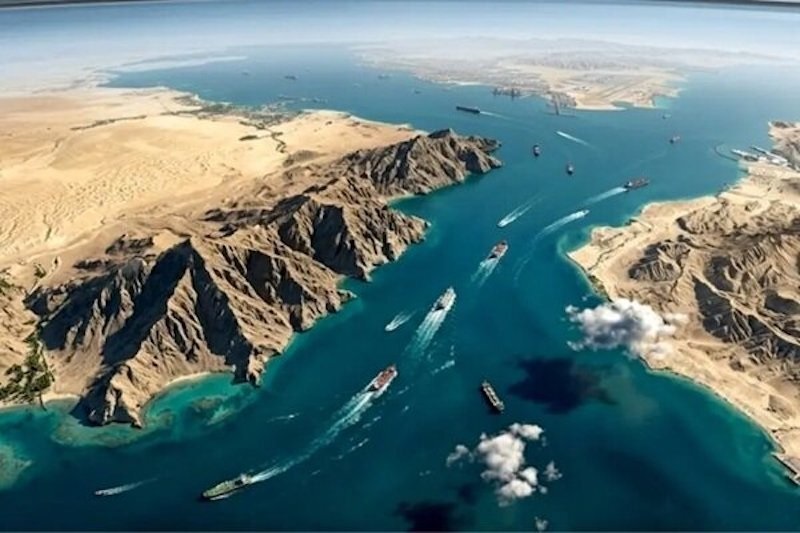


Alwaght- After signing the MoU between Iran and the US, vessel transit in the Strait of Hormuz has taken a rising trend. According to the deal, Tehran commits to cooperate for freedom of navigation in the key waterway and will not charge tolls on the ships transiting in at least 60 days.
However, Iranian officials have said that the 60-day timeframe is temporary and onve it ends, Tehran will execute its new security arrangements in the Strait. According to the new arrangements, Iran will receive tolls from the vessels in return to provided security and navigation services.
Iran-Oman cooperation: Unavoidable necessity
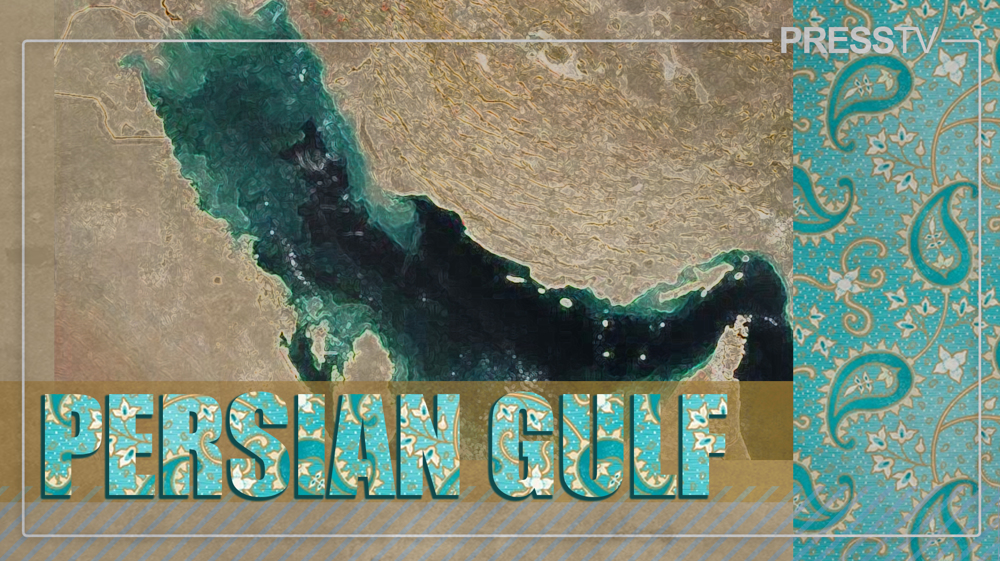
Any security mechanism in the Strait of Hormuz will be difficult to implement without cooperation from Iran and Oman. The two countries are the Strait's only littoral states, each holding sovereignty over parts of its territorial waters. Accordingly, coordination on maritime security, shipping safety, search-and-rescue operations, and vessel traffic management falls within the shared responsibility of Tehran and Muscat.
Within this framework, Iran and Oman announced in their recent joint statement the formation of a working group to examine the "future of navigation management in the Strait of Hormuz," stressing the need to uphold maritime security and ensure the continued safe passage of ships in accordance with international law.
Here is a question: Is Oman willing to fully cooperate in implementing the security arrangements Tehran envisions?
Muscat's conservative positions
Recent remarks by the Omani Foreign Minister Badr bin Hamad Al Busaidi showed that Muscat is cautious about some of the terms of Iran's plan. On Thursday, he said: " Future arrangements for the Strait of Hormuz will not include any tolls or fees for transit."
That stance suggests that while Oman supports security cooperation with Iran, it does not necessarily agree with every aspect of Tehran's proposal, particularly the idea of charging passing vessels. In other words, Oman's cooperation is more focused on safeguarding shipping security and regional stability, rather than fully aligning with all of Iran's positions.
Why is Oman circumspect?
With a look at the views of analysts and media reports, we can decide that the caution shown by Oman regarding exercising sovereignty over Strait of Hormuz is driven by several factors:
1. Legal limitations
One of the biggest reasons for Oman's caution is its legal obligations. The Omani outlet Muscat Daily has reported that Oman is a signatory to the UN Convention on the Law of the Sea (UNCLOS) 1982 and believes any legal or security regime in the Strait of Hormuz must comply with its provisions, especially the principle of safe and free passage for vessels. As a result, Muscat is reluctant to take part in any action that many countries would view as a violation of international law.
Iran, by contrast, is not a party to UNCLOS. Iran's Deputy Foreign Minister Kazem Gharibabadi has stressed that Tehran, based on its sovereign rights, can take whatever measures it deems necessary to counter security threats in the Strait of Hormuz and blames US policies for any instability there.
That is precisely why Tehran does not consider itself bound by UNCLOS commitments when enforcing security policies in the strait, while Oman, as a state party to the treaty, faces far more legal constraints.
2. Maintaining its mediator role
Another reason is Oman's traditional place in the regional foreign policy. Over the past decades, Oman has tried to maintain its role as a mediator between Iran and the US and the Persian Gulf Arab states. Actually, one of the main diplomatic assets of Oman is this mediator role, and if it leans to Iran in the current dispute, it will lose a major part of this diplomatic credit.
In addition to close ties to Iran, Oman has major security, economic, and political ties with the US, Britain, and the Persian Gulf monarchies. So, it tries to walk a tight role between the two sides.
3. Difference in exercising sovereignty
This combination of legal constraints and political considerations has pushed Oman to adopt a markedly different approach from Iran when it comes to exercising its sovereign authority over the Strait of Hormuz.
Iranian officials, for their part, have made it clear that if cooperation with Oman falls through, Tehran will press ahead with its plans regardless. Kazem Gharibabadi has stated that while reaching an understanding with Oman remains Iran's priority, if Muscat for any reason proves unwilling to establish a joint framework for managing the Strait's future, Iran will move forward unilaterally.
Is charging tolls legal?
Charging tolls on passing vessels is one of the most consequential legal questions surrounding the Strait of Hormuz.
Hadi Atazadeh, an energy law researcher, argues that while customary maritime law and UNCLOS 1982 generally prohibit levying fees solely for passage through territorial waters, Article 26 of the convention does allow coastal states to charge for services rendered, such as security, navigation assistance, search-and-rescue, and other maritime services.
In his view, Iran could therefore argue that the proposed fees are payment for security and navigational services, not a toll for mere transit through the strait.
The Iranian researcher also points out that half of the Strait of Hormuz lies within Iran's territorial waters and the other half within Oman's. He notes that Iran has never accepted the theory of "transit passage" and continues to operate under the principle of "innocent passage", a stance that, in his assessment, gives Tehran wider leeway to exercise sovereign authority within its own territorial waters.
In general, Tehran and Muscat share thought on the principle of cooperation for security of the Strait of Hormuz, but they are divided over the security arrangements, especially charging tolls. It seems that the future of this case is contingent on the result of the Iranian-Oman joint commission talks, as well as on political and security developments in the region.