















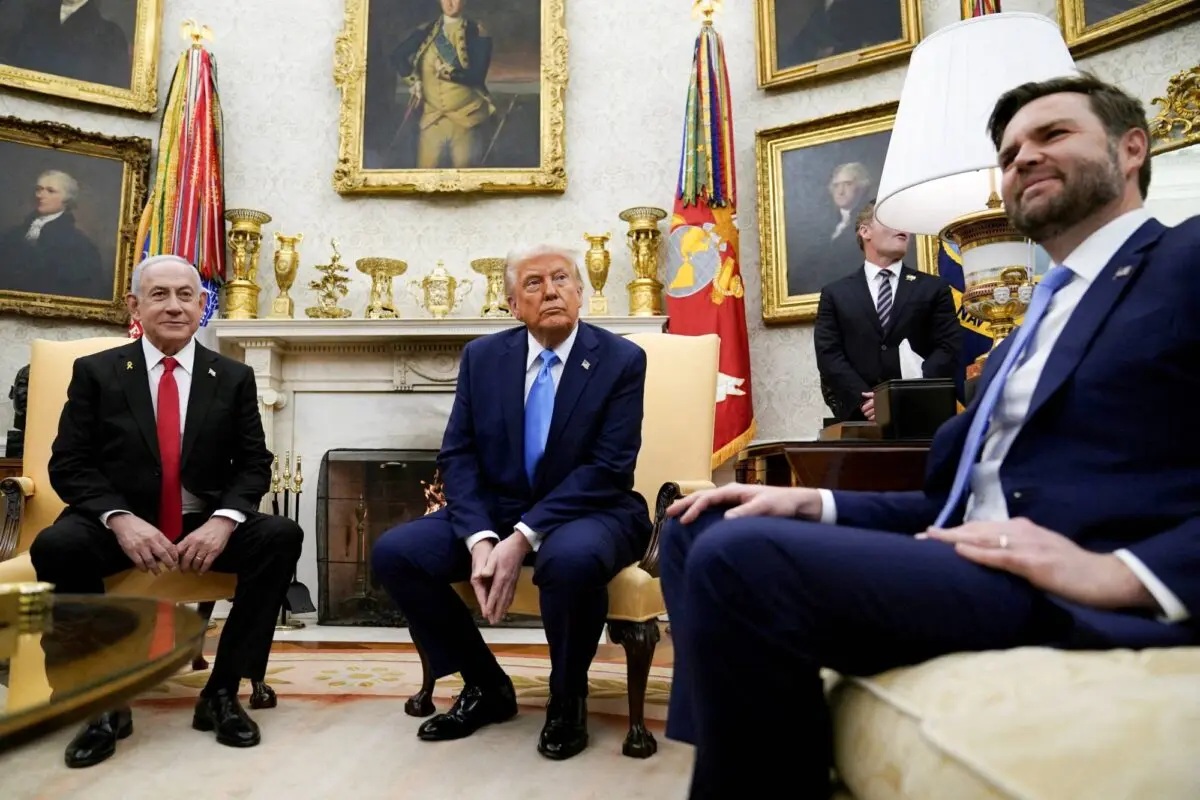


Alwaght- When a visit gets canceled, it is rarely just about the visit itself. Sometimes, postponing a diplomatic meeting is a tell, a sign of fractures that can no longer be hidden.
Israeli Prime Minister Benjamin Netanyahu's canceled visit to Washington was officially blamed on a Republican Senator Lindsey Graham's funeral. But political sources in Tel Aviv paint a very different picture, one that points to widening cracks between Donald Trump and the Israeli PM, as the two longtime allies enter a new phase of distrust and open disagreement over the region's most critical issues.
Political sources in Tel Aviv have revealed that postponing the trip to Washington that was planned for the current week was not just because of Graham's funeral, rather, it reflected a common willingness of the Israelis and Americans to delay a planned meeting between Netanyahu and Trump.
According to these sources, the political atmosphere in Washington has grown markedly more sensitive and tense toward Netanyahu in recent weeks. U.S. officials, both in public and behind closed doors, are carefully scrutinizing the Israeli cabinet's positions and the statements of its members. Netanyahu, fully aware of these sensitivities, fears that a White House appearance could escalate into a public confrontation with Trump, a scenario that, on the eve of Israel's elections, would deal a serious blow to his political standing.
That fear cuts even deeper because Netanyahu does not want a repeat of Volodymyr Zelensky's disastrous Oval Office meeting with Trump, a session that devolved into a media firestorm and cost the Ukrainian president dearly in political capital.
On the other side, the American political circles have grown increasingly critical of the Israeli PM. Their view is that Netanyahu is not advancing Trump's regional agenda, he is becoming an obstacle to it, particularly on Iran and regional crisis management.
The sharpest critique came from American Vice President J.D. Vance. In an interview with the Joe Rogan podcast, he alleged that Tel Aviv is running "a broad campaign" inside the US aimed at prolonging the war with Iran and undermining negotiations. According to Vance, Israeli officials oppose any potential nuclear deal and are working to sway American public opinion to block a diplomatic path forward.
Vance also said he has evidence of these efforts, and made clear that the administration will follow the policy Donald Trump sets, prioritizing the interests of the American people, not the demands of foreign allies.
Political sources say that since June 16 deal between Washington and Tehran, Trump has grown dubious of Netanyahu. Though the Israeli PM backed some terms of the deal, a major part of his cabinet described the MoU with Tehran "weak", a standing that was covered broadly in the Israeli political scene, and was interpreted by Washington as a sign of Tel Aviv distancing from White House's strategy.
Meanwhile, results of some polls in Israel came out to suggest drop in the Trump's popularity from 74 percent to g percent, with 62 percent of the Israelis believing that the US no longer adequately prioritizes the Israeli interests.
The American political circles see this shift in attitude as a reflection of growing opposition among parts of Israel's own society and elite to Trump's policies, particularly after he pressed Netanyahu to show more flexibility on key regional cases, including the redeployment of forces in parts of southern Syria and Lebanon, backing the Gaza peace plan, and launching the reconstruction process there.
Trump, these sources say, has told the hawkish Israeli PM in their calls to act like a decisive, independent leader, and not let domestic political pressures dictate his decisions. He has also made it clear he does not want Israel plunging into a new military confrontation under the current circumstances.
But Netanyahu's reactions have reportedly led the US president to conclude that he simply is not ready to deliver on these demands. Israeli sources attribute this to the prime minister's electoral calculus, namely, his fear of losing the support of the far-right wing of his coalition.
Trump, for his part, seems to believe that if Netanyahu adopted more independent positions and projected the image of a strong leader, he could actually draw votes from more moderate segments of the right-wing camp and strengthen his electoral standing.
In the meantime, Netanyahu, looking to de-escalate tensions, has increasingly handed over the management of relations with Washington to Ron Dermer, his close adviser, in hopes of steering the relationship back on track,especially that in Tel Aviv, there are growing concerns that Trump might throw his weight behind rival political figures in Israel's upcoming elections.
A combination of these developments shows that Washington-Tel Aviv relationship has entered a new stage in which the dispute of leaders on Iran, Gaza, and the future of regional security order is no longer merely tactical, rather, it is a gap over strategic priorities of the two sides, a gap whose one of first signs is postponing Netanyahu’s planned visit to Washington.
With the crucial congressional elections drawing closer, Trump is chasing a foreign policy win to sell to the American public, and the last thing he wants is a full-scale regional war. Netanyahu's political survival, by contrast, remains tethered to a sustained security footing and the perpetuation of a wartime status quo. This is not a temporary misunderstanding; it is a reflection of a gradual realignment in the balance of interests and priorities between two longtime allies.










