






Alwaght- Having thought that all of the Arab countries of the Persian Gulf will align with the US policies regarding the Strait of Hormuz and join the pressures against Tehran, the US President Donald Trump now faces a different reality, one in which some regional players are uninterested to fully comply with the American demands. Within this context, any country moving out of the US orbit faces strong reaction of the White House.
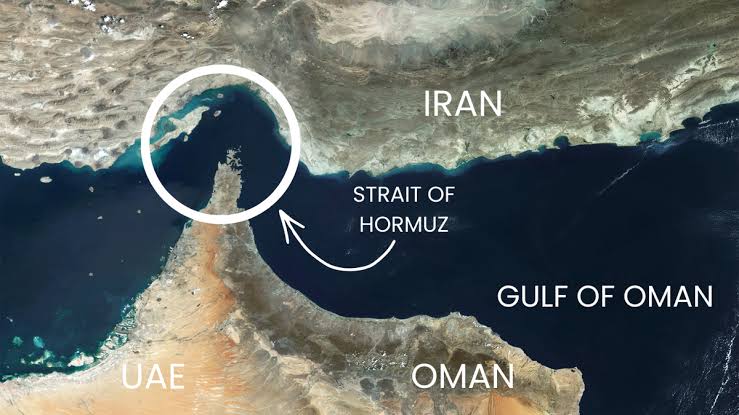
Against this backdrop, Oman has come under sharper scrutiny from the US than anyone else because of its strategic position next to the Strait of Hormuz and its prominent mediatory role in regional developments. Recently, Trump pushed back against Muscat’s moves, warning that no country would be allowed to take control of the strait. In an even sharper tone, he threatened that if Oman did not "behave" , Washington will "blow up" the tiny sultanate.
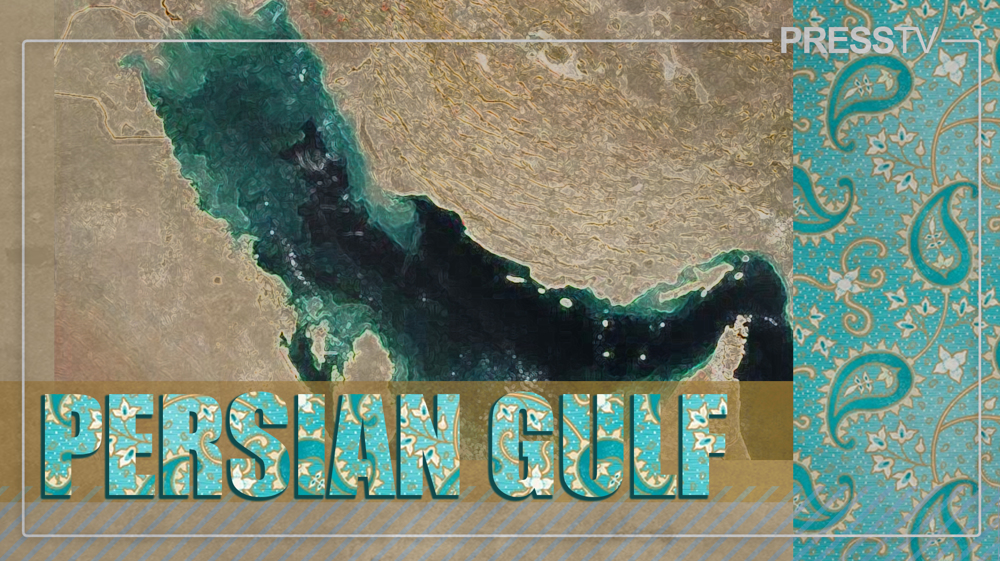
Trump’s latest threats come as reports have surfaced over the past few weeks of talks between Tehran and Muscat on setting up a new mechanism to manage maritime security and regulate ship traffic through the Strait of Hormuz. Iranian officials have repeatedly stressed that, after the recent upheavals and conflicts, the region’s equations would not revert to the pre-war era, and that security arrangements in the Persian Gulf and the Strait of Hormuz must be redefined to line up with the new realities.
Within that framework, the push to expand Iran-Oman cooperation on maritime security has gained more traction than ever, a move that seems to have rattled Washington. The US sees these moves as a sign that new arrangements are taking shape in one of the world’s most strategic chokepoints, arrangements that could shift the balance of power in the Persian Gulf into a whole new phase.
A scenario already adopted against Qatar
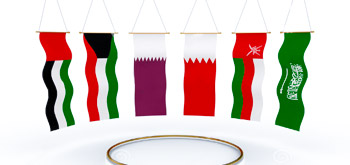
The anti-Omani threats by Washington echo the 2017 Qatar crisis, when Trump was president in his first term, and became one of the deepest political gaps in the history of the (Persian) Gulf Cooperation Council.
In June that year, Saudi Arabia and the UAE, along with Bahrain and Egypt, cut off diplomatic ties with Qatar and announced major economic and logistic sanctions on Doha.
Saudi Arabia and the UAE seized the opportunity, fueled by their long-running hostility toward Qatar over its support for Muslim Brotherhood-linked movements, and, with Washington’s green light, tightened the noose on Doha. On the surface, media spats and security concerns were framed as the root of the crisis. But digging deeper, one of the main drivers behind the pressure campaign was Qatar’s close ties to Iran and its refusal to fully fall in line with the Riyadh-Abu Dhabi camp's confrontational policies.
At the time, Riyadh and Abu Dhabi, locked in a broader regional rivalry and keen to cement their preferred order across the Arab world, tried to force Qatar into total compliance with their policies. The Trump administration’s political backing for this effort gave them the leeway to kick off the squeeze on Doha.
The list of demands handed to Qatar, ranging from scaling back ties with Iran and shutting down Al Jazeera to curbing security cooperation and overhauling Doha’s independent foreign policy, laid bare the project’s true political ambitions. Taken together, these demands made it clear that the Qatar crisis was not just some internal spat among GCC members. It was a coordinated bid to reshape the balance of power in the Persian Gulf and rein in a country that refused to dance to Riyadh and Abu Dhabi’s tune.
But the pressure campaign did not pan out the way its architects had hoped. Iran stepped in, opening up its airspace, ports, and trade routes, effectively stopping blockade from reaching a crippling Qatar. On the other side, the Qatari government refused to cave in to the humiliating terms set by Saudis. It held onto its decision-making independence and chose the path of resistance instead.
The outcome was not hard to predict: After a couple of years of tensions and political standoff, the blockaders walked back from a major part of their demands, finally agreeing to a reconciliation in Al-Oula. So, not only Qatar was not weakened, but also its regional position in the Persian was consolidated and its power bolstered.
Intimidating Muscat to distance from Tehran
Now, with the pushback Oman is facing, signs are emerging that a Qatar-style scenario could be playing out against it as well. The reason is Muscat’s distinctive and growing role in developments surrounding the Strait of Hormuz, and its close ties to Tehran. Oman has long carved out a policy distinct from many of its Arab neighbors.
Unlike the confrontational approach taken by some Persian Gulf Arab states, Muscat has consistently tried to balance its relations among Iran, its Arab neighbors, and the US. It has repeatedly stepped in as a mediator between Tehran and Washington and has acted as a trusted back channel between hostile parties on many sensitive regional files. But the latest war and the resulting shift in the Persian Gulf’s balance of power have now turned the Strait of Hormuz into one of the region’s most critical strategicp fronts.
Iranian officials believe that Iran and Oman, as the two countries flanking the Strait of Hormuz, should play the leading role in shaping new security, legal, and maritime arrangements there. And that has clearly rattled Saudi Arabia and the UAE. Riyadh and Abu Dhabi fear that any joint Iran-Oman mechanism to manage security or redefine the Strait’s legal regime would lock in Iran’s strategic foothold in the world’s most vital energy chokepoint, a position that could tip the balance of power in the Persian Gulf even further in Tehran’s favor.
For the Washington and its Arab allies, the issue is not just about Tehran and Muscat cooperating. It is about the political and strategic fallout. If Iran manages to secure a bigger say, alongside Oman, in setting the rules for transit and security in the Strait under some new arrangement, then the traditional security equation in the Persian Gulf, defined for decades by US presence and primacy, would enter an entirely new phase. So it is no surprise that the Washington-Abu Dhabi-Riyadh camp is reacting with extreme sensitivity to such a development.
So, the US and its allies through an atmosphere of threat and economic and military pressures want to intimidate Muscat and block the way to any strategic cooperation with Tehran. Some reports hold that the UAE has a bold role in this anti-Omani campaign and constantly encourage Trump to take practical reactions to Muscat's regional policies.
Abu Dhabi, which took heavy hits from the recent war, its oil exports ground to a complete halt and tens of billions of dollars in capital fled due to internal insecurity, is now wrestling with a tough economic situation. That is why it is trying to pile on the pressure to stop any new initiative on managing shipping through the Strait of Hormuz from taking shape. Because if Iran and Oman hammer out a new legal regime, other oil and gas exporters in the Persian Gulf would have no choice but to pay up to get through this strategic waterway and fall in line with the new rules taking hold there. That is clearly the last thing the Arab monarchies want, especially after they had hoped that a US-Israeli invasion would rid them of the Islamic Republic of Iran for good and hand them the reins of the region.
But Iran has come out of the war in a stronger position, and that has already upended the region’s dynamics, to the point where the Arab states are now forced to adapt to the new realities, especially on the maritime and geopolitical fronts.
Under these circumstances, while it is still too early to say for sure that the Qatar scenario will fully play out against Oman, there are burgeoning signs that Muscat is heading into a phase of political, and possibly economic, pressure. This pressure campaign looks designed to talk Oman out of teaming up with Iran on any joint projects for the Strait’s future and steer it toward falling more into line with Washington, Riyadh, and Abu Dhabi’s policies.
What way Oman will choose in the face of these pressures is yet to be clear, but Qatar experience has shown that pressure campaigns do not always yield the result expected by their architects. As Doha weathered the 2017 blockade on the strength of its regional allies and its political independence, now Muscat is in front of the same difficult test whose outcome will not only determine its ties to Iran and the US but also the future of the Strait of Hormuz and the shape of the new Persian Gulf order.