

















Alwaght- Just contrary to the common predictions of the past few months that saw end of Ukraine war after four years of economic and military attrition imminent, the field developments of the past few weeks show that not only there is no peace in sight, but also the two sides have entered a new stage of confrontation, pushing the conflict to new heights. The turning point of this escalation is Ukraine's attacks on Russian vital infrastructure deep into the country, breaking Kremlin's red lines all at once.
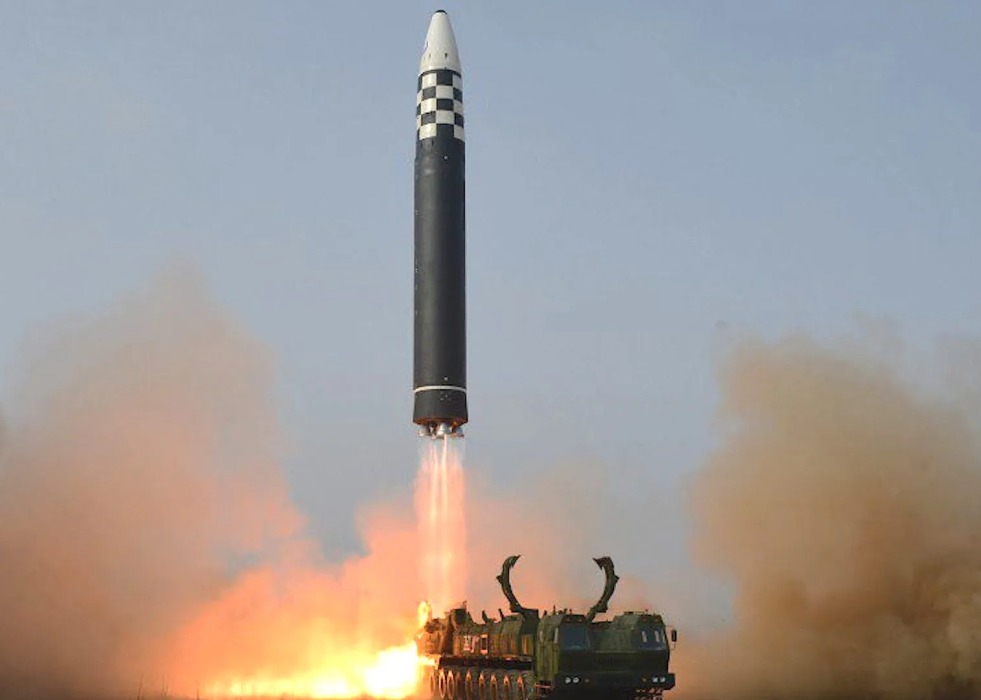
For its part, Moscow, which until now had shown restraint in using advanced weaponry, unleashed a massive missile and drone operation early Sunday and, for the first time, deployed the “Oreshnik” hypersonic ballistic missile.
This was no mere military strike. It was a geopolitical declaration: not just Kyiv, but European capitals and even Washington itself are now within direct reach of an unstoppable weapon.
Oreshnik missile's capabilities
Technically, Oreshnik missiles have smashed the boundaries of the traditional air defenses. With speed of Mach 10, or 12,000 kilometers per hour, this missile travels 3 kilometers each second. Such a speed means that even the West's most advanced air defense system like US's Patriot and Europe's IRIS-T are practically incapable against it.
The horrible side of this weapon is its multiple and independent payload system, each guided to a different target, something making its interception highly impossible.
With a reported range of 3,000 to 5,500 kilometers, the Oreshnik falls into the category of an intercontinental ballistic missile. Pavel Podvig, a senior researcher at the UN Institute for Disarmament Research in Geneva, has warned that from Russia’s easternmost points, the missile can threaten the US West Coast, and that all of Europe is unequivocally within its reach.
That is precisely why the deployment of this fearsome weapon has sent chills down European spines. Kaja Kallas, the EU’s foreign policy chief, described Russia’s use of the Oreshnik in the war against Ukraine as “a political intimidation tactic” and a “nuclear gamble.” France and other European nations have also called the move escalatory.
End of West's technological monopoly
Given these unique capabilities, the launch of the Oreshnik against Ukraine’s military and energy infrastructure cannot be dismissed as just another tactical strike. It is a direct geopolitical warning to NATO and the US. With this attack, the Kremlin has effectively declared that the West no longer holds a monopoly on offensive and defensive technologies.
Meanwhile, General Sergei Karakaev, commander of Russia’s Strategic Missile Forces, has issued a stark warning, saying: “Widespread use of the Oreshnik would be akin to using nuclear weapons.” This statement must be read alongside Moscow’s recent threat to deploy strategic weapons if its “territorial integrity is jeopardized.”
By showcasing this weapon, Russia has drawn a new red line: any direct intervention or arms supplies that target Russia’s critical infrastructure could trigger a catastrophic response, one far beyond the bounds of proportionate retaliation. The missile was also used in Russia’s nuclear drills last week, signaling that Moscow is fully prepared for any scenario with the West.
To understand why Russia deployed the Oreshnik, we need to go back. Until 2019, the Intermediate-range Nuclear Forces (INF) Treaty, signed during the Cold War between the US and the Soviet Union, banned ground-launched missiles with ranges between 500 and 5,500 kilometers. That year, President Donald Trump accused Russia of violating the treaty and unilaterally pulled Washington out of it.
Europe and many analysts warned at the time that the move would unlock a new arms race. The Oreshnik is the direct offspring of that treaty’s collapse. Now, free from the INF’s constraints, Russia has not only designed this missile but tested it in actual combat conditions.
Recently, President Vladimir Putin of Russia in a speech talked about Moscow turning to construction of such weapons, saying that after the US exit from the INF, Russia had to guarantee its strategic security.
So, Oreshnik is turning into a nightmare for the Washington leaders; on the one hand their air defenses are actionless against it and on the other hand with Trump’s exit from the INF, Moscow's hand is now open to deploy such a game-changing weapon near European borders, especially on Belarus soil.
Challenging Trump's projects
The arrival of the Oreshnik on the battlefield will challenge key US strategic plans, including the push to seize Greenland for monitoring Russian military movements, the so-called “Golden Dome” missile defense program, and the order to resume nuclear tests.
Given the Oreshnik’s ability to strike with virtually no warning, the emerging arms race in Greenland means US bases in the Arctic, across Europe, and even on American soil now face a threat that leaves the Pentagon no time to react. The message to Washington is clear: stop adventuring in Greenland and other flashpoints, because Moscow has the means to counter your escalatory moves.
Trump’s “Golden Dome” project, still in its early stages, was designed to counter old-fashioned ballistic missiles with predictable trajectories. Even if operational, it would remain largely useless against the Oreshnik’s hypersonic speed and high maneuverability.
Meanwhile, the nuclear testing Trump has prioritized to boost US deterrence against China and Russia will do little to help Washington, as the Russians will respond to every NATO action with a reaction of their own. That is precisely why Putin is placing such high stakes on this new weapon.
“Oreshnik missiles can be equipped with nuclear warheads, and Russia will gradually implement the concept of developing its nuclear forces," , Putin said, highlighting Russia’s military power.
Meanwhile, as Oreshnik went operational, Russia has unveiled Sarmat missile, whose range goes beyond 35,000 kilometers. Putin described Sarmat as the most powerful missile system, four times stronger than its Western counterparts.
Given this, the Western analysts believe that Oreshnik has created a balance in which if Washington violates the nuclear agreements or military limits, Moscow can respond with a qualitative technological leap. This is what the experts call escalation of competition to lower the nuclear threshold.
The analytical outcome of such developments is Europe's broader distancing from peace. Ukraine has now proven it can strike deep into Russia and Moscow has given responses beyond conventions. So, not only is ceasefire unlikely, but also risk of war broadening to a direct Russia-NATO confrontation is looking more real than any other time. So, the West is now in a stalemate in which continuing support to Ukraine means risking retaliatory attacks with uninterceptable weapons and stopping the support means strategic victory for the Kremlin.
Finally, the Oreshnik missile of Russia is not just a new weapon, it symbolizes a paradigm shift in deterrence logic. In fact, the era of "proportional response" has given way to an age of "shocking, unstoppable retaliation." Far from moving closer to peace, NATO and Moscow have entered a phase where a single miscalculation by either side could unleash consequences far more devastating than anything seen in the past five years. The escalation of war in Ukraine and the deployment of strategic weapons suggest as if, against all the bitter lessons of history, humanity is once again choosing an arms race over diplomacy.










