





Alwaght- As Iraq moved across the tough political crisis surrounding the government formation, the restriction of arms to the government has topped the Iraqi political debate. Interestingly, this time, the driving factor behind this debate is not Washington but Muqtada al-Sadr, the self-isolated religious leader who is increasingly turning hostile to factions opposing the American occupation forces on the Iraqi soil.
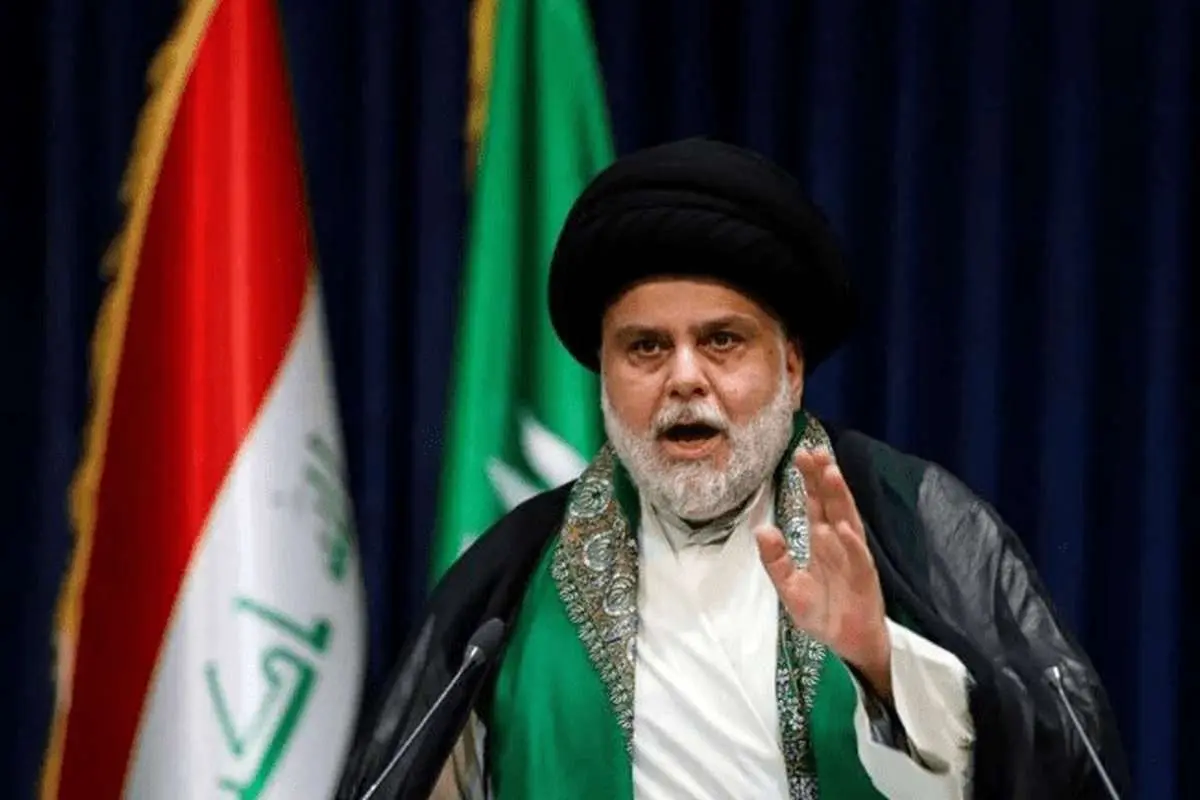
Al-Sadr, who has been living in self-imposed political isolation for a while, on Wednesday announced dissolution of the Saraya Al-Salam militant group affiliated with his Sadrist Movement and its integration into the official Iraqi army structure, becoming the top figure making headlines in Iraq. The decision was given massive addressing in the Iraqi security and political atmosphere, as expected has offered a massive propaganda feed to the forces opposed to the Iraqi resistance groups, once again attacking them, especially the Public Mobilization Forces (PMF) politically under the argument that arms should be exclusively held by the government.
For "public good of the country" and to steer clear of the threats that endanger Iraq, al-Sadr said, he decided to fully detach Saraya Al-Salam from the national Shiite bloc and integrate it into the government and the armed forces of Iraq.
The move drew immediate welcome of the new Iraqi government. Office of the newly-named Prime Minister Ali al-Zaydi described the move as boosting the government authority, rule of law, and restriction of the arms to the government, calling other militant groups to act within the framework of official security and military institutions.
Though al-Sadr in the past years had talked about suspension or dissolution of the Saraya Al-Salam, what makes the new decision different is his stark emphasis on fully joining the Iraqi government and also open invitation of the PMF subsections to follow on his footsteps.
Building pressure on the PMF
Al-Sadr made this calculation at a time when the US has spent recent months trying to steer Iraq’s political trajectory through coercive pressure and the threat of economic sanctions.
After Trump’s blunt interference in the government formation process, and failing to sideline the resistance factions from the cabinet, Washington is now banking on Iraq’s internal disputes over who can hold arms.
In this climate, resistance groups have pushed back against al-Sadr’s statement, calling it a move that plays into the hands of the American occupation.
In response, the Awliya Al-Dam Brigades, affiliated with Iraq’s Kataib Sayyid al-Shuhada, made clear that until American occupation and its oppression of Iraq come to an end, there will be no handing over of weapons or retreat from the fight.
"In wartime, they call us the sons of the honorable. In peacetime, they forget those who defended the land. Transient passersby do not protect the homeland, only loyal men of resistance do, standing guard over Iraq through every hardship," the resistance group stated.
A look at the resistance factions’ broader positions shows that from their vantage point, American pressure to disarm resistance groups ties directly into Washington’s long-term strategy to cement its military foothold in Iraq. These groups have repeatedly stated they will not lay down their arms as long as American and NATO forces remain on Iraqi soil.
With that mindset, these forces are no longer just a militia. They have set up political wings, drawn on a deep well of popular support, and expanded their clout inside parliament and the cabinet. The clearest reflection of that rising influence showed up in last year’s parliamentary elections, when a sizable chunk of the public once again voted decisively to back the resistance current.
Relying on this public support, these groups are resolutely following putting an end to the US military presence in Iraq. The manifestation of them walking this path is their recent attacks on the American military bases in the US that have inflicted major damages on the American forces and military installations, showing that Iraqi resistance still holds its high battlefield capabilities.
The resistance power gain is driving the Americans worried and Washington, using its pressure levers and also some of Iraqi actors, steer the Iraqi political atmosphere to dissolution of the PMF.
Al-Sadr playing into Israeli-American hands
Al-Sadr's decision seemingly looks inter-party and linked to the Iraq's home equations, in the fast-moving regional developments, but it should not be merely seen within the framework of the home dynamics.
West Asia affairs expert Hassan Hanizadeh commented on the objectives of al-Sadr's move in the current conditions in an interview with Alwaght, saying that given the American and Israeli defeat in the 40-day war on Iran, Washington has resorted to a rejuvenated phase of pressure on Tehran and the Axis of Resistance branches amid ongoing Israeli attacks on Lebanon and the American pressure on the Iraqi government to disarm the forces fighting against the imperialist American projects. Al-Sadr’s move also shows that the plan floated by David Petraeus, the former commander of US forces in Iraq, is taking shape. Through this action, al-Sadr is trying to pave the way for disarming the PMF. At the same time, Al-Zaydi's government seems keen on using violent means to strip the resistance groups of their weapons.
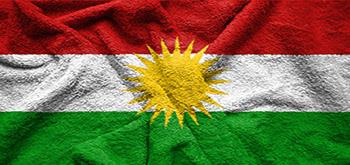
Hanizadeh noted that the disarmament push is unfolding alongside other moves. “We are now seeing a series of stirrings in the Kurdistan region, separatist groups are gearing up militarily to carry out operations,” he said, stressing that Iran’s armed forces are keeping close tabs on all American and separatist activity with full situational awareness.
Asked about Washington’s ramped-up pressure on Baghdad to disarm the resistance, and whether al-Sadr’s gambit could ultimately set the stage for Washington’s scenario to play out, Hanizadeh said that al-Sadr’s move to hand over weapons is mere posturing and will not rub off on other factions. He is carrying this out in lockstep with US and Israeli policies, ignoring the very real dangers looming over Iraq’s security. Having lost his standing among the Iraqi public, al-Sadr cannot force through the resistance’s disarmament. And if the central government tries to pull off this plan using military force, it will run into serious challenges down the line.
Shadow of threat of ISIS return
All this push to disarm the resistance is playing out even as the threat of an ISIS resurgence still looms over the region. A recent report from the US Inspector General on Operation Inherent Resolve has sounded a fresh alarm over ISIS regrouping in Syria and Iraq.
According to the report, ISIS has cashed in on the security vacuum left by the upheaval in northeastern Syria, managing to rebuild its sleeper cells. It says that in early 2026, after the security structure controlled by the Syrian Democratic Forces collapsed, between 15,000 and 20,000 ISIS members and their families broke out of camps and detention centers and vanished.
Those figures are particularly worrisome for Iraq, since a large chunk of these fighters could slip back across the shared border, infiltrate the country’s desert areas, and stir up trouble.
Hanizadeh commented on the brewing threat, saying: “Reports suggest Washington is once again rallying ISIS to bring them back into Iraq. Against that backdrop, any attempt to strip Iraq’s resistance of its weapons could deal a severe blow to the government and the country’s security. The situation has reached a point where any move against Iraq’s popular forces could spiral into civil war.”
In such murky circumstances, one question is here: Is this really the right time to bring up dissolving or weakening the PMF, the very force that played a pivotal role in keeping Iraq from collapsing during ISIS’s rampancu days, and, through immense sacrifice, managed to drive the terrorist group out of the country?
So, pushing to remove the resistance groups from Iraq's security developments at a time the US keeps its forces in Iran and ISIS threat is surging again represents a destabilizing, rather than stabilizing, move in Iraq and broader region.