












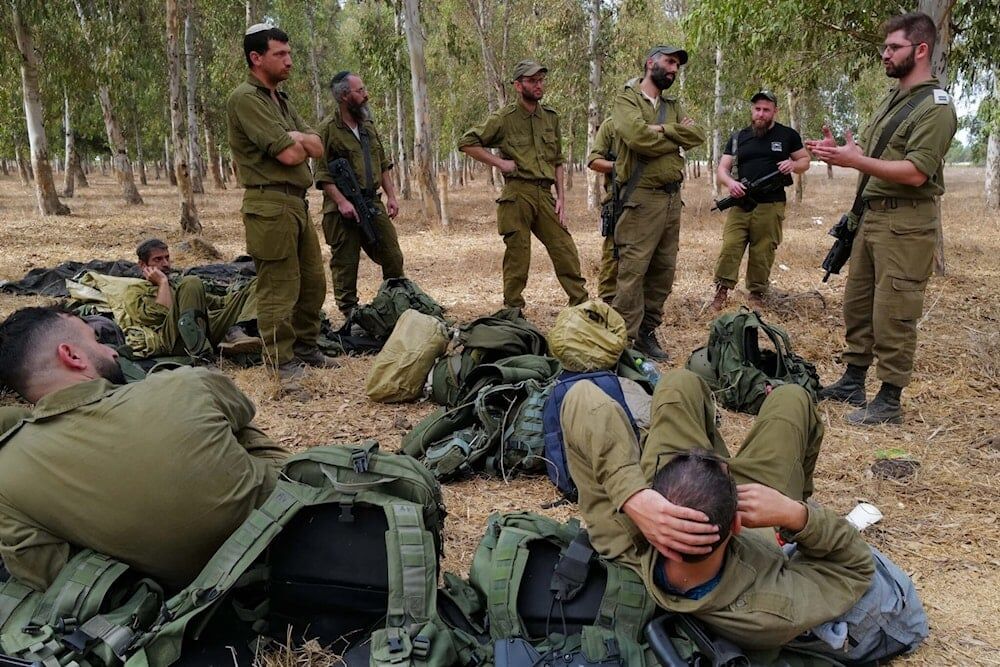


Alwaght- Israeli officials are mulling a plan to send to military service the family members of the foreign workers in the occupied territories. According to the official data of the Israeli regime, over 3,000 foreign workers are in the occupied territories who can be recruited by the Israeli military, something that can add a full brigade to the Israeli army.
Nevertheless, the army has stated that without a comprehensive legal framework, it cannot recruit this group due to legal and security concerns, but it will act in accordance with the directives of the political authorities. Earlier, Channel 7 of the Israeli regime had reported that the army, to solve its human resource shortage crisis, has resorted to recruiting Jews from foreign countries to immigrate to the occupied territories and enlist in the army in exchange for substantial salaries.
Military personnel shortage in figures
New figures show that the Israeli army is facing human sources crisis. Home polls suggest that, due to a severe army personnel shortage, the number of officers and non-commissioned officers (NCOs) intending to remain in the military has sharply declined. Consequently, the number of reservists in the Israeli military is projected to drop significantly by 2026.
Recently published figures confirm the Israeli military is grappling with a major manpower crisis, with army officials sounding the alarm over troop shortages. According to Channel 12 news, the Israeli army faces a shortfall of approximately 1,300 officers at the lieutenant and captain ranks and an additional 300 majors.
The report cites internal army surveys revealing that among career officers, only 63 percent are now interested in staying, compared to 83 percent in 2018. Among NCOs, the retention rate has plummeted to 37 percent, down from 58 percent in 2018.
For years, Israeli authorities have struggled to retain professional soldiers, but they now face a full-blown human resources crisis. The pressure of the Gaza war has driven many Israelis to avoid military service.
Infrastructural reasons behind staff shortage
The Personnel Directorate of the Israeli army has reported that in December, around 600 army professional forces are seeking early retirement and the minor officers show no interest in continuing their military career. Brigadier General Amir Vadmani, head of the Israeli military's Personnel Directorate, told the Knesset's Foreign Affairs and Defense Committee: "There is a serious gap in the manpower supply. To fill some of these gaps, we are promoting inexperienced youth to fill vacant positions."
Eyal Zamir, the Israeli military's Chief of Staff, has also confirmed the personnel shortage within the ranks. A contributing factor to the Israeli military's manpower crisis is cited as the exemption from compulsory military service for Haredi (ultra-Orthodox) men and religious seminary students. It is reported that currently, about 80,000 eligible ultra-Orthodox men between the ages of 18 and 24 have not enlisted for military service. Meanwhile, the Israeli military has announced it urgently needs at least 12,000 new recruits.
Worst crisis
Yitzhak Brick, an Israeli retired army general and military analyst, has said that Israel facing the "worst ever manpower crisis in its history." In an article published by Maarive newspaper, said that thousands of officers and NCOs have recently left active duty, either by refusing service or declining to renew their contracts.
According to Israeli media reports citing army figures, over the past two years of Israeli genocidal war in Gaza, the army lost 923 soldiers and 6,399 others were injured, while roughly 20,000 soldiers are suffering from post-traumatic stress disorder (PTSD).
Furthermore, the Israeli military is facing accusations of concealing casualty figures. Many officers are demanding immediate discharge from their bases, and younger soldiers are refusing to sign long-term contracts. This has led to a widespread shortage of professional personnel across the military. The severe manpower reduction now threatens equipment maintenance and the operational readiness of combat systems.
Brick warns that this situation can soon lead to losing the army capability for operations. He further cautions that manpower crisis can yield "full paralysis" of the Israeli army.