
















Alwaght- Since its beginning, Yemen war was supposed to be a short-period military operation to restore the Saudi-favored political equations in Yemen, but eight years of conflict have delivered a totally different outcome. After years of bombing the neighboring country and suffering heavy costs, Riyadh finally had to agree to a ceasefire, creating a state of no war, no peace. The most important achievement of the kingdom in recent years was not victory but maintaining this fragile status quo, which was unacceptable for the Yemenis.
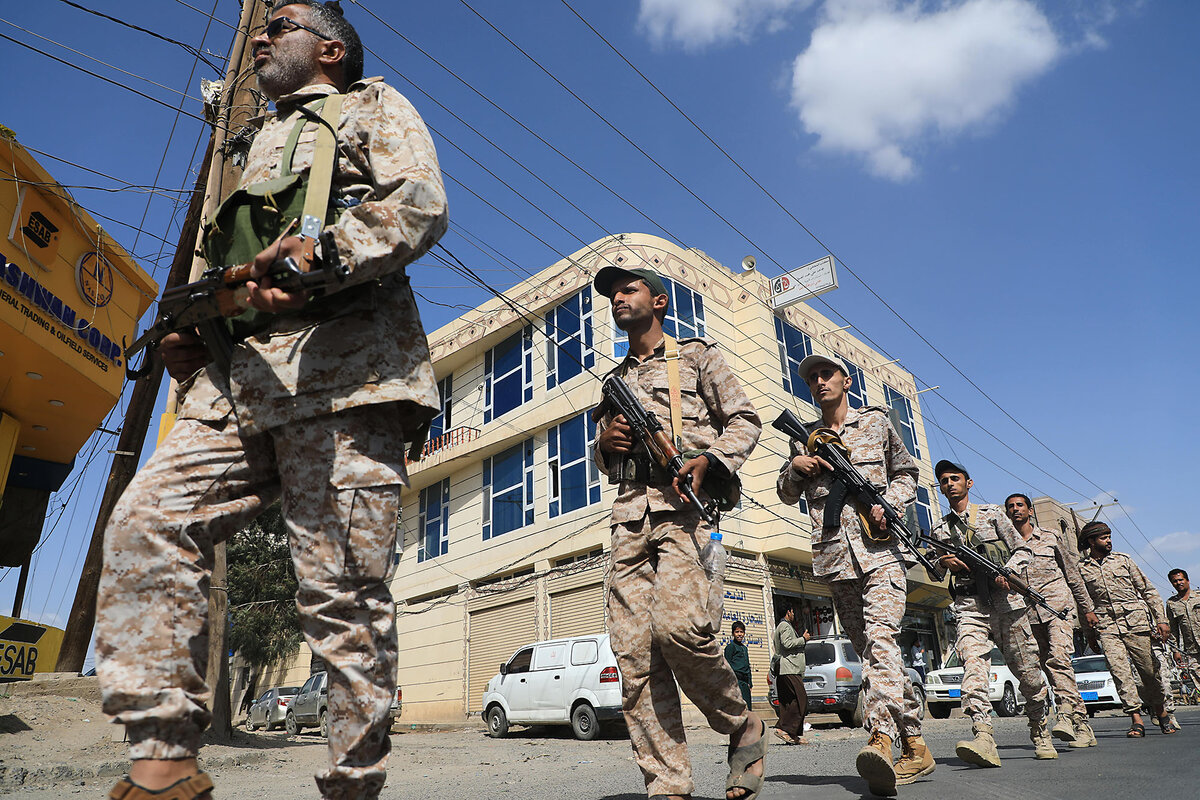
On the opposite side, Ansarullah of Yemen in this period followed a different path. The resistance movement first acted against the Israeli regime in solidarity with Gaza and then operated against the US, a staunch backer of Tel Aviv. Actually, Ansarullah challenged powers who are at way higher levels in terms of technology, military, and intelligence capabilities. The outcome was not just a political experience, but upgrading operational, weaponry, and combat capabilities.
In other words, Saudi Arabia fought eight years in Yemen only to end up being forced to agree to a ceasefire, but Ansarullah in the next years faced off more powerful enemies on more complicated battlegrounds and honed its military skills.
Bab-el-Mandeb, shifting the war calculus
The real significance of recent developments in Yemen lies in a shifting battlefield geography. Previously, Ansarallah forces had to rely on long-range missiles and drones to threaten the Bab-el-Mandeb Strait. But as Sanaa's forces advance along the western coast, they have closed the distance to this strategic waterway to a bare minimum.
This is no longer about missile range or drone flight paths, it is about geographic position.
Bab-el-Mandeb is one of the world's most critical maritime chokepoints, and Perim Island, sitting squarely in the middle of the strait, offers a unique vantage point for monitoring and controlling maritime traffic. Under these conditions, Sanaa's forces drawing near the strait and seizing the high ground overlooking it could fundamentally reshape the nature of the threat, transforming it from a long-range strike capability into sustained, close-quarters pressure on shipping lanes.
This is precisely what has ramped up Israeli and Western anxiety over Yemen. If ships could previously evade long-range weapons by simply rerouting, a threat now pressing right up against Bab al-Mandab itself makes maritime calculations far more complicated.
So, Bab al-Mandab should be understood not merely as a geographic strait but as a geopolitical lever, one capable of shaping trade, energy, and maritime security.
Saudi Arabia, returning to point of failure
Riyadh now finds itself staring down a major contradiction. For years, the Arab kingdom tried to tip the balance against Ansarallah through coalition-building, military pressure, and backing aligned forces in Yemen, yet none of these projects delivered a strategic victory.
Even when Ansarallah lacked its current level of missile, drone, and naval capabilities, Saudi Arabia ultimately failed to achieve its core objectives in the war. So expecting Riyadh today to score a win using the same old playbook, against a force that has spent years honing asymmetric warfare and missile and drone operations, simply doesn't square with realities on the ground.
Saudi Arabia's other problem is the erosion of its coalition-building capacity. Riyadh's previous coalitions against Yemen failed to change the war's equation, and any attempt to forge a new one now would come with far higher costs and risks.
Ansarullah, journey from a resistance movement to a regional power
Recent years developments have made one thing clear and it is that Ansarallah is no longer merely a domestic Yemeni player. The movement has managed to position itself as a genuinely consequential global actor, one capable of shaping maritime, energy, and security calculations worldwide.
The Gaza war only accelerated this trajectory. By placing support for Palestine at the heart of its regional policy, Ansarallah effectively stepped into direct confrontation with Israel and then drew the US into the equation. For the movement, this was a kind of knowledge transfer and operational experience gained on a real battlefield.
Seen this way, the key shift isn't just more missiles and drones, it is sharper decision-making, hardened operational experience, deeper battlefield awareness, and the ability to weave different instruments of war together into a single, coherent campaign.
An issue beyond Saudi Arabia
The significance of developments in Yemen extends well beyond Saudi Arabia's borders. If Hormuz and Bab-el-Mandeb come under pressure simultaneously, two of the world's most vital energy and trade chokepoints, on opposite sides of the region, will be affected at once.
The Strait of Hormuz in the east and Bab-el-Mandeb in the southwest of the Arabian Peninsula are, in effect, two pressure points in the global network for moving energy and goods. Any sustained disruption to these two routes drives up shipping costs, insurance premiums, and transit times, and ultimately energy prices.
That is why Yemen is no longer just a civil war or a Saudi-Ansarallah rivalry; it has become part of a larger contest over control of the region's strategic chokepoints.
Under these conditions, rising oil prices are not merely an economic indicator, they are a sign of the crisis's mounting geopolitical cost. The longer disruptions to energy and shipping routes persist, the more pressure builds on economies dependent on energy imports.
Why is Riyadh concerned?
Saudi Arabia today faces an Ansarallah that has already been through the gauntlet of war with major powers, has grown its weapons arsenal, and has moved dangerously close to a sensitive geographic position at Bab-el-Mandeb.
So the question for Riyadh is not simply whether it can intercept a missile or shoot down a drone. The real question is whether Saudi Arabia can absorb the costs of a new war of attrition, one that piles on simultaneous ground, missile, drone, and naval pressure.
How that question gets answered will decide the future of this war.
Strategic victory vs. Tactical victory
One of the key differences between the two sides in recent years comes down to the gap between tactical and strategic victory. A party may seize territory at a given moment, repel an attack, or destroy a military target, but strategic victory only comes when the balance of power itself shifts.
From this vantage point, what matters for Ansarallah is not merely advancing on a single front, it is the gradual transformation of Yemen's standing in regional calculations. Controlling Bab-el-Mandeb, or even just exerting pressure on it, can measurably boost Sanaa's geopolitical weight.
Saudi Arabia, by contrast, faces a challenge it can no longer resolve simply by throwing money at it, buying more weapons, or assembling another coalition.
Two blades at throat of world energy artery
If developments in Hormuz and Bab-el-Mandeb straits continue in tandem, West Asia could become a region where two of the world's most vital maritime chokepoints squeeze the arteries of global energy, a situation whose costs would not fall on Saudi Arabia or Israeli regime alone, but will also hit the US and Europe economically.
Under such conditions, the power equation itself shifts. An actor capable of affecting a critical chokepoint does not necessarily need the biggest army or air force to apply pressure; sometimes geography alone imposes a heavier cost on major powers.
The recent developments in Yemen should be viewed through this lens. The story is not just about seizing a few areas or shifting front lines, but it is about the gradual transformation of the balance of power in the southern Arabian Peninsula and the Red Sea.
If this trend continues, greater control over the western coast, the Arabian Sea, and strategic points like Socotra could open a new phase of geopolitical competition in the region, one in which Saudi Arabia is no longer dealing with a Yemeni group, but with an actor whose track record includes years of war and confrontation with major powers.
And that may be the most important reality of today's Yemen. Saudi Arabia is not facing the Yemen of the war's early years; it is facing a Yemen that war has forged into a far more complex and formidable actor.










