




Alwaght- Recent developments across Iraq's Kurdistan region bear witness to a gap in political order that for over two decades has been running on a fragile two-party deal but now is facing an erosion of legitimacy under the the pressure of power concentration.
In this connection, when on Wednesday the Kurdistan Democratic Party (KDP) unilaterally and with slight majority reopened the local parliament after two years, it actually drew the ire of the rival Patriotic Union of Kurdistan (PUK).
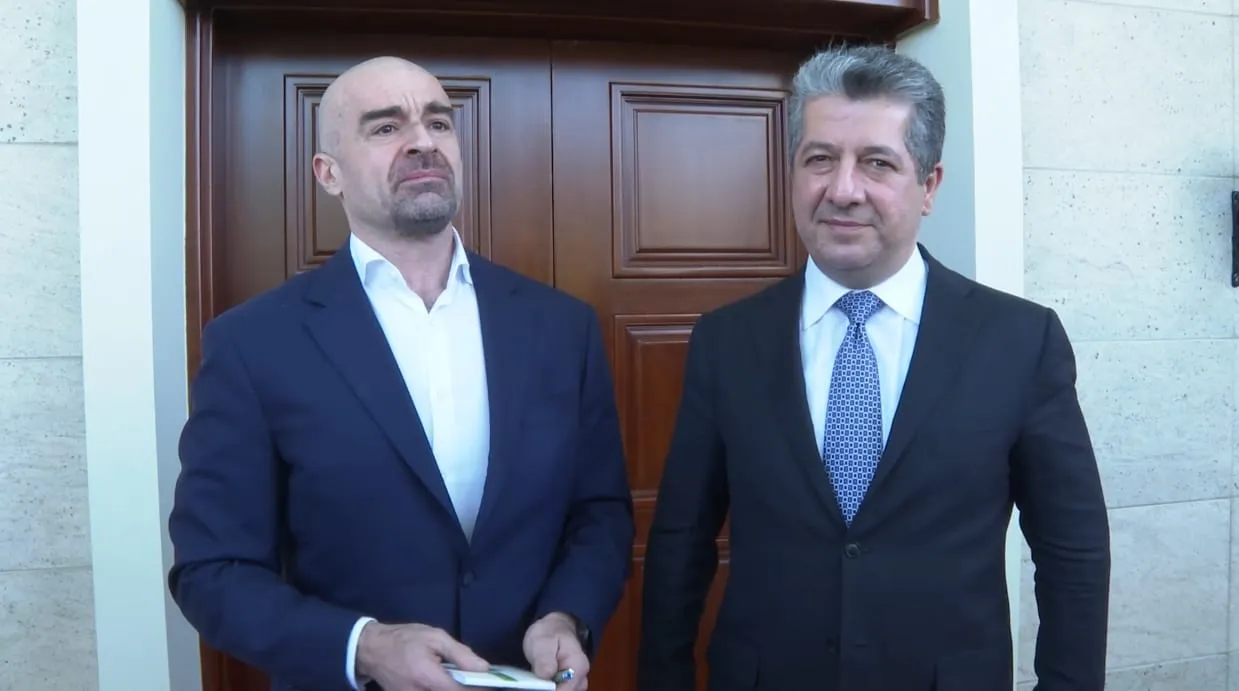
PUK's leader Bafel Talabani in a strong-toned speech officially announced exit from Erbil government, saying that Sulaymaniyah will form parallel local government and parliament. He said that his party does not recognize the decisions made by the new parliament.
Pointing to the Erbil government's performance, Talabani said that this government has been working as interim for two years and failed to meet the most basic needs of the region. It is a failed one, he held, adding that the recently taken measures will bear no fruits.
Highlightimg the role of the PUK in foundation of the Kurdistan region, he said: "This region belongs the Patriotic Union [of Kurdistan] and was built on the blood of the martyrs of the Patriotic Union. You started these actions, but we will finish them."
Meanwhile, Ghiyath al-Sorji, a member of the PUK, announced that his party will follow at the Iraqi Federal Court the holding of session by the local parliament. He claimed the parliament session was held without following legal formalities and that lawmakers had not been properly notified of its convening.
Reaction to Talabani's measures
The PUK's withdrawal from the Kurdistan Region's power-sharing arrangement has upended Erbil's political calculus, triggering a wave of reactions and alarm among officials across the region.
Nechirvan Barzani, president of the Kurdistan Region, said: "I reiterate that dialogue, compromise and partnership among all political forces are the foundation for overcoming differences and confronting challenges. Safeguarding political stability and protecting the region's institutions is a responsibility we all share. I call on all political forces to take an active part in this process and, in a spirit of national responsibility, resolve their differences within the framework of parliament. I hope this step helps break the political deadlock and creates a more conducive environment for greater understanding and cooperation among all political parties."
Masrour Barzani, the region's prime minister, also urged the boycotting parties to return to parliament. He stressed that the government's position was that reopening parliament after a two-year suspension was a move to revive legal institutions and advance the political process, and should not be seen as an action against any single party.
Vala Fareed, the new speaker of parliament, likewise declared that reactivating parliament was necessary to protect the region's legal structure and was not directed against any particular party or political movement. He also called on political forces to end their boycott and participate in parliamentary activities.
An Erbil government official, speaking to the UAE's website The National, accused the PUK and Bafel Talabani of weakening democratic institutions. He rejected the idea of separating Sulaymaniyah from the region, saying: "The Kurdistan Region is not the property of any individual or political party, and no one has the right to decide its future unilaterally. No party should secure greater concessions by relying on military power, threats or political pressure."
One of the few public endorsements of Bafel Talabani's decision came from the "Social Democratic Coalition in the Arab World." In a statement on Friday, the coalition voiced support for the party's position and its decision to withdraw from the Kurdistan Regional Government.
Further reactions are likely in the coming days, particularly in Baghdad and from the federal government, especially given that President Nechirvan Barzani and Foreign Minister Fuad Hussein hail from two different parties, the KDP and the PUK.
Deep root of dispute
The two leading parties of the Kurdistan region have had deep disputes for decades and they have just deepened with rise to power of a new generation of leaders.
Their division after fall of Saddam Hussein rule in 2003 majorly revolved around distribution of political power, control of economic resources and control of security structure. Though the 2006 strategic agreement was aimed at ending the past rivalry and forming a joint government, in practice it failed to remove the parallel structures of power of the two parties.
The KDP, buoyed by its growing electoral weight, has sought to see that advantage reflected in the structure of government and the running of the region. The PUK, by contrast, continues to insist on the historical agreement and balanced power-sharing between the two parties, wary of power concentrating in KDP hands.
Nechirvan Barzani's election as regional president in 2019, though carried out under a deal between the two parties, was followed by disputes over the limits of the presidency's powers, claims on shares of power and how government posts should be divided, showing the arrangement lacked the stability it needed. Competition for political influence, in effect, persisted and set the stage for fresh tensions.
After the October 2024 elections, too, the KDP with 39 seats and the PUK with 23 failed to agree on forming the tenth cabinet. Citing its electoral edge, the KDP demanded a revision of the power-sharing formula and argued that the election results should be reflected in the government's composition and the distribution of responsibilities, while the PUK stressed continued equal partnership, or at least a share commensurate with its political and historical standing.
Meanwhile, the delay of parliamentary elections from 2022 to October 2024, and then the dispute over the speakership and the formation of new institutions, deepened the rift between the two parties.
Additionally, competition over post of president of Iraqi federal government has been one of the two parties' central disputes and points of divergence. Since 2005, the president post has been held by the PUK, but in recent years, the KDP has challenged this monopoly and called for competition and comprehensive agreement of the Kurds over such posts. The rift over Iraqi presidency in 2022 and 2026 showed that their traditional party is far from being as efficient as before.
Another flashpoint between the KDP and the PUK is the contest over control of economic resources and how the Kurdistan region's revenues are distributed. The KDP's tighter grip on the executive apparatus and oil resources has given it broader economic influence, while the PUK wants a larger share in managing resources and a fairer distribution of revenues between Erbil and Sulaymaniyah. The halt to the region's oil exports through Turkey in March 2023, coupled with worsening financial disputes between Erbil and Baghdad, pushed the quarrel into a new phase, especially as delays in paying salaries and the allocation of budgets became a fresh weapon in the two sides' political confrontation.
All in all, as the crisis unfolds among the Iraqi Kurdish parties, potential foundation of parallel political structures in Sulaymaniyah will impair the political cohesion of the autonomous region and pave the for return to two-administration days, from 1994 to 2006, when the two parties halved the region into independence administrations amid their dispute. Under that system, each part had its own government, security and military forces, and financial resources. It was a period called "dark" by the Kurds themselves after they formed their united system under 2006 deal.