















Alwaght- With the escalation of clashes between Saudi Arabia and Yemen's Ansarullah resistance movement, war has entered a new stage, with its central face being not military, but economic infrastructures. Actually, vital arteries of Saudi Arabia have become the main theater of the renewed confrontation.
The increased missile and drone attacks on energy installations and announcement of a sea blockade on Saudi Arabia in the Red Sea show that Ansarullah is transferring the pressure from military to economic areas. This raises a question: Where do the next Yemeni surprises go farther and what new targets can be added to the target list?
Saudi oil refineries, export terminals, Red Sea ports, pipeline networks, power plants, international airports and logistics hubs are now all in Sana'a cross hairs. The message is clear: the longer the blockade of Yemen continues, the wider the target list in Riyadh becomes. That is precisely what Mohammed Ali al-Houthi, a senior Ansarallah official, warned when he said that the longer the war with Saudi Arabia drags on, the stronger the Yemenis will become.
So far, though, Saudi strikes have failed to shift the deterrence balance in Riyadh's favor, and the main reason comes down to a fundamental mismatch in economic structure.
After years of war, Yemen has developed a resilience to infrastructural attacks that Saudi Arabia simply cannot match. Its economy relies less on complex, brittle systems and more on agriculture, mineral exports and domestic production, while consumption patterns and lifestyle differences, coupled with an unyielding popular will to break the blockade by any means, have forged a society built to endure. Saudi Arabia, by contrast, depends on a sprawling web of oil, industrial, port and transport infrastructure, and that vulnerability is magnified in an asymmetric conflict.
Within that web, the geographic concentration of Saudi refining capacity stands out as particularly critical. The kingdom has roughly 3.3 million barrels a day of refining capacity, clustered in just four main hubs. If Ansarallah can strike multiple nodes of that network simultaneously while sustaining its Red Sea maritime blockade, the pressure on Saudi energy exports and the broader economy would escalate well beyond tactical damage, transforming the war into a contest where economic resilience, not military firepower, decides the next turn.
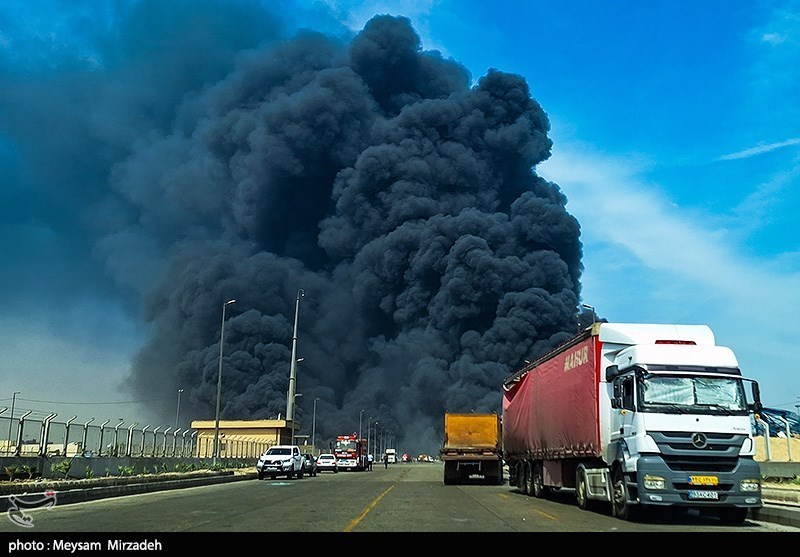
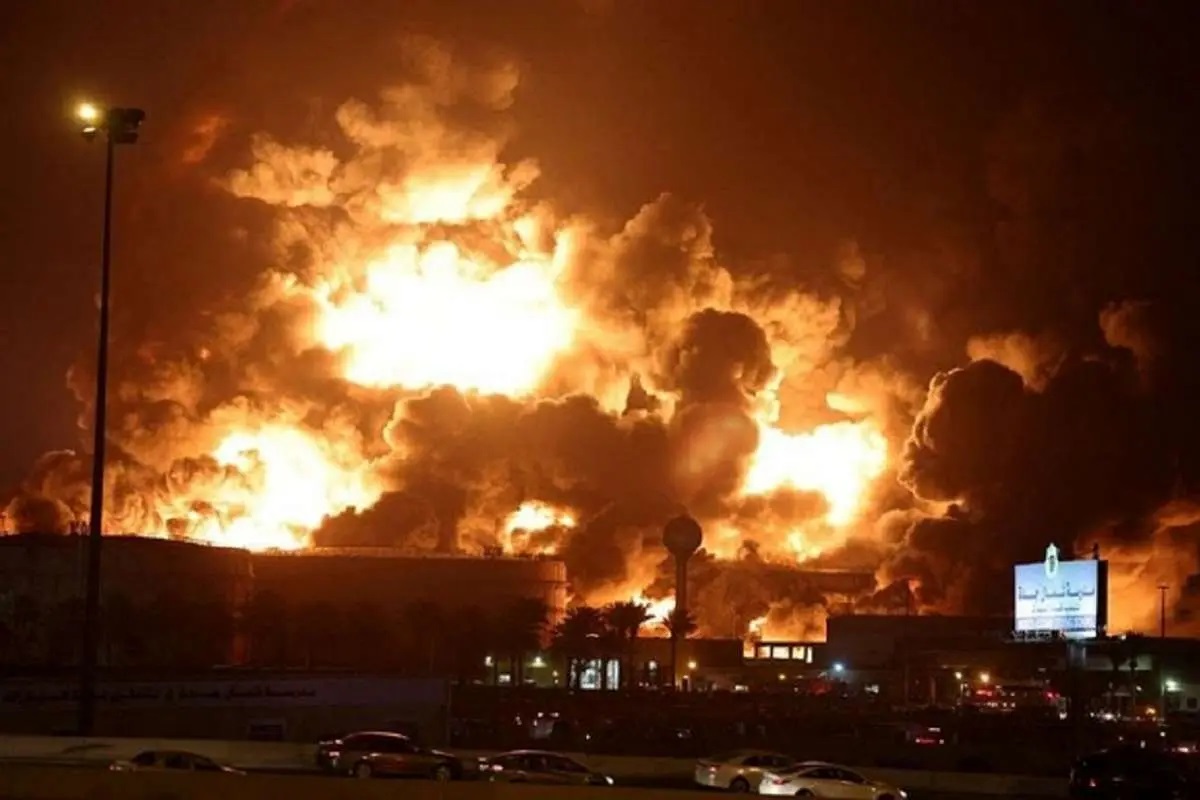
In the latest scene of this unequal war between Saudi Arabia and Yemen, an attack on Jazan refinery once again highlighted vulnerability of the Saudi energy infrastructure. Satellite imagery published after the attack show that fire continues to burn in parts of this energy facility and thick smoke rises to the sky. Reuters reported that Aramco oil giant has taken out of service the 400-barrel-capacity Jazan oil refinery after Ansarullah attack. Parts of the facility, including the gas liquefaction and storage tanks were damaged and so the repair work is still ongoing. Aramco says it is expected to return to service by August 15.
As this war intensifies in the days ahead, mapping out Saudi Arabia's refining network and its geographic distribution offers the clearest window into just how exposed the kingdom's oil infrastructure really is.
Saudi oil bottleneck in the east
Eastern Saudi Arabia is the beating heart of the kingdom's oil empire, home to its largest fields, the Abqaiq processing complex, and the SATORP and SASREF refineries strung along the Persian Gulf coast. This is the spine of Saudi crude production, and any disruption here hits exports and revenues where it hurts most.
Among these facilities, the Ras Tanura refinery occupies a singular place. With a capacity of 550,000 barrels per day, it is the kingdom's oldest and largest, churning out much of the country's gasoline, diesel, jet fuel and natural gas liquids. It serves not only the domestic market but also stands as a major export hub for Asian buyers. That makes it a prime target, and Yemen has made clear it will use its long-range missiles and drones to go after precisely such strategic assets.
SATRAP with 460,000-barrel refining capacity is one of the world's most modern refineries, fed by Saudi heavy crude. It is located in Jubail and is a joint venture of Aramco and Total Energies. Its air distance with Sana'a is 1350-1450 kilometers, which is within Ansarullah's missile range.
Then there's the SASREF refinery, also in Jubail, processing 305,000 barrels a day and producing ultra-low-sulfur fuels that meet European environmental standards. Its location, at the far eastern edge of the kingdom, means that hitting it would require long-range missiles and drones. But theoretically, it is not out of reach of Yemen's stated capabilities.
Refining hub on the Red Sea coast
On Saudi Arabia's western coast, strung along the Red Sea, lie the Yanbu, YASREF, SAMREF and Rabigh refining complexes, with roughly 1.5 million barrels a day of combined capacity, accounting for nearly half of the kingdom's total refining throughput.
Unlike the eastern facilities, these refineries are not located near oil fields. Instead, they rely on the east-west pipeline to receive their crude, a dependency that makes that artery absolutely critical. And according to Yemeni armed forces spokesman Yahya Saree, that pipeline was struck on Monday. Media reports and satellite imagery indicate that crude flows have since been halted.
Among these western plants, the SAMREF refinery in the industrial city of Yanbu stands out as a major hub for refining and exporting petroleum products to global markets, given its position on the Red Sea coast. Farther south, the Rabigh refinery, north of Jeddah, processes roughly 400,000 barrels a day and is also one of the kingdom's largest petrochemical complexes. Its distance from Sana'a, about 1,050 kilometers, places it squarely within the operational reach of Yemen's long-range missiles and drones.
The Yanbu refinery itself, with 220,000 barrels a day of capacity, is a key supplier of fuel to Saudi Arabia's domestic market. It sits roughly 1,000 kilometers from Sana'a, a geographic reality that has repeatedly landed it on Ansarallah's target list in recent years. The most recent illustration came Saturday when Aramco's Yanbu facilities were struck with ballistic missiles and drones, a fresh reminder that energy infrastructure along the Red Sea coast is by no means safe from the threat.
Then there is the Riyadh refinery, at the center of the country. While its capacity is smaller than that of the major coastal complexes, its location in the capital gives it strategic weight. Fully owned by Aramco, it sits about 950 kilometers from Yemen's nearest border point and roughly 1,200 kilometers from Sana'a by air. That distance suggests that if tensions escalate further, even this facility would fall within the strike range of Yemen's armed forces.
Southern oil within Ansarullah's range
In south Saudi Arabia, Jazan refinery is one of the newest and most important energy projects of this country. In addition to production of gasoline, low-sulfur diesel, and p-Xyline and other oil side products, it is linked to a unified power plant with a 3.8-gigawatt power plant. The power plant provides electricity of the oil refinery, surrounding industries, and millions of subscribers. Significance of Jazan does not just lie in its refining capacity, but its dedicated port, hydrogen production units, petrochemical complexes, and logistics infrastructure that make it one of the most crucial energy hubs of the Arab kingdom.
In recent years, the thought was that by expanding its refineries and export terminals along the Red Sea coast, Saudi Arabia had broken its dependence on the Strait of Hormuz. But the reality is more precarious: the kingdom has simply traded one chokepoint for several. Where its oil exports once hinged primarily on keeping the Strait of Hormuz open, Riyadh now finds itself reliant on four simultaneous pressure points, the strait itself, the East-West pipeline, the Yanbu-Rabigh-Jazan refining cluster, and the Red Sea-Bab-el-Mandeb shipping lane. A disruption to any single one of these arteries can ripple through the entire energy export chain.
This is why assessing Saudi Arabia's export capacity cannot stop at daily crude production numbers. The operational status of these four chokepoints is what truly determines the stability of the kingdom's exports and, by extension, its role in the global energy market. Under normal conditions, the network offers a reasonable degree of flexibility. But if two or more of these nodes are hit simultaneously, the consequences would ripple far beyond a simple dip in output or shipments. Such a scenario would disrupt the entire supply chain for crude and refined products alike, and the shockwaves would transmit swiftly to world markets.
Ansarullah struck Saudi energy infrastructure before this. During the war, especially in September 2019, Yemeni armed forces launched an array of attacks on Aramco facilities, the most important of which was Abqaiq facilities. The attack halted, though temporarily, nearly half of Saudi oil output, took out of production capacity millions of oil barrels, sent unprecedented shockwave to the world markets, and instantly sent oil prices higher.
After that, until a fragile ceasefire took hold, Aramco facilities were struck repeatedly by missiles and drones.
Against that backdrop, the simultaneous knockout of Saudi Arabia's main refineries ranks among the most bearish scenarios facing global energy markets. A halt at these centers would not merely cut crude exports, it would severely disrupt production of gasoline, diesel, jet fuel, liquefied petroleum gas and other refined products.
Inside the kingdom, the ripple effects would be immense: road and air transport networks, power plants, petrochemical industries and the supply chain for essential goods would all come under severe strain.
But the fallout would not stop at Saudi borders. The kingdom is one of the world's largest exporters of refined products to Europe and Asia. A shortfall of several million barrels per day in refined output would create a gap that cannot be quickly filled. The result will be a sharp spike in crude oil and refined product prices, surging petrochemical costs, higher energy bills for importing nations, mounting inflationary pressure, and a rising risk of global recession.
The Wall Street Journal on Tuesday in a report said that simultaneous disruption of oil flow in the two straits of Homuz and Bab-el-Mandeb has cut nearly one-fourth of the world oil supply from markets. From this vantage point, any large-scale disruption to Saudi Arabia's refining and export network is not merely a domestic or regional issue; it has the potential to metastasize into an international energy market crisis with global ramifications.