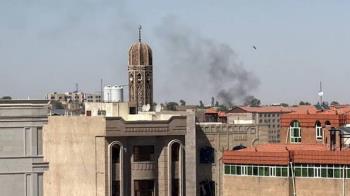










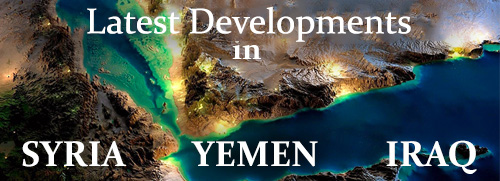

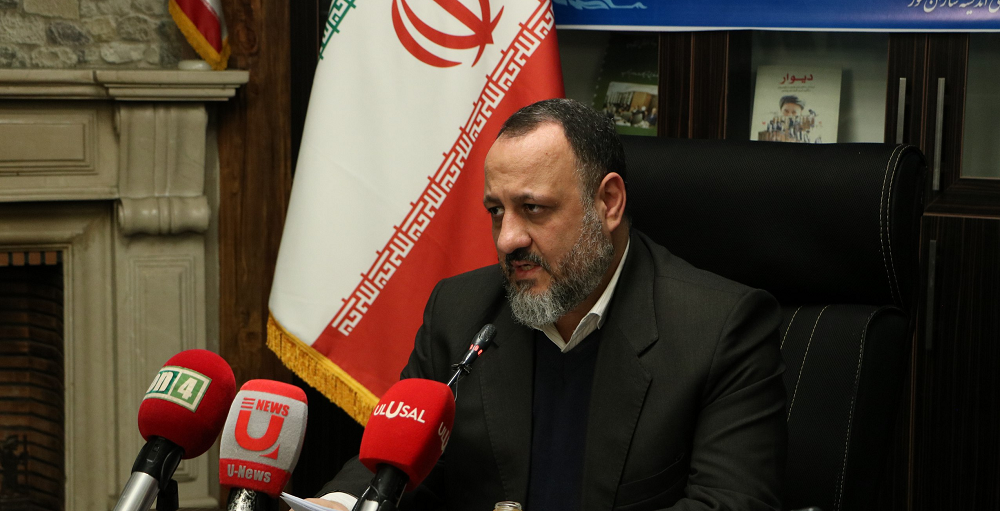


Alwaght- War in Yemen has become the center of gravity of regional and international developments as its aspects are fast expanding. While the Yemeni forces are tightening the noose in air and sea on Saudi Arabia and targeting its airports with missiles, in recent days Riyadh has stepped up its efforts in a bid to form a military coalition and draw support of its allies. This comes as field developments are showing fluidity of the advances of the two warring sides and there are conflicting reports of Saudi and Emirati-backed mercenaries retaking some of the west coast regions overlooking Bab-el-Mandeb recently liberated by Ansarullah forces. For updates on the course of war, Alwaght has talked to Ahmad Zarean, a Tehran-based senior political expert and head of Andisheh Sazan-e-Nour Institute for Strategic Studies.
Alwaght: How is the battleground going? How real and how propagandistic are the reports published by Western and Arab media of advances by the mercenaries?
Zarean: After the heavy and surprising blow that Yemeni fighters dealt to the Saudi and Emirati mercenaries, they, too, tried to mobilize all their forces and capabilities in order to be able to reoccupy the liberated areas on the ground with Saudi air support. Of course, in some areas they had a limited advance, and these areas are mainly coastal and, geographically, lack terrain and strong defensive fortifications. Therefore, it is natural that an actor possessing air power and the ability to provide support and fire dominance can achieve limited advances in areas that do not have suitable fortifications and defensive arrangements. But this does not mean absolute geographical and territorial dominance, and as soon as the intensity of fire decreases, the Ansarallah forces can retake these areas again. However, these advances are still currently limited and not very extensive.
Alwaght: In your viewpoint, what assessment has Ansarullah made before entering the new round of military operations? Do you think the Bab-el-Mandeb battle can be separated fron the broader regional equation?
Zarean: Yemenis entered this battle with two aims. Their first goal was to save Yemen from foreign interventions, especially the interventions of Saudi Arabia and the UAE, to cut off the presence of foreign forces in this country, and to put an end to their destructive role-playing in Yemen. And the second goal of the Yemenis is to end the oppressive siege of Yemen, a siege that has lasted more than ten years and has imposed a heavy pressure on the Yemeni people. During this period, a large number of Yemeni children have lost their lives due to malnutrition. This issue has created a serious motivation for the Yemenis to, at this stage, both put an end to foreign interventions and strive to lift the siege of their country.
Therefore, in the first place, these actions are pursued with the aim of realizing the demands of the Yemeni people. However, although the Yemenis have undertaken these actions within the framework of a national will and with the aim of preserving the sovereignty and independence of the country, preventing foreign intervention, and lifting the oppressive siege, its consequences have gone beyond the domestic level of Yemen and have also caused a change in the regional balance.
Naturally, the Yemenis' advances and the cleansing of the coastal areas from the presence of Emirati and Saudi forces, as well as their control over the Bab-el-Mandeb Strait, can change the conditions of the region and shift the balance in favor of the Axis of Resistance. Therefore, although the initial motivation of the Yemenis had a national nature, the consequences of their actions have taken on regional and even international dimensions.
Alwaght: Why have the US and other Western countries failed to meet Saudi expectations for support?
Zarean: In this regard, several points should be taken into account. First one is that the US and Europe are grappling with major challenges. Europe is busy with Ukraine war and the US is bogged down in the Strait of Hormuz. Indeed, these conditions limit their options, making an all-out involvement in a new crisis costly and difficult.
The second point is that they are now examining the conditions, and given past experiences, they will probably reach the conclusion that the Yemen crisis has no military solution and the Sanaa government cannot be defeated militarily. This assessment itself also influences their caution about entering this fray.
And the third point is that the Americans, in early 2025, experienced a war with the Yemenis that lasted more than 50 days, and in the end, the Americans withdrew unilaterally from this conflict. The Americans know that classic armies face serious difficulties in confronting the combat capability of Yemeni fighters. For this reason, they look at this scene with great caution and prefer not to enter such a conflict.
Alwaght: Saudi Arabia has a well-equipped army and huge military budget. So, why does it feel a need for others' help?
Zarean: The reason for this issue must be sought in several factors. First, the Saudi army and its military equipment have a completely classic and symmetrical nature and are mainly designed for classic wars, while confronting the Yemeni forces, especially in the current conditions, requires different capabilities and methods of warfare.
The second factor is the morale of the Saudi military forces. Naturally, the morale of soldiers in offensive wars differs from that in defensive wars, and usually in defensive wars, more motivation and will is felt to confront the threat. The war that Saudi Arabia has started against Yemen is an offensive and aggressive war with illegitimate objectives; therefore, the Saudi military forces at the operational levels are faced with weakness in the morale and will necessary to continue such a war.
The next point is that the kingdom does not have sufficient confidence in its army, because this system is illegitimate and within the heart of Saudi society there have always been grounds for protest and opposition to the royal system, even if in a hidden manner, and on the other hand, many Saudi military forces feel sympathy with the Yemenis; for this reason, the Saudi ruling authority is forced to rely on foreign forces and mercenaries. In this same framework, in order to be able to achieve a gain against the Yemenis or reduce the pressure caused by their actions, it has resorted to using foreign mercenaries.
Alwaght: Has Mecca Pact managed to ease the Saudi burden? If Pakistan and Turkey get engaged deeper in this war, what would be the consequences and costs for them?
Zarean: It must be said that the Yemen war is the first serious test of this agreement. If Turkey and Pakistan enter the Yemen fray fully and support Saudi Arabia, it can be said that this agreement has been effective and has been able to fulfill the expectations of the Saudis.
But what we have witnessed so far is that Pakistan and Turkey do not have much desire to enter directly, openly, and fully into Saudi Arabia's war against Yemen. They prefer to limit their support for Saudi Arabia to intelligence and weapons assistance and avoid direct entry into the battlefield.
This issue has several reasons. First, if these countries want to enter the Yemen war fully, they must obtain permission from their parliaments; an action that is very unlikely to be accompanied by a positive vote from the parliaments of Pakistan and Turkey.
The second point is the domestic challenges and public opinion of these countries. Naturally, if Turkey and Pakistan enter such a fray, especially if their military forces suffer casualties, they will face serious difficulty in answering to their public opinion. Significant parts of society in both countries oppose this war, and for this reason, the full-scale military entry of Turkey and Pakistan into the war against Yemen can become a factor for the intensification and activation of social rifts in these countries.
Additionally, if this process leads to Saudi Arabia's defeat, naturally the reputational costs for these countries will also increase. For this reason, in the current conditions, they prefer to limit their support for Saudi Arabia to intelligence and weapons assistance. Of course, Pakistan's intelligence and weapons assistance to Saudi Arabia has existed since the past and is not a new issue. If Turkey is also going to provide assistance to Saudi Arabia, it seems that this assistance will mainly be in the field of military weapons. Overall, it seems that these countries are still assessing the conditions and are worried that entering the Yemen war will increase their costs both domestically and regionally.
Alwaght: In recent visit to Riyadh of interim Syrian president Abu Mohammad al-Jolani, media speculated about deployment of Syrian terrorists to Yemen war in return for economic support to Damascus government, though the latter has rejected these reports. Can such a possibility be taken seriously? What would be the fallout?
Zarean: Yes, as you said, the Syrian side has rejected this issue, saying that it has no such plan. But if the Syrians want to assist Saudi Arabia, they will dispatch their takfiri and salafi fighters to Yemen. These forces are troublemakers for Abu Mohammad al-Jolani and he prefers to send them away from Syria to other regions. Therefore, such a move can provide a service to Saudi Arabia and draw privileges in return and at the same time help Damascus get rid of takfiri and salafi forces which have centrifugal tendencies and stand against some policies pursued by al-Jolani in Syria.